.jpg)



.jpg)
Spinal Stenosis Exercise: Why Your Routine Demands a Completely Different Approach (And How to Do It Right)


If you have been diagnosed with lumbar spinal stenosis, you have probably scoured the internet for the best spinal stenosis exercise to relieve your back and leg pain. You might have even tried generic core strengthening routines like crunches, sit-ups, planks, or bridges you found online, only to end up feeling worse.
It is incredibly frustrating to put in the effort to heal, only to feel like your body is fighting back. But here is the truth: treating spinal stenosis requires a completely different approach than treating a standard muscle strain or even a disc issue. Understanding the differences between sciatica and spinal stenosis is the first step to making sure you are doing the right movements for your body.
When I work with my clients, I constantly remind them that we need to shift how we look at the diagnosis. We have to remember the difference between functional vs. structural. Many patients come to me terrified by their MRI results, worried that they immediately need to consider the risks of spinal stenosis surgery
But what shows up on an image (structural) does not dictate how you have to feel or move (functional). In fact, seeing words like “degeneration” or “arthritis” on an MRI can be scary, but these changes are often just "wrinkles on the inside"—a normal part of aging that almost every human experiences.
You are not your MRI. We cannot "un-age" the spine or fix a bone, but we can improve your tissue tolerance and build a resilient support system around those nerves so you can walk, stand, and live without pain.
5 Foundational Rules For Spinal Stenosis Exercises to Ensure You Are Actually Improving and Not Making Things Worse

1. The Problem with Extension (Remember: Flexion is Your Friend)
With spinal stenosis and many other conditions such as arthritis or disc disease, the spaces in your lower spine have narrowed, which can irritate the nerves. When you stand up tall, arch your back, or walk, you are putting your spine into extension. Extension naturally closes down that space even further, which is why standing and walking can trigger your pain.
When exercising with stenosis, you need to avoid extension-based exercises initially, such as lying on your belly and pressing up or doing the extended portion of a cat-cow stretch. Instead, remember that flexion is your friend. Bending forward opens up the spaces in the spine, giving your nerves room to breathe. Incorporate flexion-based movements, like a seated lumbar stretch or the rounded "cat" stretch, to give yourself an edge and provide immediate relief.
2. Peripheralization vs. Centralization of Nerve Pain (Listen to the Nerve)
When you are doing any spinal stenosis exercise, you must pay attention to where you feel the sensation. If you are doing a strengthening exercise and you feel your lower back getting sore, that is okay—your back muscles are working.
However, if you feel pain, tingling, or a heavy sensation moving away from your back and shooting down into your glute, hamstring, calf, or foot, you must stop. This is called peripheralization, and it is a red flag. Peripheralization occurs when pain travels downward or away from the back. This may be the glute or leg. If this happens, stop the exercise immediately and do a flexion-based stretch until the leg pain resolves. Back soreness is okay; nerve pain traveling down the leg is not.
3. Monitor Your Tissue Irritability
When you are rebuilding your nerves tolerance to compression, some soreness is expected. You should not go higher than a 2/10 pain level during your exercise.
Tissue irritability refers to how your body responds after you do something (working out, walking, etc) If you complete an exercise and find yourself laid up on the couch for two days unable to move, you exceeded your tissue tolerance. You did too much, too fast. You need to dial back the intensity or the number of repetitions until you find the "sweet spot" where your body is challenged but recovers quickly. Exceeding tissue irritability thresholds at that moment leads to an inflammatory response that can delay the healing process. And, it just makes your life not as fun.
4. You Must Progress Your Routine
A major problem I see is patients finding 3 or 4 exercises that feel good and then doing only those exercises for the rest of a long time. Your body changes over time, and so should your exercises.
As your tissue tolerance improves, you must progress your routine. This might mean increasing repetitions, adding resistance, or moving from lying-down stretches to standing exercises. Progression is the only way to continually build strength and long-term mobility.
5. A Well-Rounded Approach (The SPARK Method)
Simply doing generic core strengthening will not cure spinal stenosis. Spinal stenosis is complex, and your recovery program must be well-rounded. You have to improve the nerve and the entire system. I have seen this work time and time again when we implement a complete system approach rather than just one-off stretches.
To truly recover and prevent future flare-ups, I use the SPARK Program with my patients. SPARK stands for:
- S - Strengthening: Safely building the hips and core without adding painful compression.
- P - Pain Relief: Using targeted strategies (like heat, ice, or specific stretches) to calm the nervous system.
- A - Activate the Nerve: Using specific "nerve glides" to improve the nerve's tolerance to movement and blood flow.
- R - Regain Mobility: Restoring the spine's natural range of motion.
- K - Keep Moving: Utilizing structured, strategic walking programs
Your Next Steps for True Healing
You don't have to guess what exercises are safe for your spine anymore. If you want to stop the cycle of pain and start building real resiliency, here are the exact resources I use with my own patients:
- Is Your Walking Pain Caused by Spinal Stenosis? Take the FREE Quiz!: Unsure if your pain is actually coming from stenosis? Take this free assessment to figure out your pain pattern and what to do next.
- Download the Pain-Free Walking with Spinal Stenosis eBook: Get my exact core strengthening and mobility plan designed specifically to help you walk farther and stand longer without pain.
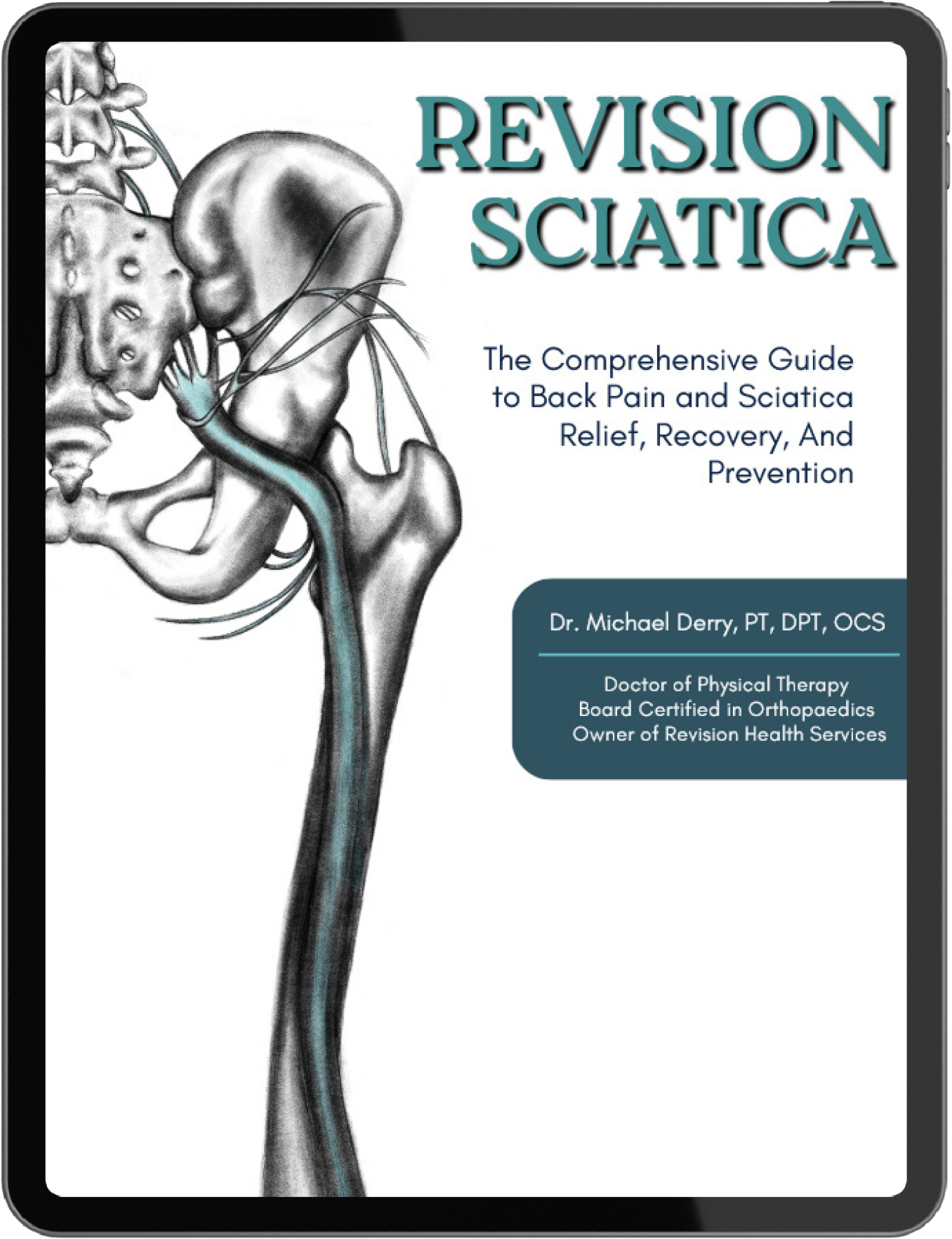
- Get Revision Sciatica: The Total Solution: If you want the complete, step-by-step 8-week SPARK program with daily protocols, pictures, and instructions to fix your stenosis pain for good, grab a copy of my book.
Finding the right spinal stenosis exercise routine doesn't have to be a frustrating process of trial and error; it is really about learning your body and building true tissue tolerance while building your resiliency to everyday movement. You don't have to let pain dictate your life, so let's get you back to doing the things you enjoy.
Summary
Treating spinal stenosis requires a different, more thoughtful approach than typical back pain routines—focusing on flexion-based movements, monitoring nerve responses, and gradually building tissue tolerance rather than relying on generic exercises. It emphasizes a holistic, progressive system (like the SPARK method) to reduce pain, improve mobility, and build long-term resilience so people can return to daily activities without fear.
If you have been diagnosed with lumbar spinal stenosis, you have probably scoured the internet for the best spinal stenosis exercise to relieve your back and leg pain. You might have even tried generic core strengthening routines like crunches, sit-ups, planks, or bridges you found online, only to end up feeling worse.
It is incredibly frustrating to put in the effort to heal, only to feel like your body is fighting back. But here is the truth: treating spinal stenosis requires a completely different approach than treating a standard muscle strain or even a disc issue. Understanding the differences between sciatica and spinal stenosis is the first step to making sure you are doing the right movements for your body.
When I work with my clients, I constantly remind them that we need to shift how we look at the diagnosis. We have to remember the difference between functional vs. structural. Many patients come to me terrified by their MRI results, worried that they immediately need to consider the risks of spinal stenosis surgery
But what shows up on an image (structural) does not dictate how you have to feel or move (functional). In fact, seeing words like “degeneration” or “arthritis” on an MRI can be scary, but these changes are often just "wrinkles on the inside"—a normal part of aging that almost every human experiences.
You are not your MRI. We cannot "un-age" the spine or fix a bone, but we can improve your tissue tolerance and build a resilient support system around those nerves so you can walk, stand, and live without pain.
5 Foundational Rules For Spinal Stenosis Exercises to Ensure You Are Actually Improving and Not Making Things Worse
1. The Problem with Extension (Remember: Flexion is Your Friend)
With spinal stenosis and many other conditions such as arthritis or disc disease, the spaces in your lower spine have narrowed, which can irritate the nerves. When you stand up tall, arch your back, or walk, you are putting your spine into extension. Extension naturally closes down that space even further, which is why standing and walking can trigger your pain.
When exercising with stenosis, you need to avoid extension-based exercises initially, such as lying on your belly and pressing up or doing the extended portion of a cat-cow stretch. Instead, remember that flexion is your friend. Bending forward opens up the spaces in the spine, giving your nerves room to breathe. Incorporate flexion-based movements, like a seated lumbar stretch or the rounded "cat" stretch, to give yourself an edge and provide immediate relief.
2. Peripheralization vs. Centralization of Nerve Pain (Listen to the Nerve)
When you are doing any spinal stenosis exercise, you must pay attention to where you feel the sensation. If you are doing a strengthening exercise and you feel your lower back getting sore, that is okay—your back muscles are working.
However, if you feel pain, tingling, or a heavy sensation moving away from your back and shooting down into your glute, hamstring, calf, or foot, you must stop. This is called peripheralization, and it is a red flag. Peripheralization occurs when pain travels downward or away from the back. This may be the glute or leg. If this happens, stop the exercise immediately and do a flexion-based stretch until the leg pain resolves. Back soreness is okay; nerve pain traveling down the leg is not.
3. Monitor Your Tissue Irritability
When you are rebuilding your nerves tolerance to compression, some soreness is expected. You should not go higher than a 2/10 pain level during your exercise.
Tissue irritability refers to how your body responds after you do something (working out, walking, etc) If you complete an exercise and find yourself laid up on the couch for two days unable to move, you exceeded your tissue tolerance. You did too much, too fast. You need to dial back the intensity or the number of repetitions until you find the "sweet spot" where your body is challenged but recovers quickly. Exceeding tissue irritability thresholds at that moment leads to an inflammatory response that can delay the healing process. And, it just makes your life not as fun.
4. You Must Progress Your Routine
A major problem I see is patients finding 3 or 4 exercises that feel good and then doing only those exercises for the rest of a long time. Your body changes over time, and so should your exercises.
As your tissue tolerance improves, you must progress your routine. This might mean increasing repetitions, adding resistance, or moving from lying-down stretches to standing exercises. Progression is the only way to continually build strength and long-term mobility.
5. A Well-Rounded Approach (The SPARK Method)
Simply doing generic core strengthening will not cure spinal stenosis. Spinal stenosis is complex, and your recovery program must be well-rounded. You have to improve the nerve and the entire system. I have seen this work time and time again when we implement a complete system approach rather than just one-off stretches.
To truly recover and prevent future flare-ups, I use the SPARK Program with my patients. SPARK stands for:
- S - Strengthening: Safely building the hips and core without adding painful compression.
- P - Pain Relief: Using targeted strategies (like heat, ice, or specific stretches) to calm the nervous system.
- A - Activate the Nerve: Using specific "nerve glides" to improve the nerve's tolerance to movement and blood flow.
- R - Regain Mobility: Restoring the spine's natural range of motion.
- K - Keep Moving: Utilizing structured, strategic walking programs
Your Next Steps for True Healing
You don't have to guess what exercises are safe for your spine anymore. If you want to stop the cycle of pain and start building real resiliency, here are the exact resources I use with my own patients:
- Is Your Walking Pain Caused by Spinal Stenosis? Take the FREE Quiz!: Unsure if your pain is actually coming from stenosis? Take this free assessment to figure out your pain pattern and what to do next.
- Download the Pain-Free Walking with Spinal Stenosis eBook: Get my exact core strengthening and mobility plan designed specifically to help you walk farther and stand longer without pain.
- Get Revision Sciatica: The Total Solution: If you want the complete, step-by-step 8-week SPARK program with daily protocols, pictures, and instructions to fix your stenosis pain for good, grab a copy of my book.
Finding the right spinal stenosis exercise routine doesn't have to be a frustrating process of trial and error; it is really about learning your body and building true tissue tolerance while building your resiliency to everyday movement. You don't have to let pain dictate your life, so let's get you back to doing the things you enjoy.
Summary
Treating spinal stenosis requires a different, more thoughtful approach than typical back pain routines—focusing on flexion-based movements, monitoring nerve responses, and gradually building tissue tolerance rather than relying on generic exercises. It emphasizes a holistic, progressive system (like the SPARK method) to reduce pain, improve mobility, and build long-term resilience so people can return to daily activities without fear.

%20Blog%20thumbnails.jpg)


