






In my 10+ years as a physical therapist, one of the most common questions I hear is, "Do I have sciatica or is this a slipped disc?"
It’s a valid question because the pain can be intense, scary, and confusing. You might feel a sharp, burning sensation down your leg one minute, and a deep ache in your lower back the next.
The truth is, these two conditions are deeply connected. A herniated disc (often called a slipped disc) is frequently the culprit behind sciatica. But knowing the difference—and knowing which one is driving your pain—is the first step to getting your life back. If you are unsure what is causing your sciatica, check out this FREE Quiz to help you figure out if it's disc-related or arthritis.
In this guide, I’ll explain exactly how to tell the difference, share simple self-tests you can do at home, and provide a clear path to relief.
What is Sciatica? (The Symptom)
Sciatica sometimes confused with pinched nerve isn't just pain; it's a description of symptoms caused by inflammation or compression of the sciatic nerve.
This nerve is the largest in your body, running from your lower back (L4-S1 nerve roots), through your hips and buttocks, and down each leg. When it gets compressed or inflamed, it lets you know—loud and clear.
Common Sciatica Symptoms:
- One-sided pain: Usually affects only one leg.
- Radiating pain: Travels from the buttock down the back of the thigh and calf.
- Sensory changes: Numbness, tingling (pins and needles), or
- Weakness: Often in the foot.
- "Electric" sensation: Often described as a hot poker or sharp jolt.
Key Insight: Many of my patients are confused because they have terrible leg pain but no back pain. This is classic sciatica—the problem is in the back, but the pain is in the leg. According to recent studies, the prevalence of sciatica ranges from 1.6% to 43% of the population (Fairag et al., 2022).
What is a Herniated Disc? (The Cause)
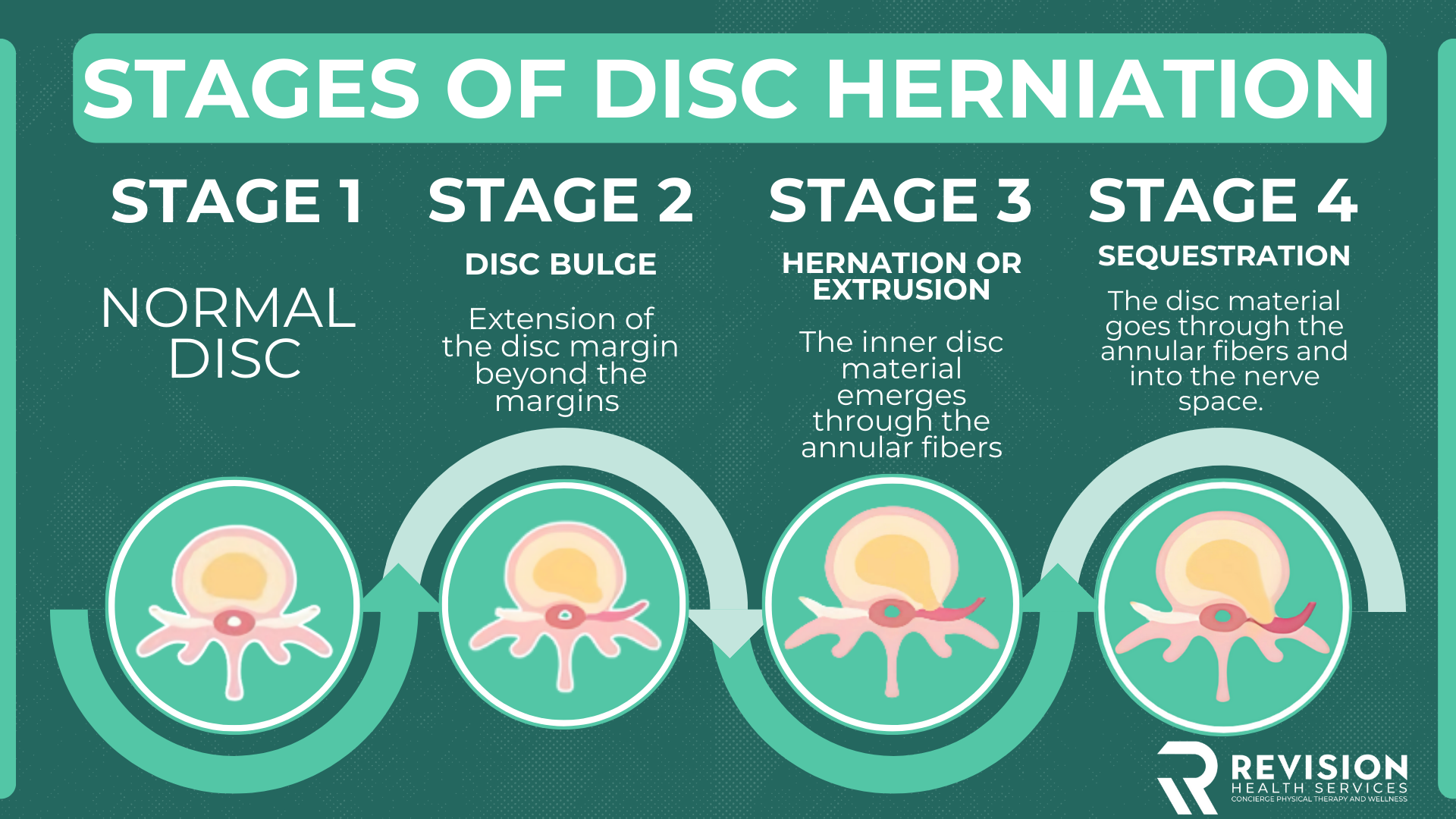
Your spine is made up of vertebrae stacked on top of cushioned discs. A herniated disc happens when the tough outer layer of that disc (annulus fibrosus) gives way, allowing the soft, gel-like center (nucleus pulposus) to push outward.
Signs You Might Have a Herniated Disc:
- Pain with bending: Putting on socks or tying shoes is often excruciating.
- Sciatica: All the things we mentioned above.
- Younger: 40 and younger.
- Coughing/Sneezing: Sudden pressure (like a sneeze) sends a shot of pain down the leg.
- MOI: Usually have mechanism of injury
Do Herniated Discs Always Cause Pain?
Here is the good news: No. Many people have disc bulges or herniations without ever feeling pain. In a classic study by Jensen et al. (1994), MRI scans showed that 36% of people with no back pain had normal discs at all levels—meaning the majority had some "abnormality" but felt fine. Even more striking, 38%had abnormalities at more than one disc level despite having zero pain.
How to Tell You May Have Sciatica From A Disc Herniation: 3 Simple Self-Tests
While an MRI is the gold standard for seeing a herniated disc, remember most have a disc herniation and don’t have pain. And, sciatica can be a symptom of a disc herniation so you can have a herniation without sciatica and sciatica that isn’t from a herniated disc. If you feel that your disc may be causing pain, try these three tests. If you are unsure if you have sciatica, check out this video!
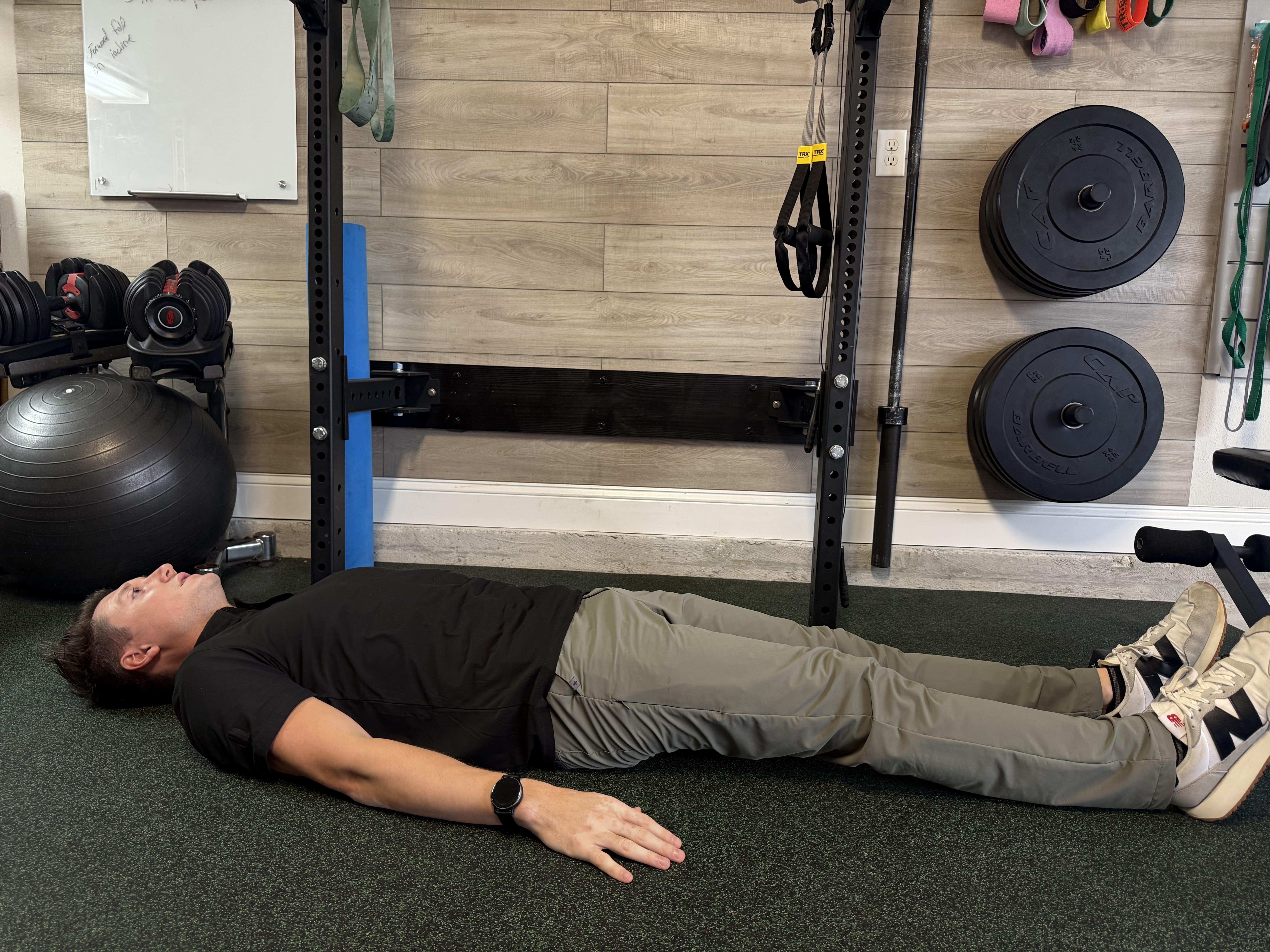
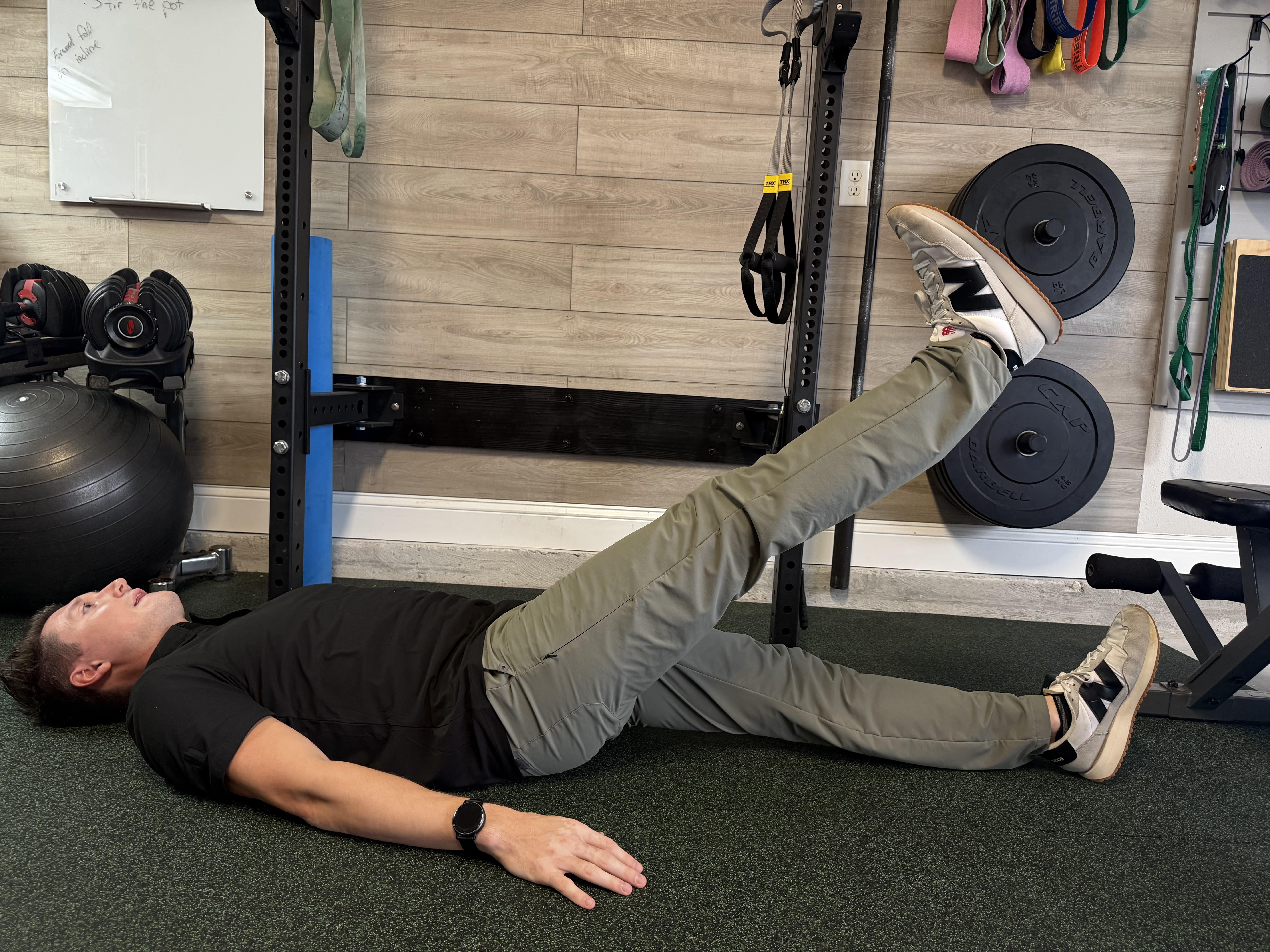
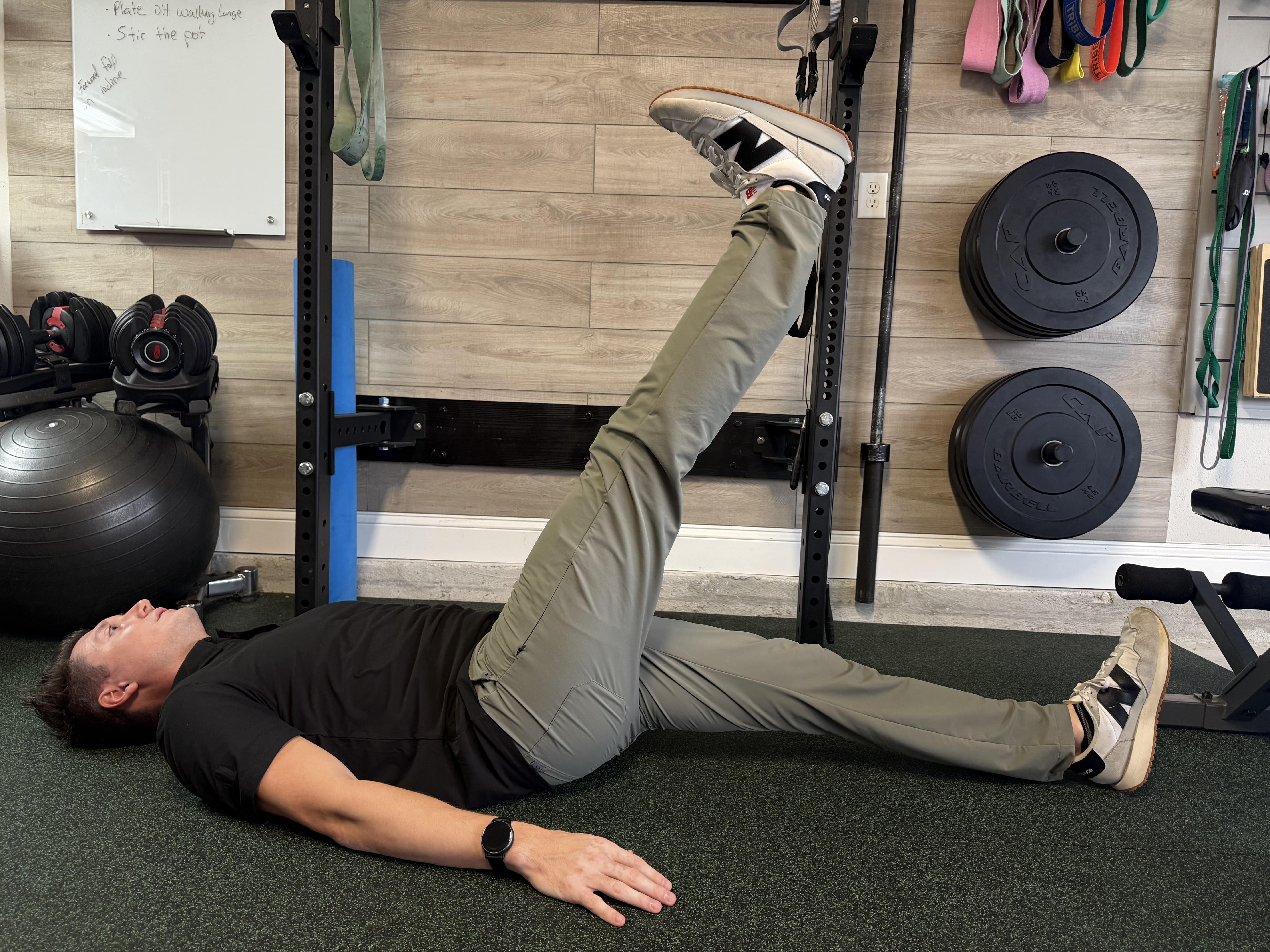
1. The Straight Leg Raise (SLR) Test
This is a quick test to assess if your sciatic nerve is being compressed from a potential disc issue.
- How to do it: Lie flat on your back on a firm surface with both knees straight. Start to lft your leg.
- Positive Result: If you feel sharp, radiating pain (not just tight hamstrings) down your leg, specifically between 30 and 70 degrees of lifting, this is a positive test for a disc issue.
2. The Slump Test
This tests the sensitivity of your sciatic nerve.
- How to do it: Sit on the edge of a chair. Slump your shoulders and tuck your chin to your chest. Slowly kick your painful leg out straight.
- Positive Result: If extending your leg reproduces your specific leg pain, and lifting your head makes it better, it confirms nerve tension (sciatica).


3. The "Cough" Test
This one is simple. Stand up and cough deeply. If you feel a sudden jolt of pain in your back or shooting down your leg, it indicates increased pressure in the spinal canal, often pointing to a disc issue.
Which Is Worse?
This is a tricky question because they often come as a package deal. However, sciatica (the nerve pain) is often the part that makes life miserable. Nerve pain is relentless—it burns, aches, and can keep you up at night. No one really cares if they have a herniated disc without pain. But, you can help prevent future issues with a solid program that mobility and strength to support our spine an hips.
The good news? Both typically heal on their own. Most people experience significant improvement within 4–6 weeks.
Even more encouraging is that the herniation itself can go away. A meta-analysis by Zhong et al. (2017) found that spontaneous resorption (healing) of lumbar disc herniations occurred in 66.7% of cases. Interestingly, larger herniations tended to resorb even faster than smaller ones.
Common Questions I Hear From My Patients
"Does a herniated disc hurt all the time?" Not usually. Pain is often intermittent and variable because the forces on your disc change throughout the day. Sitting is often worse than standing.
"Is walking good for a herniated disc and sciatica?" Yes, absolutely. Walking is one of the MOST effective ways to flush inflammation and keep your spine mobile. It engages the muscles that support your spine and promotes stability.
- My Advice: Start with short walks—even if it is just one minute. If pain increases or radiates further down your leg (peripheralization), stop and rest. If the pain stays in your back or gets better, keep going. Aim for 20-30 minutes of pain-free walking daily.
How to Find Relief and Start Healing
If you suspect you have a herniated disc causing sciatica, the worst thing you can do is bed rest. The second worst thing is aggressive stretching (like toe touches), which can make the herniation worse. The easiest way to start feeling better would be to:
1. Take my FREE Quiz to figure out the cause and then tailor exercises to address it.
2. Calm the Inflammation Use ice or heat (whichever feels better) on your lower back—even if the pain is in your leg.
3. Follow a Structured Plan Recovering from a herniated disc isn't about random exercises. It requires a systematic approach to offload the disc, calm the nerves, and rebuild strength.
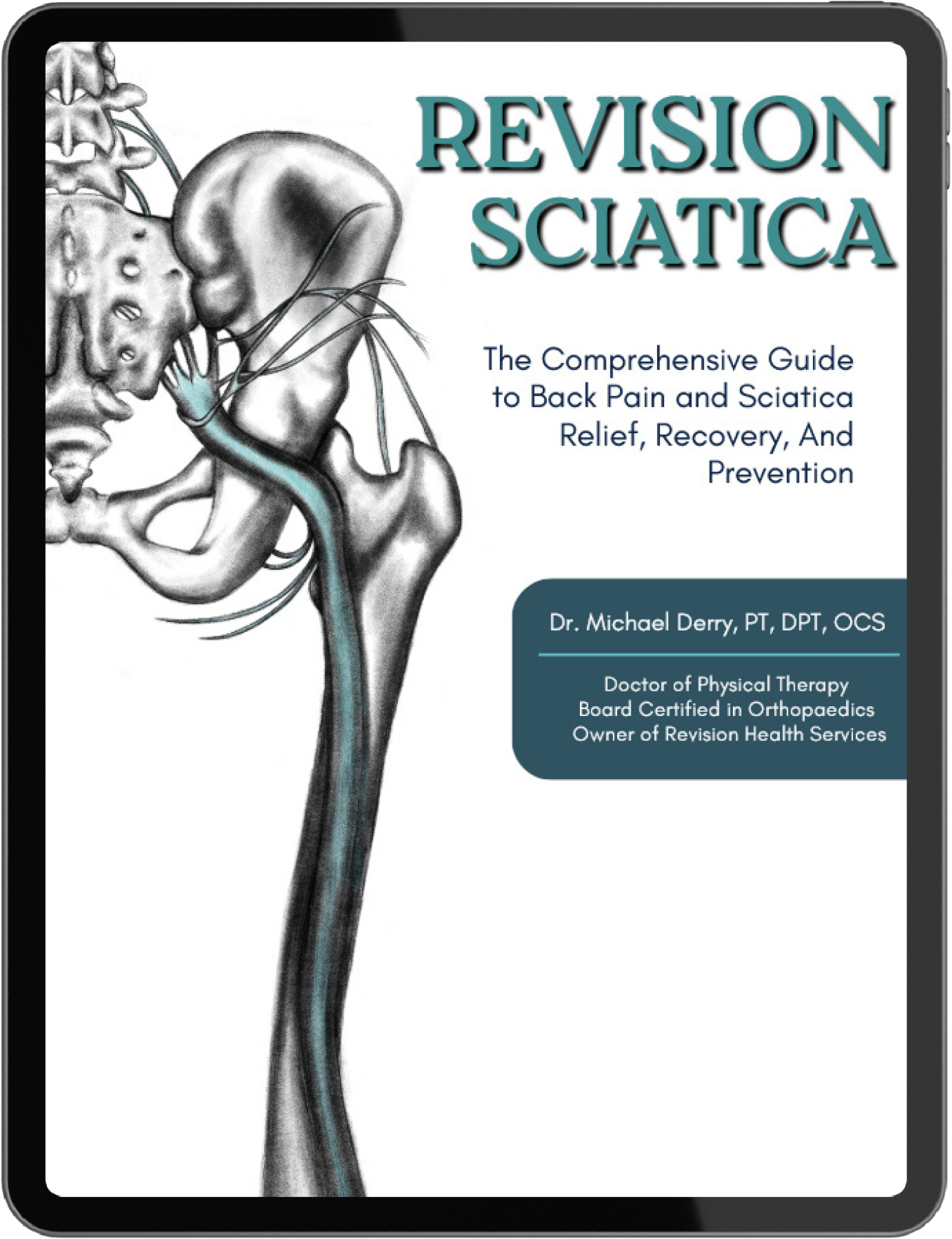
I wrote the Revision Sciatica Book specifically for this journey. It’s a comprehensive guide that walks you through:
- The "SPARK" Program for relief and recovery.
- Specific nerve glides to reduce sensitivity and improve nerve health.
- How to strengthen your back without making things worse.
- 50+ Pictures and 8 Weeks of Exercises to start your recovery today.
Summary
Whether you call it a slipped disc, a pinched nerve, or sciatica, the goal is the same: get out of pain and get back to living.
The body is resilient. Herniated discs can heal, and irritated nerves can calm down. Use the tests above to understand your body, avoid the movements that hurt, and lean into the ones that heal. You’ve got this.
In my 10+ years as a physical therapist, one of the most common questions I hear is, "Do I have sciatica or is this a slipped disc?"
It’s a valid question because the pain can be intense, scary, and confusing. You might feel a sharp, burning sensation down your leg one minute, and a deep ache in your lower back the next.
The truth is, these two conditions are deeply connected. A herniated disc (often called a slipped disc) is frequently the culprit behind sciatica. But knowing the difference—and knowing which one is driving your pain—is the first step to getting your life back. If you are unsure what is causing your sciatica, check out this FREE Quiz to help you figure out if it's disc-related or arthritis.
In this guide, I’ll explain exactly how to tell the difference, share simple self-tests you can do at home, and provide a clear path to relief.
What is Sciatica? (The Symptom)
Sciatica sometimes confused with pinched nerve isn't just pain; it's a description of symptoms caused by inflammation or compression of the sciatic nerve.
This nerve is the largest in your body, running from your lower back (L4-S1 nerve roots), through your hips and buttocks, and down each leg. When it gets compressed or inflamed, it lets you know—loud and clear.
Common Sciatica Symptoms:
- One-sided pain: Usually affects only one leg.
- Radiating pain: Travels from the buttock down the back of the thigh and calf.
- Sensory changes: Numbness, tingling (pins and needles), or
- Weakness: Often in the foot.
- "Electric" sensation: Often described as a hot poker or sharp jolt.
Key Insight: Many of my patients are confused because they have terrible leg pain but no back pain. This is classic sciatica—the problem is in the back, but the pain is in the leg. According to recent studies, the prevalence of sciatica ranges from 1.6% to 43% of the population (Fairag et al., 2022).
What is a Herniated Disc? (The Cause)
Your spine is made up of vertebrae stacked on top of cushioned discs. A herniated disc happens when the tough outer layer of that disc (annulus fibrosus) gives way, allowing the soft, gel-like center (nucleus pulposus) to push outward.
Signs You Might Have a Herniated Disc:
- Pain with bending: Putting on socks or tying shoes is often excruciating.
- Sciatica: All the things we mentioned above.
- Younger: 40 and younger.
- Coughing/Sneezing: Sudden pressure (like a sneeze) sends a shot of pain down the leg.
- MOI: Usually have mechanism of injury
Do Herniated Discs Always Cause Pain?
Here is the good news: No. Many people have disc bulges or herniations without ever feeling pain. In a classic study by Jensen et al. (1994), MRI scans showed that 36% of people with no back pain had normal discs at all levels—meaning the majority had some "abnormality" but felt fine. Even more striking, 38%had abnormalities at more than one disc level despite having zero pain.
How to Tell You May Have Sciatica From A Disc Herniation: 3 Simple Self-Tests
While an MRI is the gold standard for seeing a herniated disc, remember most have a disc herniation and don’t have pain. And, sciatica can be a symptom of a disc herniation so you can have a herniation without sciatica and sciatica that isn’t from a herniated disc. If you feel that your disc may be causing pain, try these three tests. If you are unsure if you have sciatica, check out this video!
1. The Straight Leg Raise (SLR) Test
This is a quick test to assess if your sciatic nerve is being compressed from a potential disc issue.
- How to do it: Lie flat on your back on a firm surface with both knees straight. Start to lft your leg.
- Positive Result: If you feel sharp, radiating pain (not just tight hamstrings) down your leg, specifically between 30 and 70 degrees of lifting, this is a positive test for a disc issue.
2. The Slump Test
This tests the sensitivity of your sciatic nerve.
- How to do it: Sit on the edge of a chair. Slump your shoulders and tuck your chin to your chest. Slowly kick your painful leg out straight.
- Positive Result: If extending your leg reproduces your specific leg pain, and lifting your head makes it better, it confirms nerve tension (sciatica).
3. The "Cough" Test
This one is simple. Stand up and cough deeply. If you feel a sudden jolt of pain in your back or shooting down your leg, it indicates increased pressure in the spinal canal, often pointing to a disc issue.
Which Is Worse?
This is a tricky question because they often come as a package deal. However, sciatica (the nerve pain) is often the part that makes life miserable. Nerve pain is relentless—it burns, aches, and can keep you up at night. No one really cares if they have a herniated disc without pain. But, you can help prevent future issues with a solid program that mobility and strength to support our spine an hips.
The good news? Both typically heal on their own. Most people experience significant improvement within 4–6 weeks.
Even more encouraging is that the herniation itself can go away. A meta-analysis by Zhong et al. (2017) found that spontaneous resorption (healing) of lumbar disc herniations occurred in 66.7% of cases. Interestingly, larger herniations tended to resorb even faster than smaller ones.
Common Questions I Hear From My Patients
"Does a herniated disc hurt all the time?" Not usually. Pain is often intermittent and variable because the forces on your disc change throughout the day. Sitting is often worse than standing.
"Is walking good for a herniated disc and sciatica?" Yes, absolutely. Walking is one of the MOST effective ways to flush inflammation and keep your spine mobile. It engages the muscles that support your spine and promotes stability.
- My Advice: Start with short walks—even if it is just one minute. If pain increases or radiates further down your leg (peripheralization), stop and rest. If the pain stays in your back or gets better, keep going. Aim for 20-30 minutes of pain-free walking daily.
How to Find Relief and Start Healing
If you suspect you have a herniated disc causing sciatica, the worst thing you can do is bed rest. The second worst thing is aggressive stretching (like toe touches), which can make the herniation worse. The easiest way to start feeling better would be to:
1. Take my FREE Quiz to figure out the cause and then tailor exercises to address it.
2. Calm the Inflammation Use ice or heat (whichever feels better) on your lower back—even if the pain is in your leg.
3. Follow a Structured Plan Recovering from a herniated disc isn't about random exercises. It requires a systematic approach to offload the disc, calm the nerves, and rebuild strength.
I wrote the Revision Sciatica Book specifically for this journey. It’s a comprehensive guide that walks you through:
- The "SPARK" Program for relief and recovery.
- Specific nerve glides to reduce sensitivity and improve nerve health.
- How to strengthen your back without making things worse.
- 50+ Pictures and 8 Weeks of Exercises to start your recovery today.
Summary
Whether you call it a slipped disc, a pinched nerve, or sciatica, the goal is the same: get out of pain and get back to living.
The body is resilient. Herniated discs can heal, and irritated nerves can calm down. Use the tests above to understand your body, avoid the movements that hurt, and lean into the ones that heal. You’ve got this.

%20Blog%20thumbnails.jpg)


