



Severe Spinal Stenosis Symptoms: What To Watch For!


If you have been told you have "severe" spinal stenosis, the first thing I want you to do is take a deep breath. I see patients every day who have been told their imaging looks "terrible" and that their arthritis is causing severe stenosis, yet they are still able to find relief and improve their quality of life.
Remember: an MRI is just a snapshot in time. I call these findings "wrinkles on the inside." While the word "severe" doesn’t sound great, it describes the structure of your spine, not your function or your future. However, when stenosis reaches an advanced stage—specific warning signs warrant close monitoring.
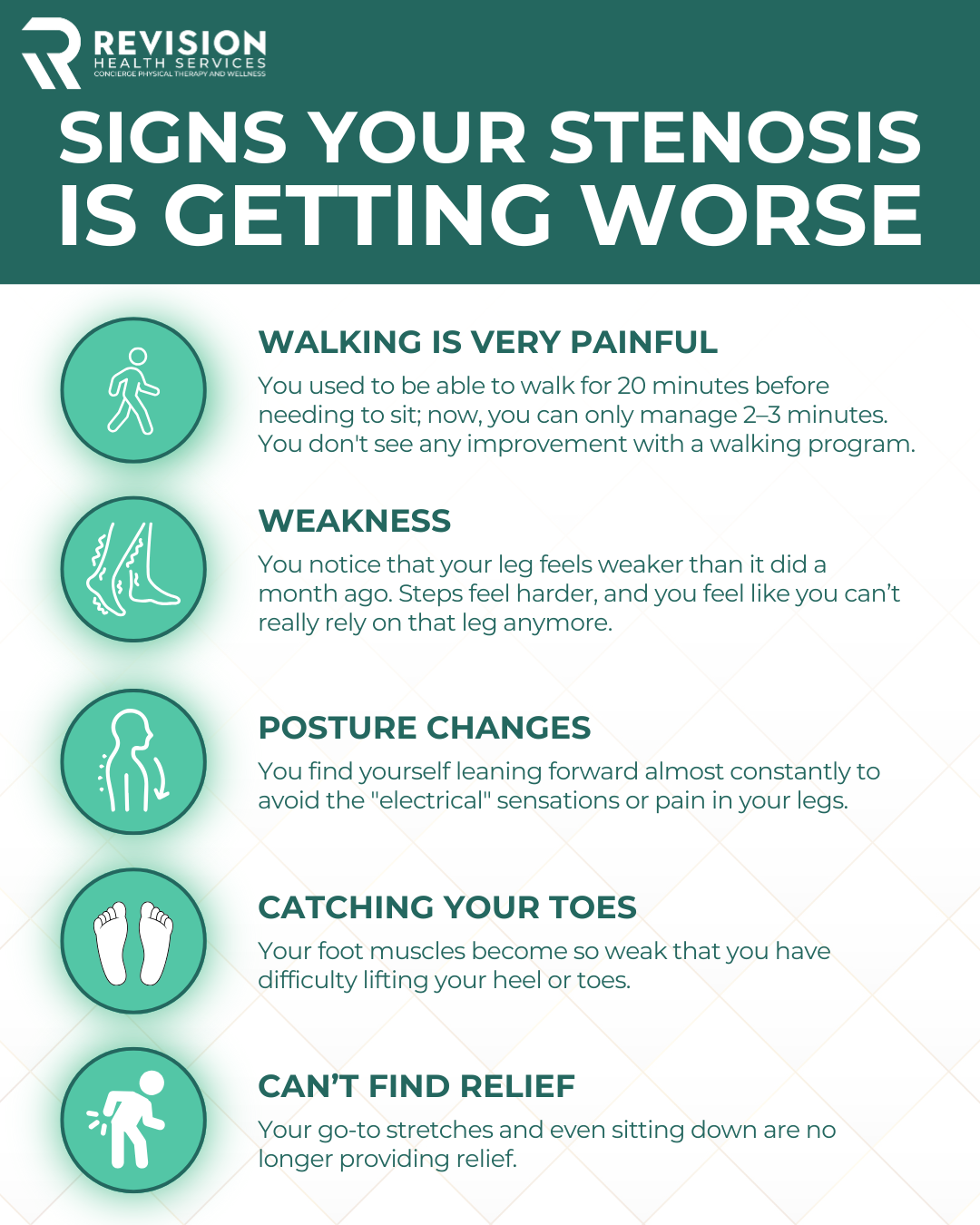
Signs Your Stenosis is Getting Worse
How do you know if your stenosis is getting worse? It isn't just about the pain level; it’s about your muscles and nerves. In my experience, stenosis is "worsening" when nerves become compromised (numbness or weakness) to a level that would need a different treatment and quick!
Note: You don’t have to have all of these at once. Often, it's just one of these things that signals a shift.
- Walking Really Sucks: You used to be able to walk for 20 minutes before needing to sit; now, you can only manage 2–3 minutes. You don't see any improvement with a walking program.
- Weakness: You notice that your leg feels weaker than it did a month ago. Steps feel harder, and you feel like you can’t really rely on that leg anymore.
- Posture Changes: You find yourself leaning forward almost constantly to avoid the "electrical" sensations or pain in your legs.
- Catching Your Toes: Your foot muscles become so weak that you have difficulty lifting your heel or toes.
- Can’t Find Relief: Your go-to stretches and even sitting down are no longer providing relief.
Symptoms of Advanced or Worsening Spinal Stenosis
The L4-L5 and L5-S1 levels are the "workhorses" of the lower back. Because they endure the most wear and tear, they are the most common sites for severe narrowing (stenosis). These can be tested with a clinical examination that a PT can easily perform. Don’t rely on imaging alone!
L4-L5: The "Foot Drop" Level
When L4-L5 stenosis becomes severe, it affects the L5 nerve root.
- The Warning Sign: You may notice tripping over the edge of a rug or your foot "slaps" the ground when you walk. This is due to weakness in the muscles that lift your foot.
- What it feels like: Numbness that travels across the top of the foot and into the big toe.
- Pain: A line of pain traveling from the back of the leg down to the big toe.
L5-S1: The "Push-Off" Muscles
Severe narrowing here affects the S1 nerve root, which provides the motor power needed to push off the ground during walking.
- The Warning Sign: Difficulty standing up on your tiptoes or a feeling that your calf muscle is "soft" or wasting away (atrophy).
- What it feels like: Pain or burning that travels down the back of the calf and into the pinky toe.
Leg Numbness
Portions of your leg or foot feel numbness or very different than they did in the past. This is expsicllay worse after doing an activity that makes your pain worse such as walking.
Fasciculations
This is one that isn't talked about a lot! It's when you have contractions in your calf that are not controlled by you. You may notice that you are cramping at night as well. Have someone record a video of your calf muscles when you are laying on your belly or in bend. Yow may see that htey are twitching and you can't control it. Those are fasciculations and can be sign that your nerves from your back are not happy. You should be stretching them and healing your sciatic nerve. Here is how to do that.
Red Flags That Need Immediate Attention
There is a difference between "severe stenosis" and a "medical emergency." As a PT, I am always screening for Cauda Equina Syndrome. This happens when the bundle of nerves at the end of the spinal cord is so compressed that vital functions are interrupted.
Cauda Equina Syndrome Warning that
Seek immediate medical attention if you experience:
- Saddle Anesthesia: Numbness in the groin, buttocks, or inner thighs (where you would touch a saddle).
- Bowel or Bladder Changes: Sudden inability to go or completely void.
- Sudden Sexual Dysfunction: A new and total loss of function.
- Progressive Motor Loss: Rapidly losing the ability to move your legs or feet.
Treatment for Severe Stenosis: Injections, Surgery, and Conservative Care
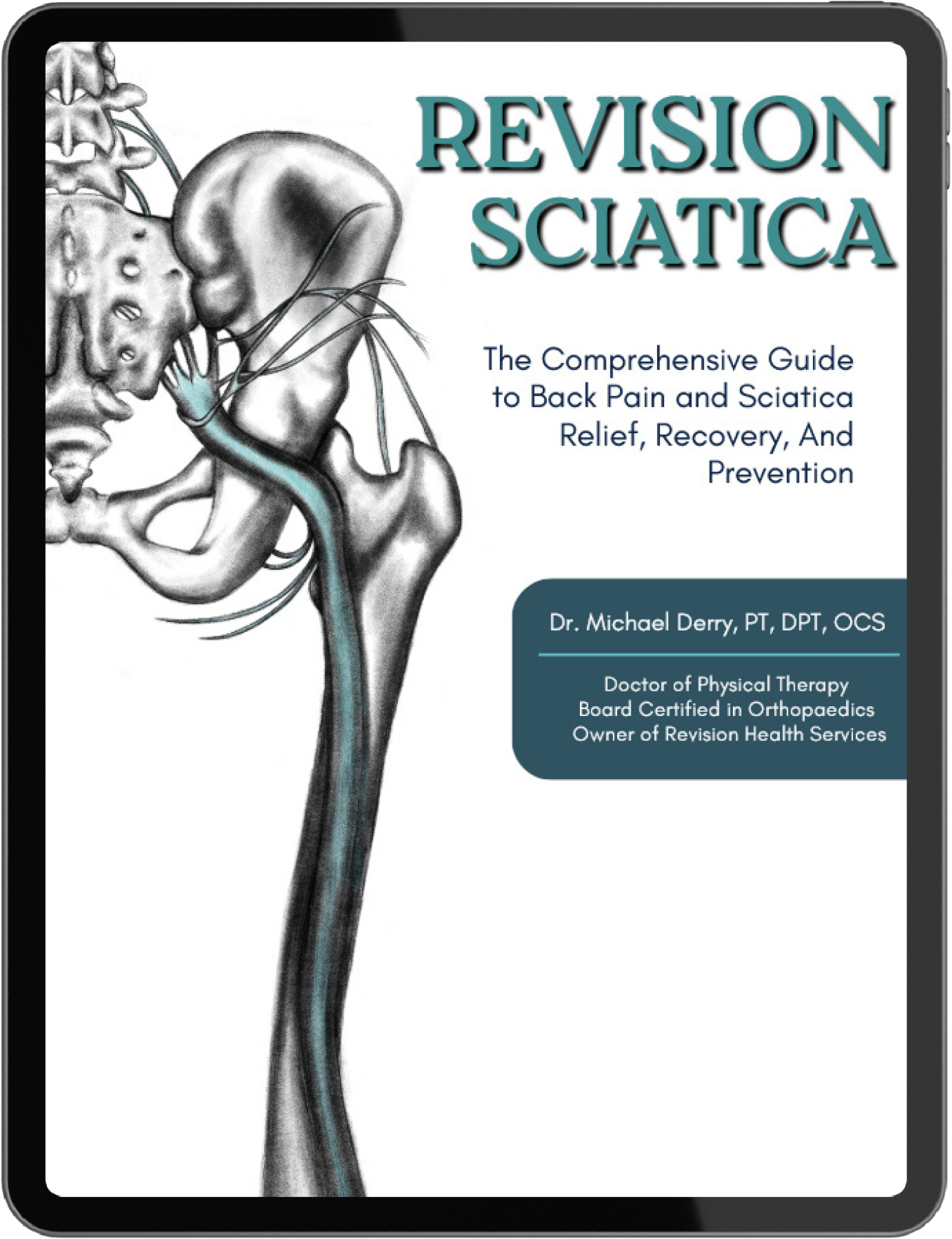
When spinal stenosis symptoms become advanced, patients often ask, "Is it time for surgery?" In my book, Revision Sciatica, I emphasize that the goal is always to improve nerve health and tissue tolerance before considering surgery—provided you don't have the red flags discussed above.
Injections and Surgery Considerations
While research (Genevay & Atlas, 2010) shows that epidural steroid injections may provide short-term relief, they do not "fix" the narrowing. However, if you have a trip coming up or simply can't find relief, they can be a helpful tool.
I often use injections as a diagnostic tool. Using a numbing agent like lidocaine helps confirm if that specific area is truly the source of your pain. This is a great indicator of whether surgery will be successful. I always encourage my clients to try an injection before surgery to "confirm the target."
Surgery (like a laminectomy or decompression) is often considered when:
- Conservative care has failed for more than 6 months.
- There is a clear, progressive neurological deficit (like foot drop).
- The "quality of life" cost of not walking outweighs the surgical risks.
- You've confirmed relief with a diagnostic injection.
Conservative Relief Techniques
Even with severe stenosis, I have seen patients improve significantly using:
Traction: Gently "opening" the space to give nerves breathing room.
TENS: Using TENS for pain relief
Flexion-Based Movement: exercises to keep the spinal canal open
My Perspective: Finding a Way Forward
"When I work with my clients, the goal isn't just to look at the MRI; it's to see how we can improve their nerve health and pain. I have seen this work even in 'severe' cases—when we learn your body and heal the nerve, things really change." — Dr. Michael Derry, PT
In my experience, your body is incredibly adaptable. Even with severe stenosis, we can use techniques like nerve gliding and specific decompression movements to help you regain your independence.
Take the Next Step Toward Relief
FREE RESOURCE: Not sure if your pain is coming from a disc or bony stenosis? Take my Sciatica Quiz to figure it out.
THE REVISION SCIATICA BOOK: For a deep dive into treating severe nerve pain, including my specific protocols for TENS, traction, and nerve health, get the 8-week pathway here.
Summary
While a diagnosis of “severe” spinal stenosis can feel overwhelming, it’s important to remember that your body’s capacity to heal and adapt often goes far beyond what an MRI can show. By recognizing key warning signs—and focusing on improving nerve health and tissue tolerance, many people are able to manage symptoms and regain function. Whether through conservative strategies like traction and TENS or carefully considering advanced treatments, having a clear, supportive plan can make all the difference on your path back to confident, pain-free movement.
If you have been told you have "severe" spinal stenosis, the first thing I want you to do is take a deep breath. I see patients every day who have been told their imaging looks "terrible" and that their arthritis is causing severe stenosis, yet they are still able to find relief and improve their quality of life.
Remember: an MRI is just a snapshot in time. I call these findings "wrinkles on the inside." While the word "severe" doesn’t sound great, it describes the structure of your spine, not your function or your future. However, when stenosis reaches an advanced stage—specific warning signs warrant close monitoring.
Signs Your Stenosis is Getting Worse
How do you know if your stenosis is getting worse? It isn't just about the pain level; it’s about your muscles and nerves. In my experience, stenosis is "worsening" when nerves become compromised (numbness or weakness) to a level that would need a different treatment and quick!
Note: You don’t have to have all of these at once. Often, it's just one of these things that signals a shift.
- Walking Really Sucks: You used to be able to walk for 20 minutes before needing to sit; now, you can only manage 2–3 minutes. You don't see any improvement with a walking program.
- Weakness: You notice that your leg feels weaker than it did a month ago. Steps feel harder, and you feel like you can’t really rely on that leg anymore.
- Posture Changes: You find yourself leaning forward almost constantly to avoid the "electrical" sensations or pain in your legs.
- Catching Your Toes: Your foot muscles become so weak that you have difficulty lifting your heel or toes.
- Can’t Find Relief: Your go-to stretches and even sitting down are no longer providing relief.
Symptoms of Advanced or Worsening Spinal Stenosis
The L4-L5 and L5-S1 levels are the "workhorses" of the lower back. Because they endure the most wear and tear, they are the most common sites for severe narrowing (stenosis). These can be tested with a clinical examination that a PT can easily perform. Don’t rely on imaging alone!
L4-L5: The "Foot Drop" Level
When L4-L5 stenosis becomes severe, it affects the L5 nerve root.
- The Warning Sign: You may notice tripping over the edge of a rug or your foot "slaps" the ground when you walk. This is due to weakness in the muscles that lift your foot.
- What it feels like: Numbness that travels across the top of the foot and into the big toe.
- Pain: A line of pain traveling from the back of the leg down to the big toe.
L5-S1: The "Push-Off" Muscles
Severe narrowing here affects the S1 nerve root, which provides the motor power needed to push off the ground during walking.
- The Warning Sign: Difficulty standing up on your tiptoes or a feeling that your calf muscle is "soft" or wasting away (atrophy).
- What it feels like: Pain or burning that travels down the back of the calf and into the pinky toe.
Leg Numbness
Portions of your leg or foot feel numbness or very different than they did in the past. This is expsicllay worse after doing an activity that makes your pain worse such as walking.
Fasciculations
This is one that isn't talked about a lot! It's when you have contractions in your calf that are not controlled by you. You may notice that you are cramping at night as well. Have someone record a video of your calf muscles when you are laying on your belly or in bend. Yow may see that htey are twitching and you can't control it. Those are fasciculations and can be sign that your nerves from your back are not happy. You should be stretching them and healing your sciatic nerve. Here is how to do that.
Red Flags That Need Immediate Attention
There is a difference between "severe stenosis" and a "medical emergency." As a PT, I am always screening for Cauda Equina Syndrome. This happens when the bundle of nerves at the end of the spinal cord is so compressed that vital functions are interrupted.
Cauda Equina Syndrome Warning that
Seek immediate medical attention if you experience:
- Saddle Anesthesia: Numbness in the groin, buttocks, or inner thighs (where you would touch a saddle).
- Bowel or Bladder Changes: Sudden inability to go or completely void.
- Sudden Sexual Dysfunction: A new and total loss of function.
- Progressive Motor Loss: Rapidly losing the ability to move your legs or feet.
Treatment for Severe Stenosis: Injections, Surgery, and Conservative Care
When spinal stenosis symptoms become advanced, patients often ask, "Is it time for surgery?" In my book, Revision Sciatica, I emphasize that the goal is always to improve nerve health and tissue tolerance before considering surgery—provided you don't have the red flags discussed above.
Injections and Surgery Considerations
While research (Genevay & Atlas, 2010) shows that epidural steroid injections may provide short-term relief, they do not "fix" the narrowing. However, if you have a trip coming up or simply can't find relief, they can be a helpful tool.
I often use injections as a diagnostic tool. Using a numbing agent like lidocaine helps confirm if that specific area is truly the source of your pain. This is a great indicator of whether surgery will be successful. I always encourage my clients to try an injection before surgery to "confirm the target."
Surgery (like a laminectomy or decompression) is often considered when:
- Conservative care has failed for more than 6 months.
- There is a clear, progressive neurological deficit (like foot drop).
- The "quality of life" cost of not walking outweighs the surgical risks.
- You've confirmed relief with a diagnostic injection.
Conservative Relief Techniques
Even with severe stenosis, I have seen patients improve significantly using:
Traction: Gently "opening" the space to give nerves breathing room.
TENS: Using TENS for pain relief
Flexion-Based Movement: exercises to keep the spinal canal open
My Perspective: Finding a Way Forward
"When I work with my clients, the goal isn't just to look at the MRI; it's to see how we can improve their nerve health and pain. I have seen this work even in 'severe' cases—when we learn your body and heal the nerve, things really change." — Dr. Michael Derry, PT
In my experience, your body is incredibly adaptable. Even with severe stenosis, we can use techniques like nerve gliding and specific decompression movements to help you regain your independence.
Take the Next Step Toward Relief
FREE RESOURCE: Not sure if your pain is coming from a disc or bony stenosis? Take my Sciatica Quiz to figure it out.
THE REVISION SCIATICA BOOK: For a deep dive into treating severe nerve pain, including my specific protocols for TENS, traction, and nerve health, get the 8-week pathway here.
Summary
While a diagnosis of “severe” spinal stenosis can feel overwhelming, it’s important to remember that your body’s capacity to heal and adapt often goes far beyond what an MRI can show. By recognizing key warning signs—and focusing on improving nerve health and tissue tolerance, many people are able to manage symptoms and regain function. Whether through conservative strategies like traction and TENS or carefully considering advanced treatments, having a clear, supportive plan can make all the difference on your path back to confident, pain-free movement.

%20Blog%20thumbnails.jpg)


