



We want to build strength without worsening sciatica, so resistance bands are a great way to do that. You can absolutely build strength and relieve nerve pain by using resistance bands to safely load your hips and core while avoiding heavy spinal compression.
In this blog, I will show you exactly which exercises to do, how to perform them, and the perfect reps and sets to build true resiliency at home.
Can You Safely Use Resistance Bands With Sciatica
Yes, you can safely use resistance bands when recovering from sciatica. When I work with my clients I frequently use resistance bands because they provide consistent, safe tension without placing heavy downward compression on the spine. This allows us to effectively strengthen the lumbopelvic complex while protecting sensitive nerves.
Resistance bands are cheap, versatile, and incredible for improving tissue tolerance in your back and hips.
If you are unsure if your leg pain is actually sciatica, I highly recommend starting with my Free Sciatica Quiz to pinpoint the exact cause of your discomfort.
Resistance Band Workout For Sciatica + Warm up!
Before you jump right into the workout, you must warm up the nervous system. I always remind my patients that motion is lotion for your joints and your nerves. We want to gently flirt with the pain to encourage blood flow and ensure the nerve can glide freely before we add any resistance. Nerve glides are uncomfortable but not harmful.
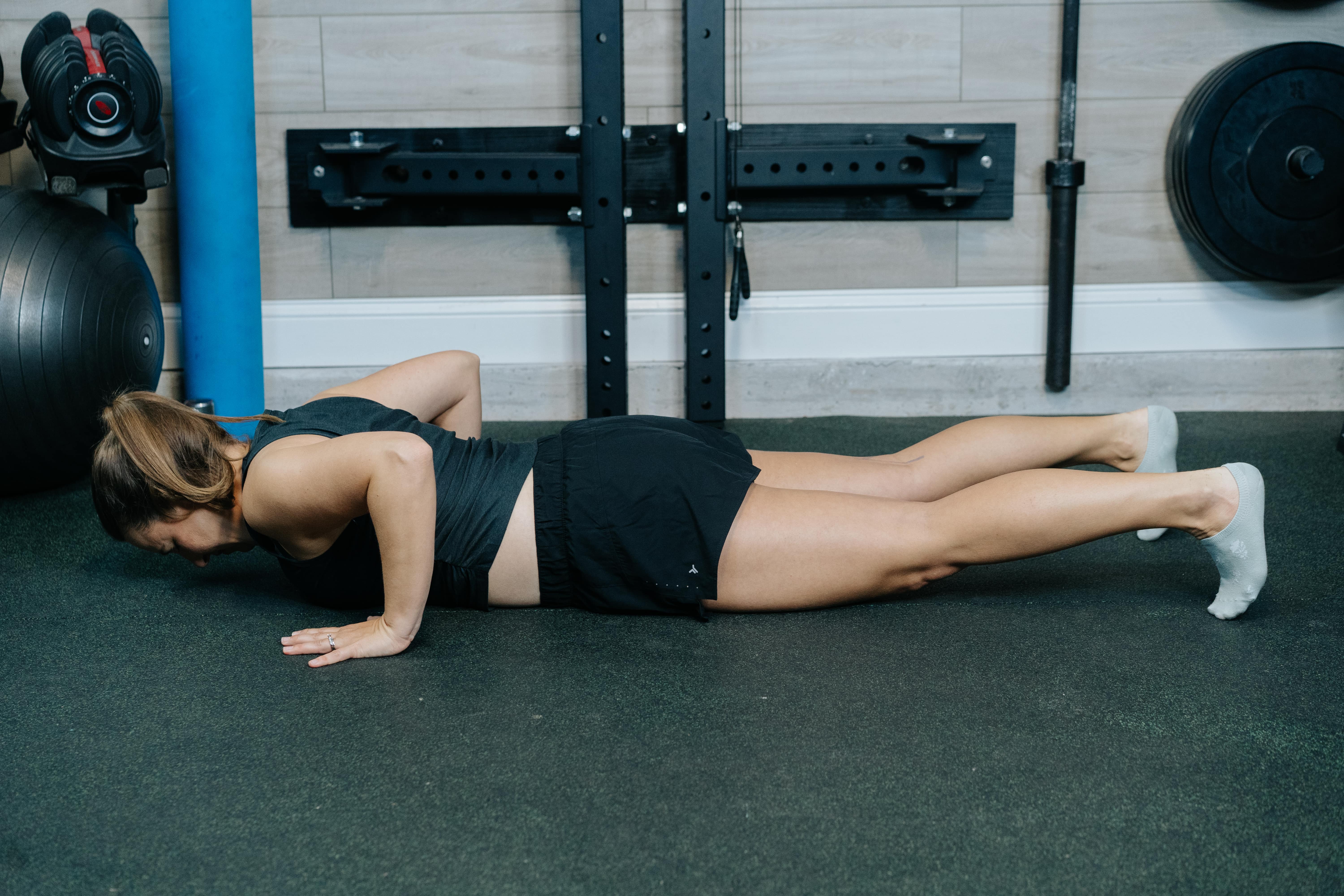
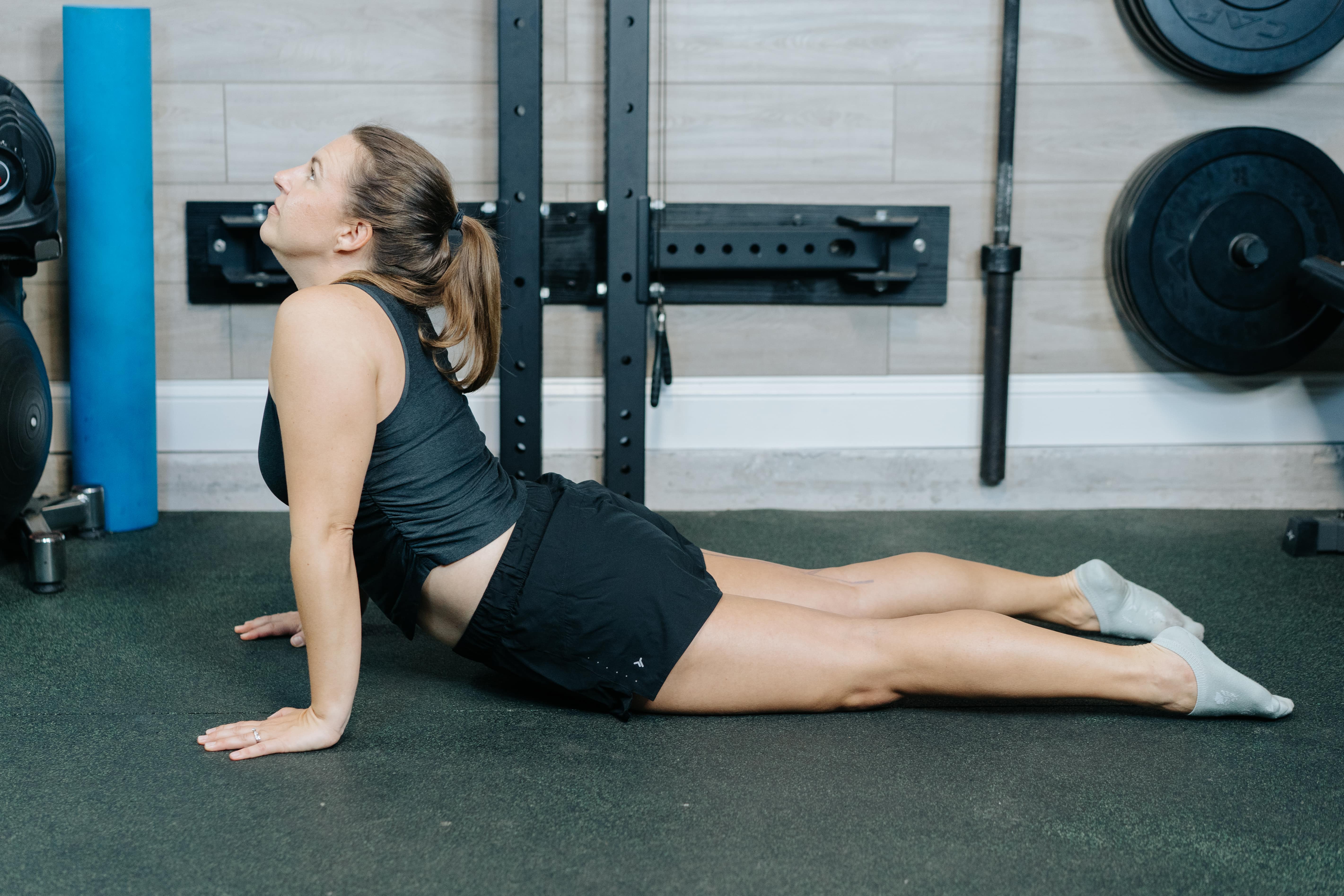
Warm Up: The Press Up To Downward Dog With Nerve Glide
This dynamic movement primes the spine for exercise by combining gentle extension with a powerful nerve glide.
- Start by lying on your stomach and gently pressing your chest upward while keeping your hips on the floor. Hold this press for just a second to let your lower back adapt.
- From there, transition to your hands and knees, tuck your toes, and press your hips up and back into a downward dog position. You will feel a strong pull down the back of your legs the higher you are, which is the sciatic nerve stretching.
- Return to the starting position immediately, as we only want to hold this for 1 to 2 seconds for a total of 5-10 repetitions.
We always want to strengthen the muscles that attach around your spine and hips. What works with my patients is focusing on standing band exercises that build endurance and core stability. Here are five safe, highly effective movements you can do right in your living room.
Here are the bands you will need for this workout:
As an Amazon Associate, I earn from qualifying purchases at no extra cost to you!
Resistance Bands: https://amzn.to/4cOqkcf Looped Resistance Bands: https://amzn.to/4epaFRR
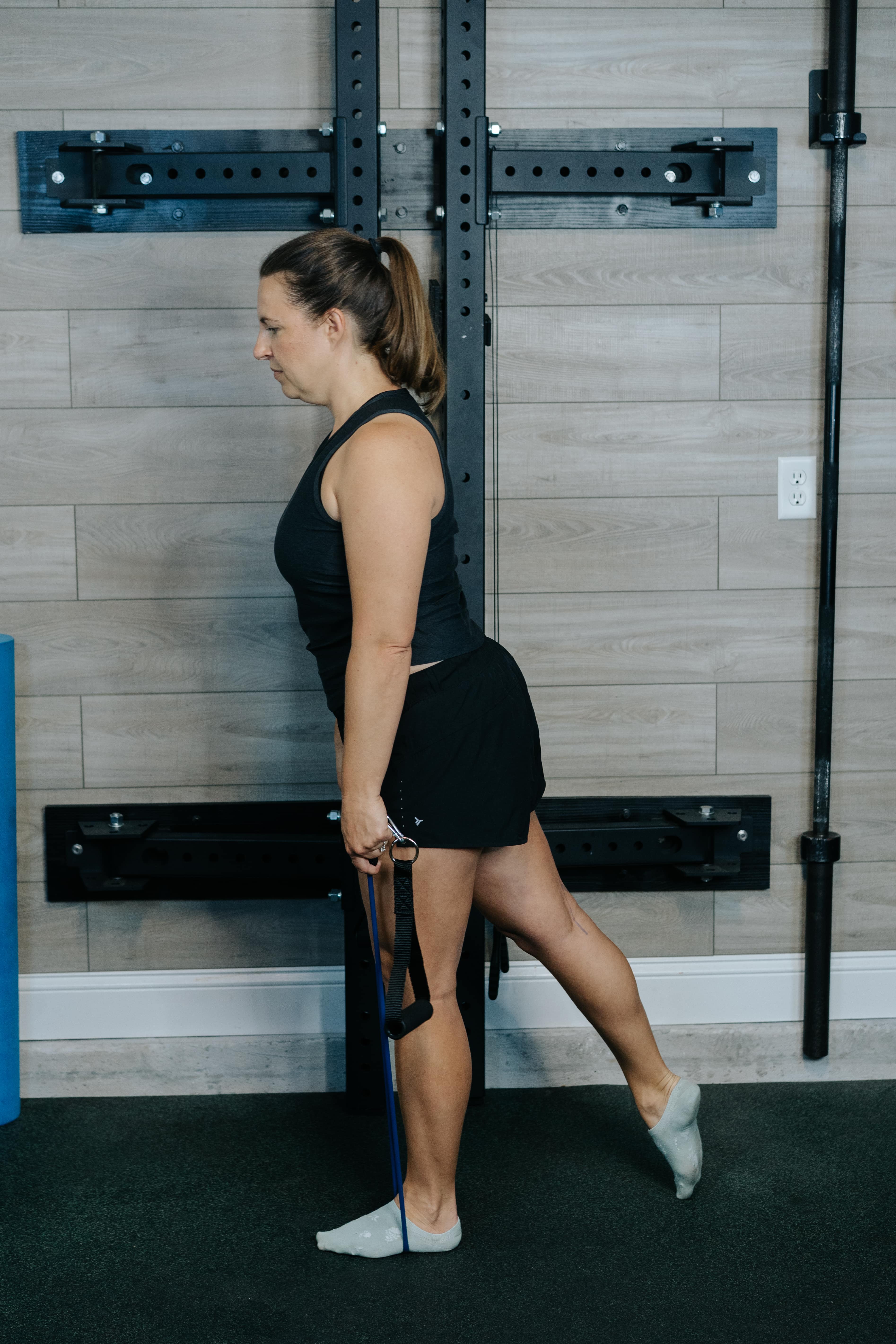
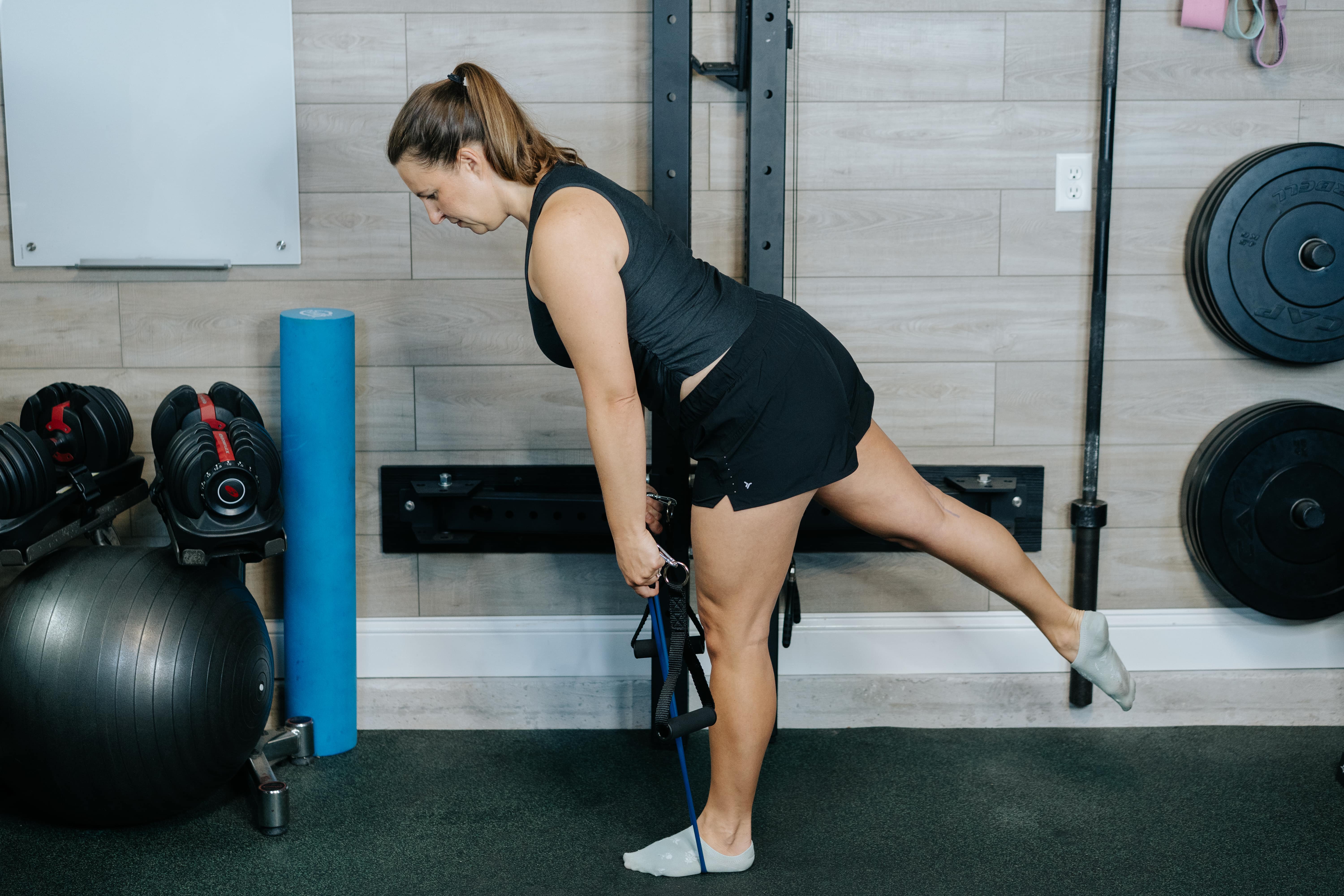
Banded Romanian Deadlifts For Sciatic Nerve Gliding
The banded Romanian Deadlift (RDL) is a staple for strengthening your posterior chain while dynamically gliding the sciatic nerve. Wrap the ends of a long resistance band around your hands and step on the middle of the band with your feet shoulder-width apart. Stand tall so you feel tension in the band right from the start.
- Keep your back very straight, keep a slight bend in your knees, and push your hips backward as if you are shutting a car door with your glutes.
- You will feel a strong stretch in your hamstrings and potentially a nerve pull.
- Stop the moment you feel that pull, and then squeeze your glutes to return to a tall standing position.
- Dosage: Complete 2 sets of 12 repetitions.
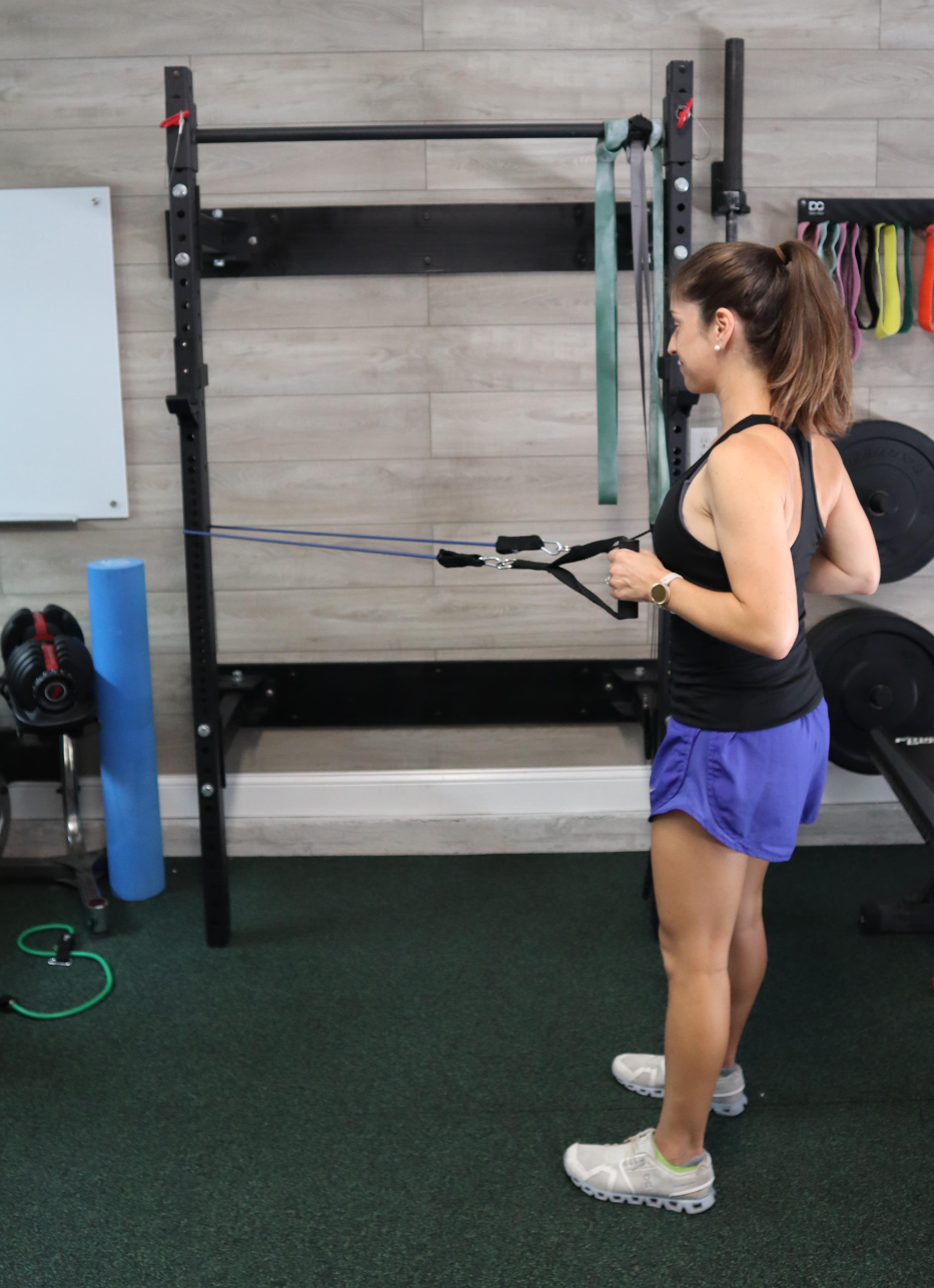
Standing Banded Row For Back Strength
The standing row is fantastic for strengthening the middle trapezius and rhomboids, which are vital for maintaining an upright posture.
- Anchor your resistance band to a sturdy door at about chest height. Grab the handles, step back until you feel tension, and keep your knees slightly bent in a sport-ready stance.
- Keeping your chest proud, pull your elbows back, straightening them past your sides. Think about actively pinching your shoulder blades together at the very end of the movement. Slowly control the band as your arms return to the starting position, keeping your muscles engaged throughout.
- Dosage: Complete 2 to 3 sets of 12 repetitions.
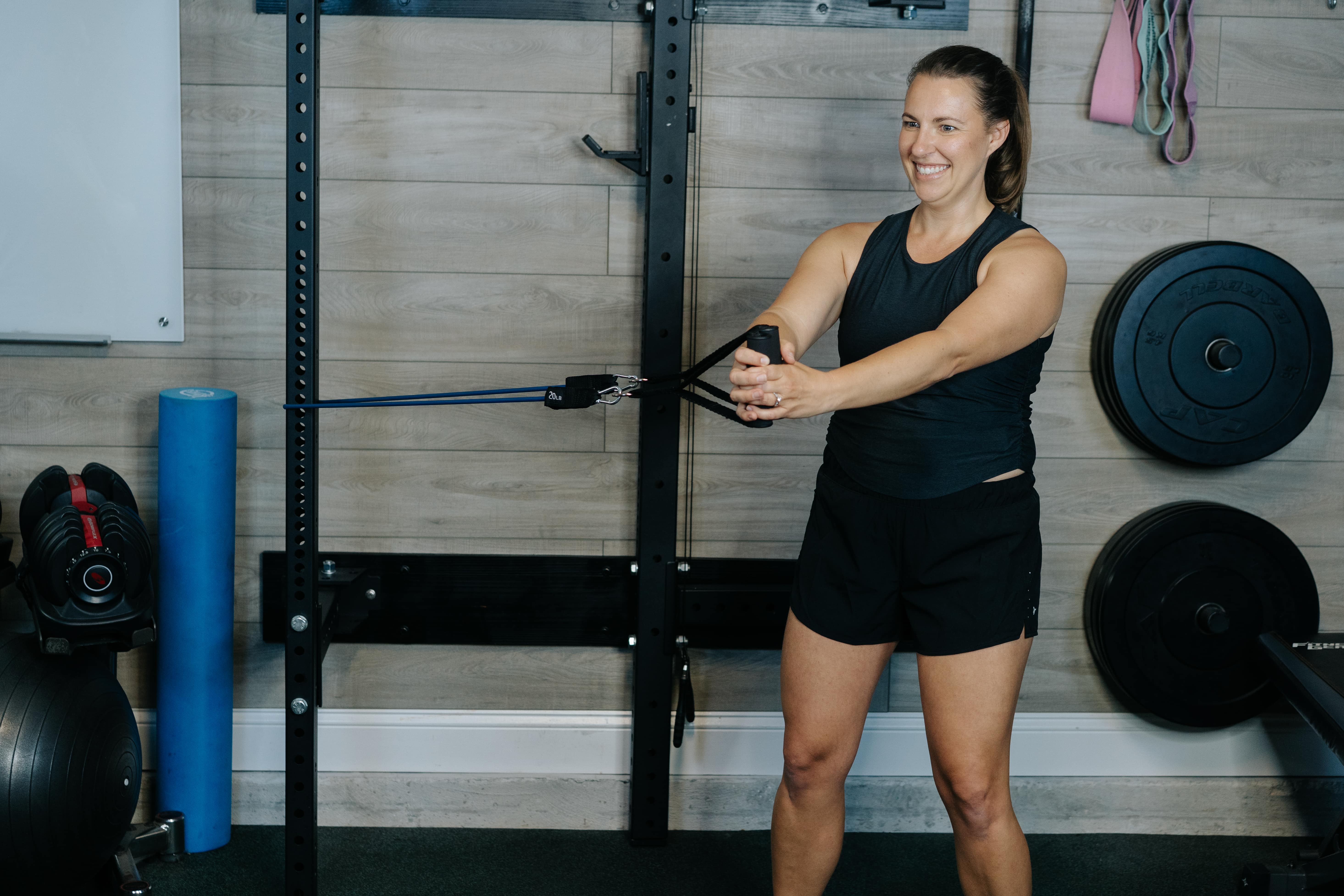
The Pallof Press To Build A Resilient Core
The Pallof Press is an incredible anti-rotation exercise that builds a resilient core without bending or twisting your spine.
- Anchor the band at chest height and stand sideways to the anchor point. Grab the band with both hands and hold it directly against your chest, then step away until you feel strong tension.
- Get into an athletic stance with your knees slightly bent, then press the band straight out in front of you. The band will try to pull you and rotate your spine toward the door, but your core must fight to keep your body perfectly still.
- Hold your arms extended for two seconds, then bring your hands back to your chest.
- Dosage: Complete 20 repetitions on each side with a 2-second hold on every press.
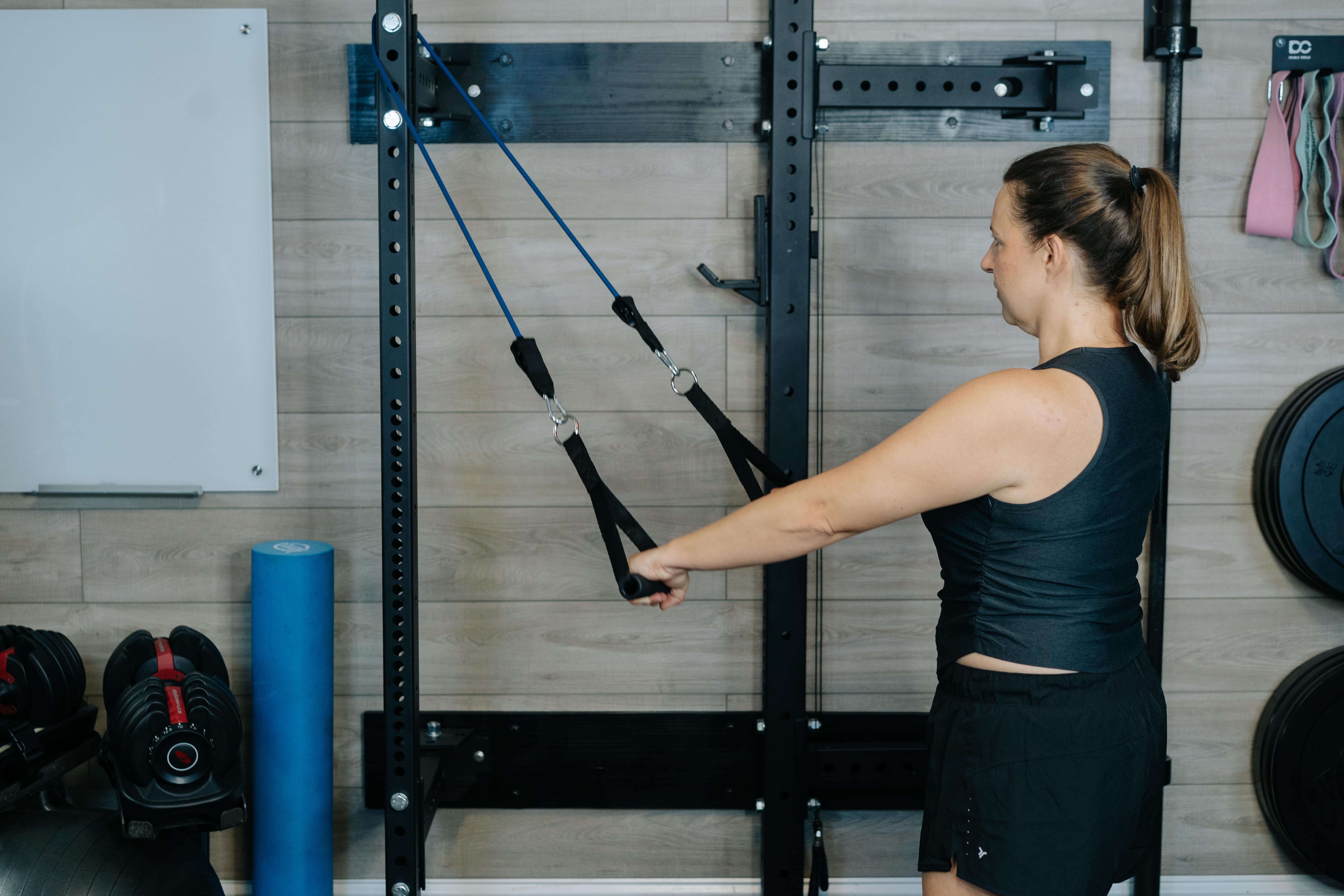
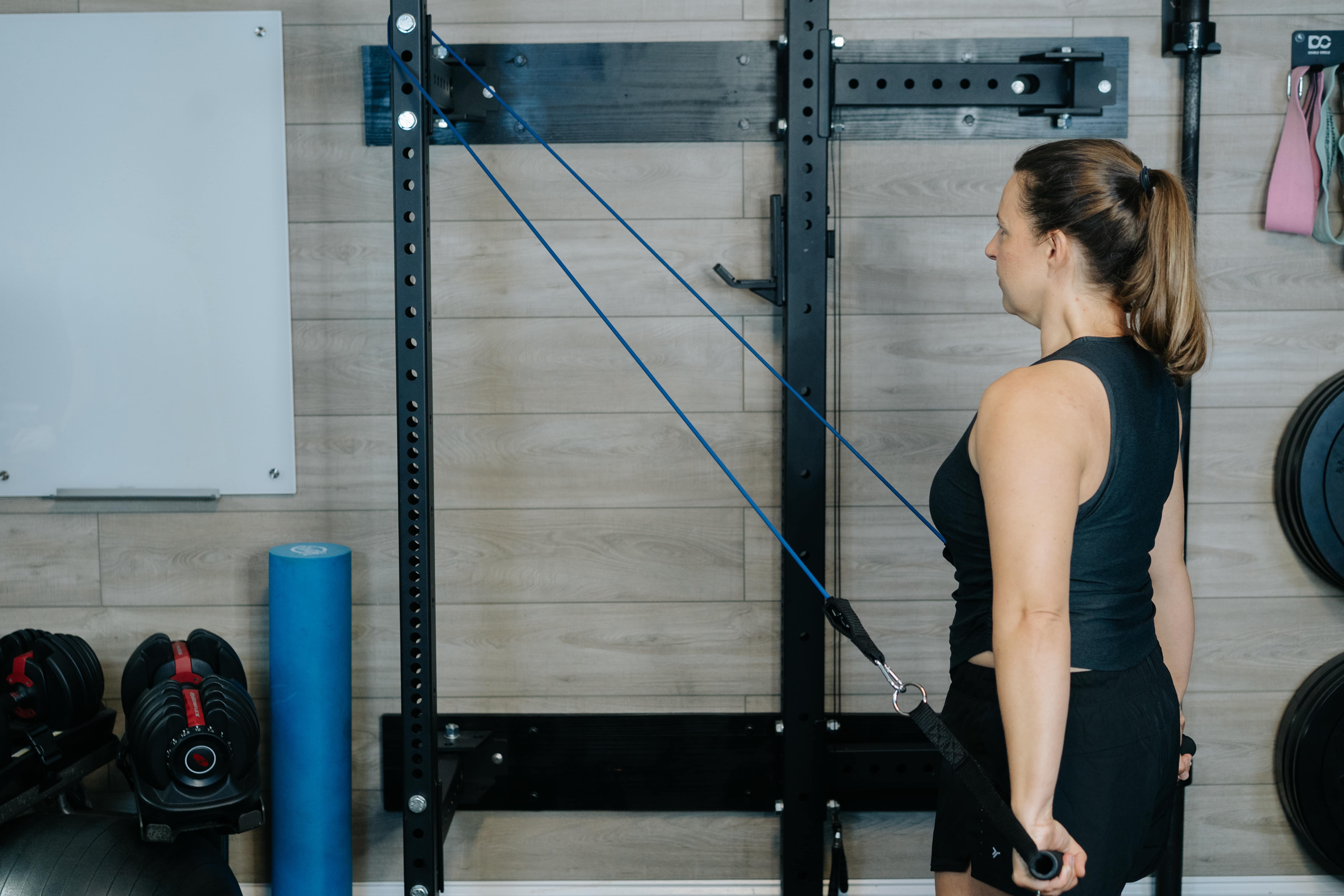
Standing Shoulder Extensions For Total Body Strength
This exercise targets your latissimus dorsi, which is a massive back muscle that attaches directly to your lower spine and pelvis.
- Anchor the band high up on a door and grab one handle in each hand. Stand tall, engage your core, and start with your arms reaching forward at roughly face height.
- Keeping your arms completely straight, pull your hands firmly down to your sides. You will feel your upper back, the back of your arms, and your core all working together to stabilize your posture.
- Slowly return your hands to the starting position without letting the band aggressively snap you forward.
- Dosage: Complete 2 to 3 sets of 12 repetitions.
Banded Side Steps For Glute Strength
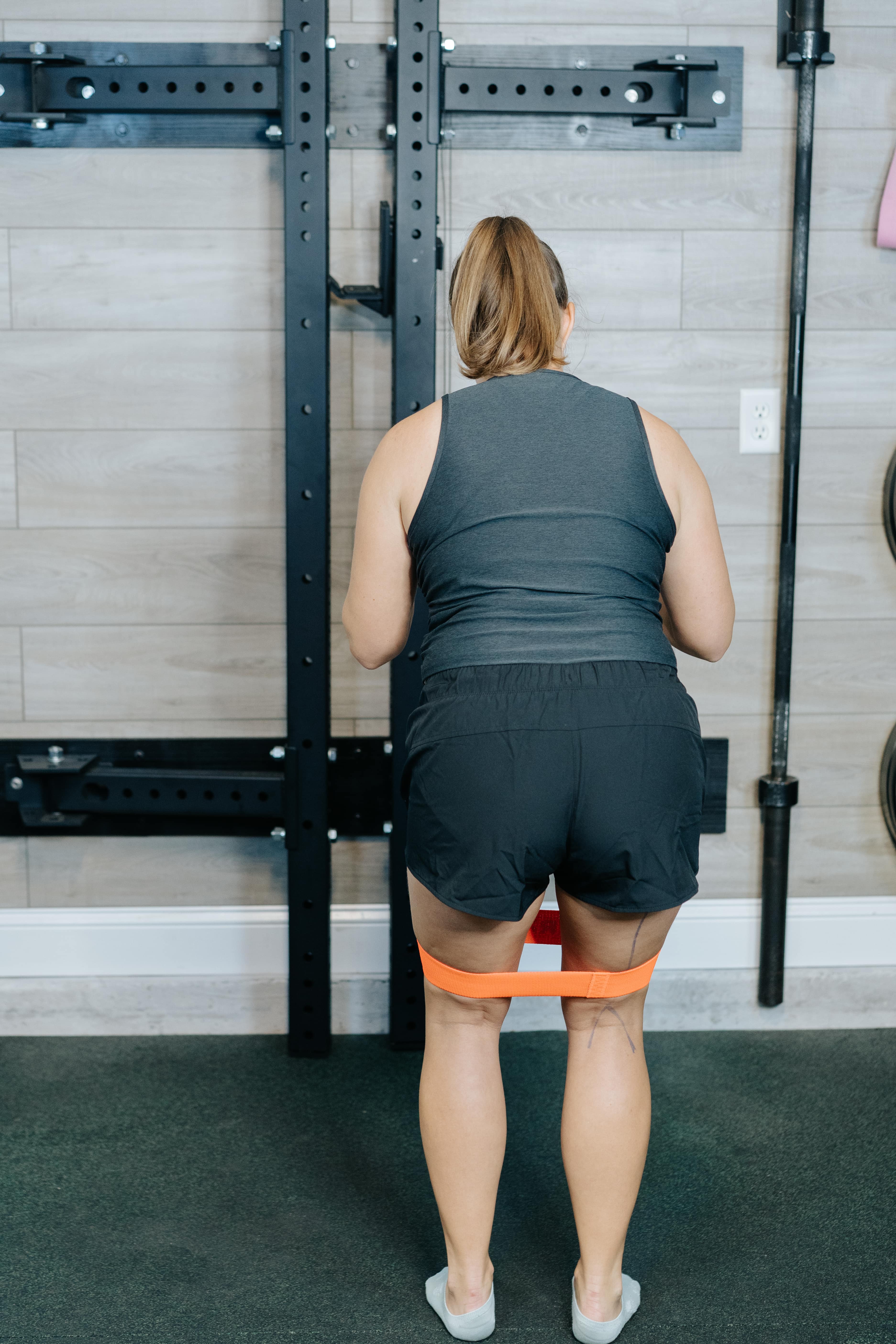
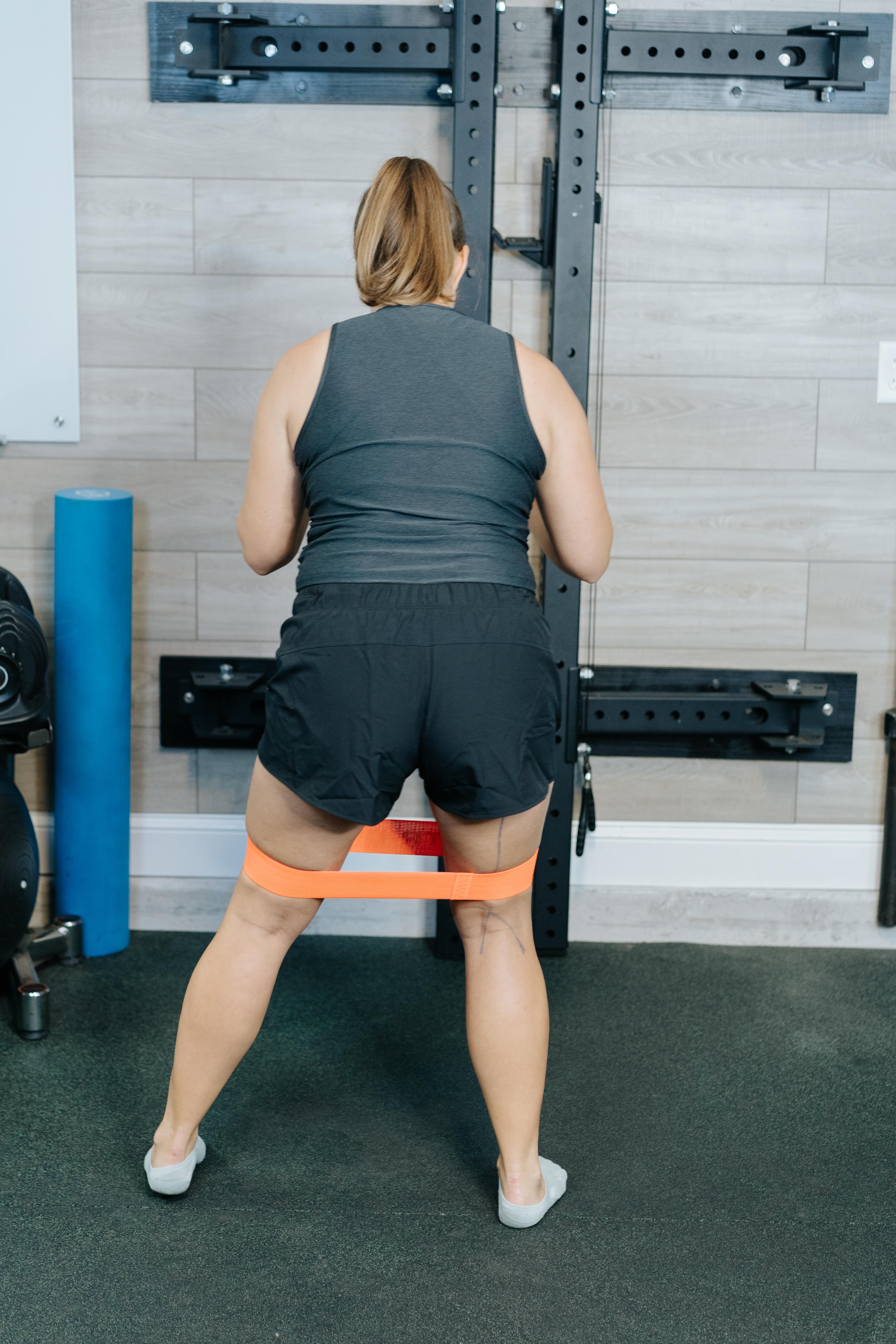
It’s always a good idea to have strong glutes. Take a small, circular resistance band and place it completely around both of your legs, resting just below your kneecaps.
- Assume a sport-ready position by slightly bending your hips and knees while keeping your chest up.
- Take a small, controlled step to the side with your lead foot, and then let your trailing foot follow. You do not want your feet to touch between steps; always keep tension on the band. Keep stepping in one direction until your outer glute feels a deep burn, and then reverse directions.
- Dosage: Complete 2 sets of 20 steps in each direction.
Utilizing The SPARK Program For Sciatica Relief
In my 10+ years of PT experience, I have found that recovering from nerve pain requires much more than strengthening. Strength is great, but when you add nerve-focused exercises and education, real long-term recovery happens.
That is exactly why I created the SPARK program, which stands for Strengthening, Pain relief, Activating the nerve, Regaining mobility, and Keep walking. It is a structured framework designed to help you avoid risky surgeries and get your life back.
Remember, age-related changes on imaging are entirely normal and are simply wrinkles on the inside. You are not your MRI, and focusing on improving tissue tolerance with the SPARK protocol is the absolute best way to build a resilient body. If you are tired of guessing what to do next, grab a copy of my Revision Sciatica Book for an exact, step-by-step roadmap to recovery.
Teaming Up With A Movement Professional
If you try this sciatica safe workout and find that your pain is worsening or moving further down your leg, it is time to seek guidance. You should team up with a conservative provider, like a physical therapist, to ensure you are on the right path. We will watch how you move, correct your form, and help you find the exact exercises your body is craving.
Summary
Resistance bands are a safe and effective way to build strength with sciatica because they strengthen the hips, core, and back without placing excessive compression on the spine. This guide explains how to prepare your nervous system with nerve glides and walks through five sciatica-friendly resistance band exercises designed to improve stability, mobility, and tissue tolerance. By combining strengthening with the SPARK framework, you can reduce nerve irritation, build resilience, and support long-term recovery without relying on surgery.
We want to build strength without worsening sciatica, so resistance bands are a great way to do that. You can absolutely build strength and relieve nerve pain by using resistance bands to safely load your hips and core while avoiding heavy spinal compression.
In this blog, I will show you exactly which exercises to do, how to perform them, and the perfect reps and sets to build true resiliency at home.
Can You Safely Use Resistance Bands With Sciatica
Yes, you can safely use resistance bands when recovering from sciatica. When I work with my clients I frequently use resistance bands because they provide consistent, safe tension without placing heavy downward compression on the spine. This allows us to effectively strengthen the lumbopelvic complex while protecting sensitive nerves.
Resistance bands are cheap, versatile, and incredible for improving tissue tolerance in your back and hips.
If you are unsure if your leg pain is actually sciatica, I highly recommend starting with my Free Sciatica Quiz to pinpoint the exact cause of your discomfort.
Resistance Band Workout For Sciatica + Warm up!
Before you jump right into the workout, you must warm up the nervous system. I always remind my patients that motion is lotion for your joints and your nerves. We want to gently flirt with the pain to encourage blood flow and ensure the nerve can glide freely before we add any resistance. Nerve glides are uncomfortable but not harmful.
Warm Up: The Press Up To Downward Dog With Nerve Glide
This dynamic movement primes the spine for exercise by combining gentle extension with a powerful nerve glide.
- Start by lying on your stomach and gently pressing your chest upward while keeping your hips on the floor. Hold this press for just a second to let your lower back adapt.
- From there, transition to your hands and knees, tuck your toes, and press your hips up and back into a downward dog position. You will feel a strong pull down the back of your legs the higher you are, which is the sciatic nerve stretching.
- Return to the starting position immediately, as we only want to hold this for 1 to 2 seconds for a total of 5-10 repetitions.
We always want to strengthen the muscles that attach around your spine and hips. What works with my patients is focusing on standing band exercises that build endurance and core stability. Here are five safe, highly effective movements you can do right in your living room.
Here are the bands you will need for this workout:
As an Amazon Associate, I earn from qualifying purchases at no extra cost to you!
Resistance Bands: https://amzn.to/4cOqkcf Looped Resistance Bands: https://amzn.to/4epaFRR
Banded Romanian Deadlifts For Sciatic Nerve Gliding
The banded Romanian Deadlift (RDL) is a staple for strengthening your posterior chain while dynamically gliding the sciatic nerve. Wrap the ends of a long resistance band around your hands and step on the middle of the band with your feet shoulder-width apart. Stand tall so you feel tension in the band right from the start.
- Keep your back very straight, keep a slight bend in your knees, and push your hips backward as if you are shutting a car door with your glutes.
- You will feel a strong stretch in your hamstrings and potentially a nerve pull.
- Stop the moment you feel that pull, and then squeeze your glutes to return to a tall standing position.
- Dosage: Complete 2 sets of 12 repetitions.
Standing Banded Row For Back Strength
The standing row is fantastic for strengthening the middle trapezius and rhomboids, which are vital for maintaining an upright posture.
- Anchor your resistance band to a sturdy door at about chest height. Grab the handles, step back until you feel tension, and keep your knees slightly bent in a sport-ready stance.
- Keeping your chest proud, pull your elbows back, straightening them past your sides. Think about actively pinching your shoulder blades together at the very end of the movement. Slowly control the band as your arms return to the starting position, keeping your muscles engaged throughout.
- Dosage: Complete 2 to 3 sets of 12 repetitions.
The Pallof Press To Build A Resilient Core
The Pallof Press is an incredible anti-rotation exercise that builds a resilient core without bending or twisting your spine.
- Anchor the band at chest height and stand sideways to the anchor point. Grab the band with both hands and hold it directly against your chest, then step away until you feel strong tension.
- Get into an athletic stance with your knees slightly bent, then press the band straight out in front of you. The band will try to pull you and rotate your spine toward the door, but your core must fight to keep your body perfectly still.
- Hold your arms extended for two seconds, then bring your hands back to your chest.
- Dosage: Complete 20 repetitions on each side with a 2-second hold on every press.
Standing Shoulder Extensions For Total Body Strength
This exercise targets your latissimus dorsi, which is a massive back muscle that attaches directly to your lower spine and pelvis.
- Anchor the band high up on a door and grab one handle in each hand. Stand tall, engage your core, and start with your arms reaching forward at roughly face height.
- Keeping your arms completely straight, pull your hands firmly down to your sides. You will feel your upper back, the back of your arms, and your core all working together to stabilize your posture.
- Slowly return your hands to the starting position without letting the band aggressively snap you forward.
- Dosage: Complete 2 to 3 sets of 12 repetitions.
Banded Side Steps For Glute Strength
It’s always a good idea to have strong glutes. Take a small, circular resistance band and place it completely around both of your legs, resting just below your kneecaps.
- Assume a sport-ready position by slightly bending your hips and knees while keeping your chest up.
- Take a small, controlled step to the side with your lead foot, and then let your trailing foot follow. You do not want your feet to touch between steps; always keep tension on the band. Keep stepping in one direction until your outer glute feels a deep burn, and then reverse directions.
- Dosage: Complete 2 sets of 20 steps in each direction.
Utilizing The SPARK Program For Sciatica Relief
In my 10+ years of PT experience, I have found that recovering from nerve pain requires much more than strengthening. Strength is great, but when you add nerve-focused exercises and education, real long-term recovery happens.
That is exactly why I created the SPARK program, which stands for Strengthening, Pain relief, Activating the nerve, Regaining mobility, and Keep walking. It is a structured framework designed to help you avoid risky surgeries and get your life back.
Remember, age-related changes on imaging are entirely normal and are simply wrinkles on the inside. You are not your MRI, and focusing on improving tissue tolerance with the SPARK protocol is the absolute best way to build a resilient body. If you are tired of guessing what to do next, grab a copy of my Revision Sciatica Book for an exact, step-by-step roadmap to recovery.
Teaming Up With A Movement Professional
If you try this sciatica safe workout and find that your pain is worsening or moving further down your leg, it is time to seek guidance. You should team up with a conservative provider, like a physical therapist, to ensure you are on the right path. We will watch how you move, correct your form, and help you find the exact exercises your body is craving.
Summary
Resistance bands are a safe and effective way to build strength with sciatica because they strengthen the hips, core, and back without placing excessive compression on the spine. This guide explains how to prepare your nervous system with nerve glides and walks through five sciatica-friendly resistance band exercises designed to improve stability, mobility, and tissue tolerance. By combining strengthening with the SPARK framework, you can reduce nerve irritation, build resilience, and support long-term recovery without relying on surgery.

%20Blog%20thumbnails.jpg)

.jpg)
