



Are you dealing with nagging back pain and searching for the best standing lower back stretches to find relief fast? You can easily loosen tight muscles and decompress your spine with simple movements such as the Standing L Stretch, Standing Lumbar Rotations, and the Standing Hip Flexor Stretch. In this blog, I will show you exactly how to perform these exercises at the office or at home to imrpove your discomfort without ever getting on the floor.
This is also helpful for office workers because these exercises will focus on reversing the rigid, hunched posture we hold at a desk all day. If you work from home or in a corporate office, you likely spend hours staring at a screen, which causes your hip flexors and back muscles to become incredibly tight. Recent research has shown that prolonged sitting can be highly detrimental to your musculoskeletal health.
3 Fast And Effective Standing Lower Back Stretches
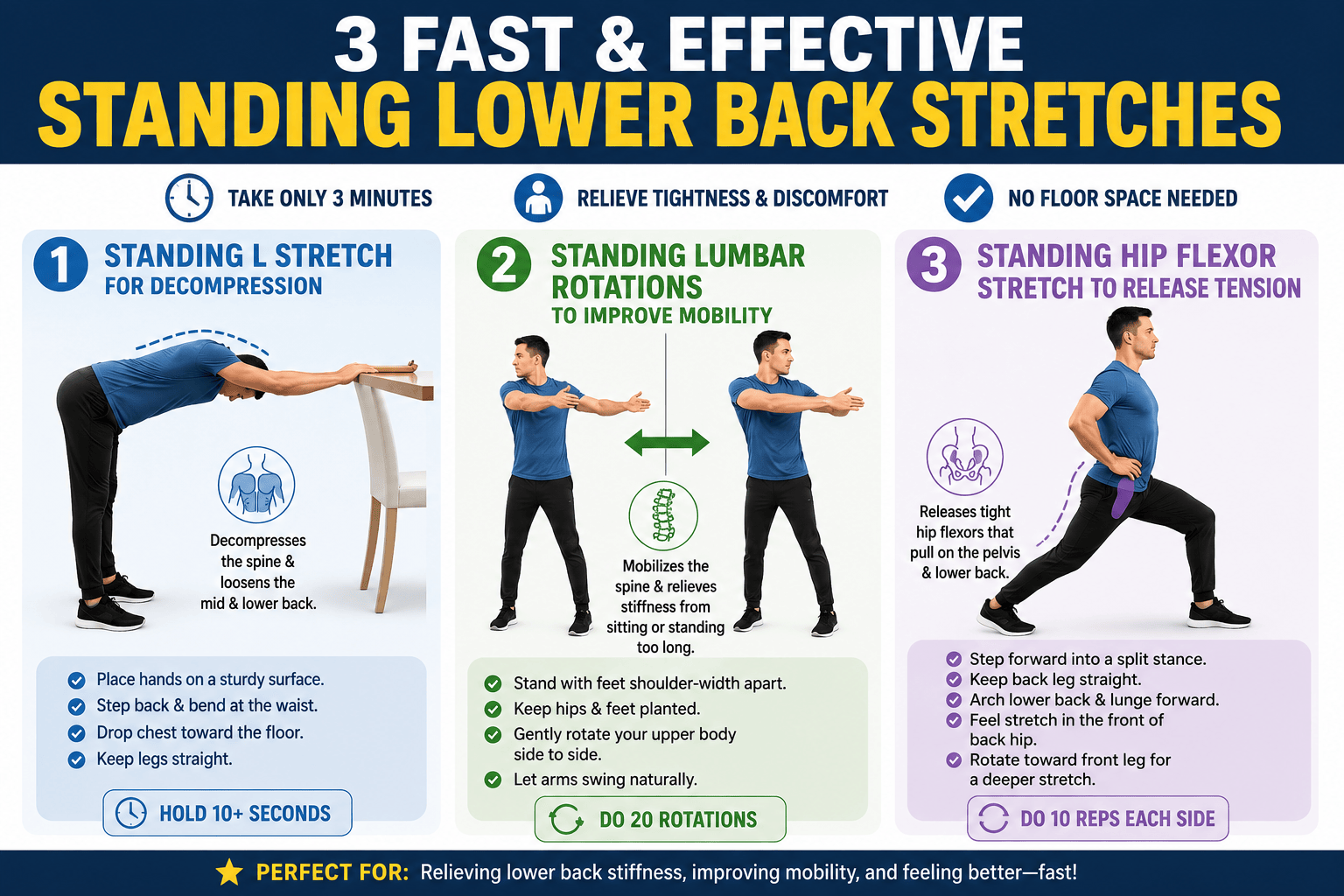
To get fast relief, the three most effective standing lower back stretches are the Standing L Stretch, Standing Lumbar Rotation, and Standing Hip Flexor Stretch. These specific exercises target the spine and hips to reduce discomfort from sitting or standing for too long. They can be performed in just three minutes and require absolutely no floor space. Let us break down exactly how to perform them for maximum benefit.
The Standing L Stretch For Lumbar Decompression
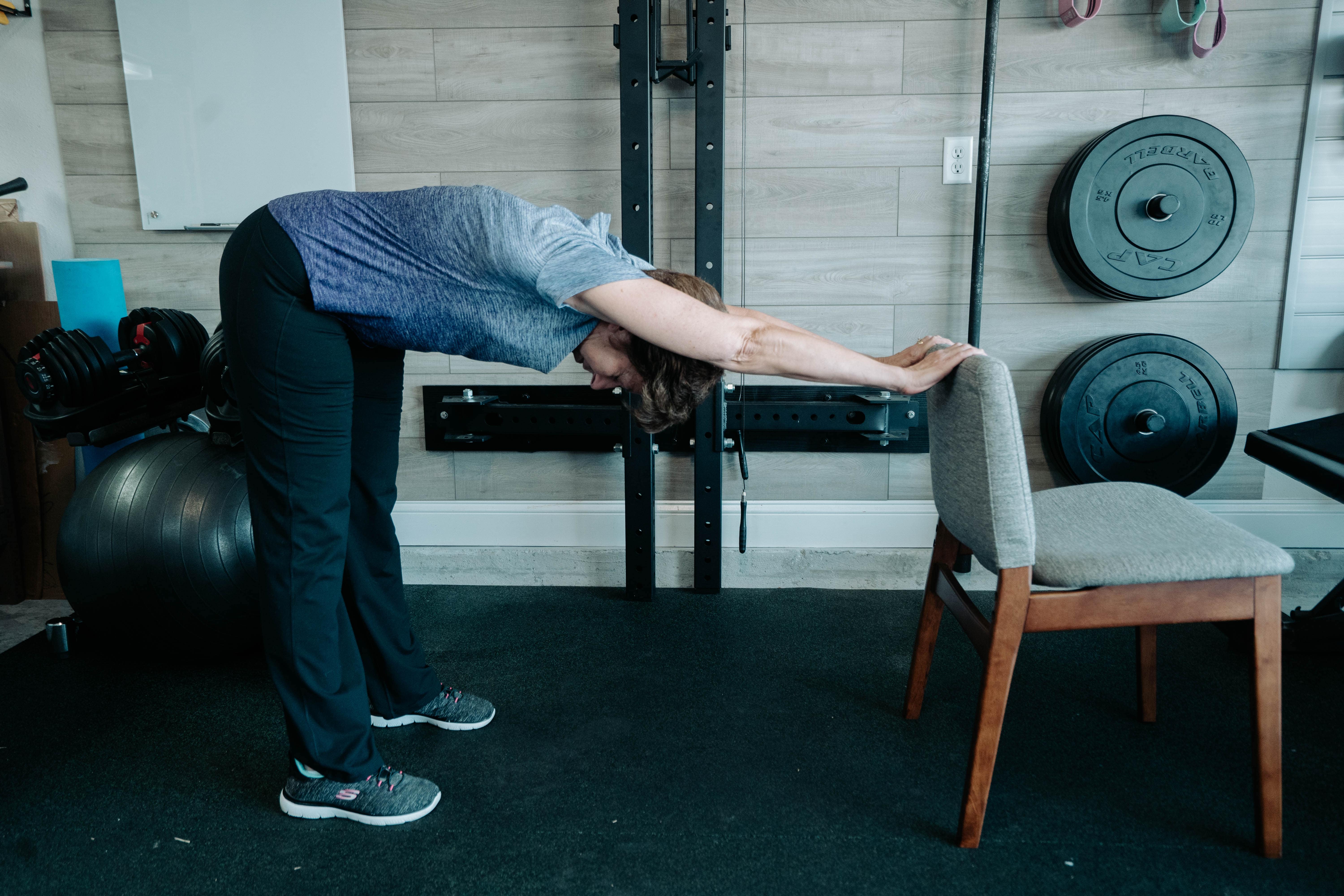
This is often my first recommendation because it uses gravity to safely decompress your spine while simultaneously loosening your mid-back and low back. To begin, find something elevated and sturdy to hold onto, such as the back of an office chair or a countertop. Place your hands palms down on the surface and step your feet back until your arms are fully extended.
Next, bend at the waist, dropping your chest toward the floor until you feel a gentle stretch starting under your armpits and running down your back. Keep your legs straight and hold this position for at least 10 seconds to let the muscles relax. This stretch specifically targets the latissimus dorsi, a massive muscle that connects your upper body directly to your lower back.
Standing Lumbar Rotations To Improve Mobility
Standing lumbar rotations help mobilize the spine and get you out of that rigid, forward-facing posture you hold all day. We usually think about bending forward and backward, but the ability to rotate is just as crucial for everyday activities like reaching for your seatbelt. Start standing with your feet about shoulder-width apart to ensure a solid base.
Keep your hips and feet planted firmly in place while you gently twist your upper body from side to side. Start slow, let your arms swing naturally to use a little physics and momentum, and try doing 20 rotations throughout your day. This movement actively nourishes the facet joints in your spine to quickly eliminate that stiff feeling.

Standing Hip Flexor Stretch To Release Tension
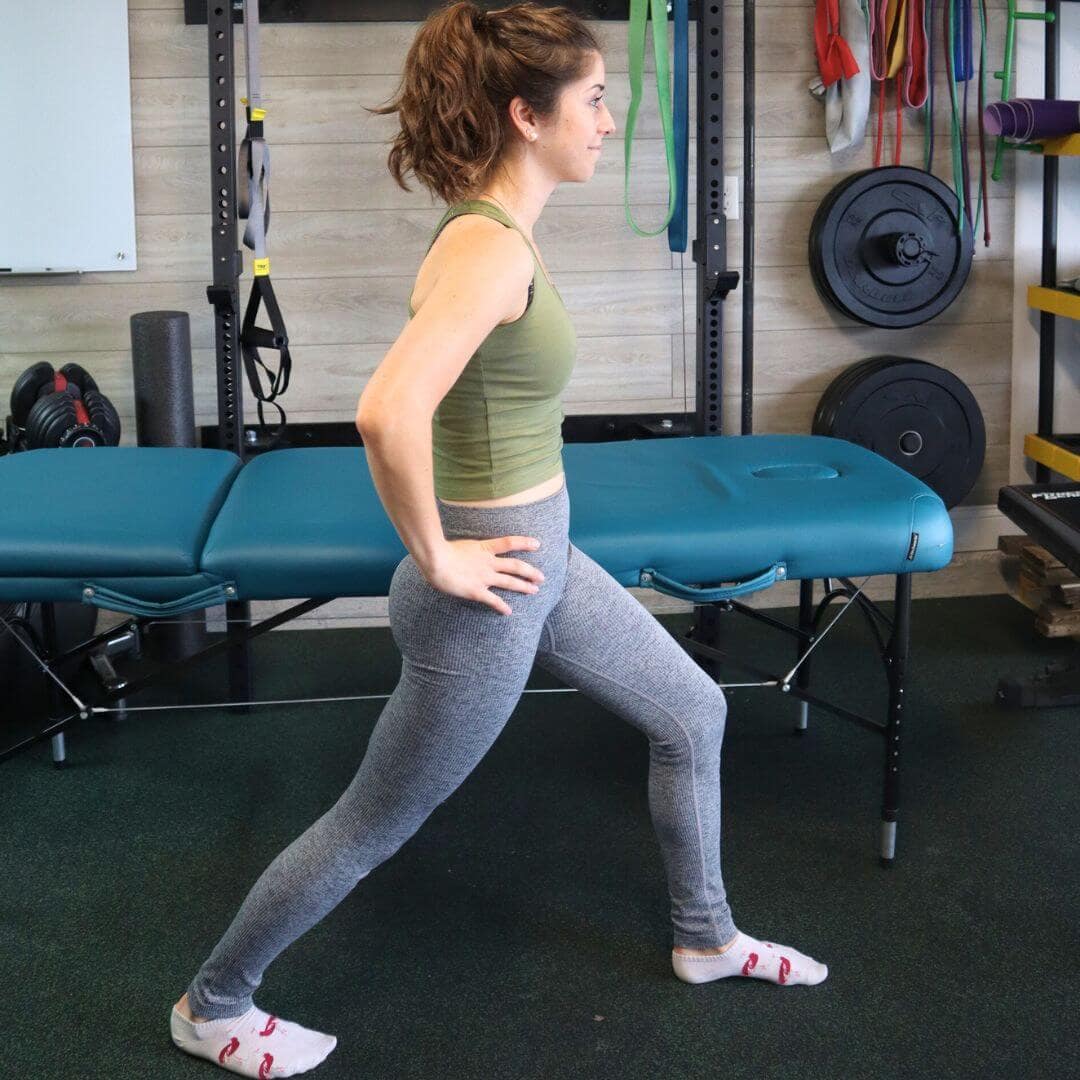
This standing hip flexor stretch is vital because tight hips will aggressively pull on your pelvis, tilting it forward and causing intense lower back pain. The main muscle involved here is the psoas major, which directly connects your spine to your lower body. Start standing with your feet shoulder-width apart, then step forward with one foot into a split stance.
Keep your back leg straight, and gently arch your lower back as you lean and lunge forward slightly. You should immediately feel a stretch in the front of the hip on your trailing leg. For an added stretch, rotate your upper body toward your front leg and try to complete 10 reps on each side.
Bonus Move: Decompress Your Spine At The Kitchen Counter
If your back feels compressed or heavy from fighting gravity all day, you can easily perform spinal decompression right at your kitchen counter. This is an amazing way to fight stiffness and safely stretch your spine without buying an inversion table or expensive equipment. Find a sturdy countertop, place your hands flat on the edge, and lock your elbows completely straight.
Next, shift your body weight into your hands and lean forward slightly. Keep your toes lightly on the ground, slightly bend your knees, and let the weight of your lower body simply hang. Breathe out, relax your deep back muscles, and enjoy the immediate relief of creating space between your vertebrae.
Why Standing Lower Back Stretches Are So Effective
Lower-back stretches performed while standing are incredibly effective because they allow you to target stiffness quickly without interrupting your busy day. As a father, husband, and full-time professional, I know that finding time to squeeze in a full workout or roll out a yoga mat on the office floor is difficult. When you are constantly on the go, these standing movements provide an immediate way to relieve tension and safely get your joints moving.
These stretches are designed to target the exact areas that tighten up when we remain stagnant for hours on end. By incorporating these movements into your daily routine, you can prevent the aches and pains that come from gravity constantly compressing your spine. It is about working smarter, not harder, to build a resilient body.
Remember That Motion Is Lotion For Your Joints
In my 10+ years of PT experience, I always remind my clients that motion is lotion for your joints. Stiffness is usually the result of maintaining a sustained posture for too long, which decreases the natural lubrication your spine desperately needs. By moving your spine through these specific standing stretches, your joints glide more freely, and your muscles work together to produce smoother, pain-free movement.
Is Your Pain Just Stiffness, or Is It Sciatica
Figuring out whether your pain is just muscular stiffness or true sciatica is the absolute first step in knowing how to treat it properly. These standing stretches are fantastic for general lower back stiffness, achy muscles, and joint tension. However, if you are experiencing sharp, shooting pain, numbness, or tingling traveling down your leg, you might be dealing with a nerve issue.
If you are unsure exactly what is causing your leg or back discomfort, do not rely on generic stretches alone. I have created a specific tool to help you pinpoint the source of your symptoms. I highly recommend taking my Free Sciatica Quiz right now to get clarity and find the right path forward.
Utilizing The SPARK Program For Sciatica Relief
If you do have sciatica, generic stretching might not be enough to fully heal, which is exactly why I created the SPARK program. This proven clinical framework stands for Strengthening, Pain relief, Activating the nerve, Regaining mobility, and Keep walking. I always remind my patients in Jacksonville that scary, age-related findings on an MRI are often just normal wrinkles on the inside.
You are not your MRI, and focusing on improving your tissue tolerance through the structured SPARK program is the ultimate way to heal naturally without surgery. By following a proven system, you safely improve your nerve health and build true, lasting resiliency. For a complete, step-by-step roadmap to recovery, grab a copy of my Revision Sciatica Book today.
Teaming Up With A Movement Professional
Teaming up with a movement professional is the smartest thing you can do if your pain is stubborn or not improving with basic stretches. A physical therapist can safely evaluate your movements, correct your form, and help you build true resiliency so you can get back to living a pain-free life. Movement is medicine, and expert guidance ensures you are doing the exact exercises your unique body is craving.
We want to empower you to take control of your spinal health rather than relying on passive treatments like pills or injections. For more insights on building a rock-solid foundation, check out my comprehensive guide on Easy Core Strengthening Exercises For Lower Back Pain.
Summary
Standing lower back stretches are a fast and effective way to relieve stiffness, improve mobility, and decompress the spine without needing to get on the floor. This guide demonstrates three simple stretches—the Standing L Stretch, Standing Lumbar Rotation, and Standing Hip Flexor Stretch—that can be performed in just a few minutes at home or in the office. By incorporating regular movement into your day, you can reduce tension, improve spinal health, and build long-term resilience against back pain.
Are you dealing with nagging back pain and searching for the best standing lower back stretches to find relief fast? You can easily loosen tight muscles and decompress your spine with simple movements such as the Standing L Stretch, Standing Lumbar Rotations, and the Standing Hip Flexor Stretch. In this blog, I will show you exactly how to perform these exercises at the office or at home to imrpove your discomfort without ever getting on the floor.
This is also helpful for office workers because these exercises will focus on reversing the rigid, hunched posture we hold at a desk all day. If you work from home or in a corporate office, you likely spend hours staring at a screen, which causes your hip flexors and back muscles to become incredibly tight. Recent research has shown that prolonged sitting can be highly detrimental to your musculoskeletal health.
3 Fast And Effective Standing Lower Back Stretches
To get fast relief, the three most effective standing lower back stretches are the Standing L Stretch, Standing Lumbar Rotation, and Standing Hip Flexor Stretch. These specific exercises target the spine and hips to reduce discomfort from sitting or standing for too long. They can be performed in just three minutes and require absolutely no floor space. Let us break down exactly how to perform them for maximum benefit.
The Standing L Stretch For Lumbar Decompression
This is often my first recommendation because it uses gravity to safely decompress your spine while simultaneously loosening your mid-back and low back. To begin, find something elevated and sturdy to hold onto, such as the back of an office chair or a countertop. Place your hands palms down on the surface and step your feet back until your arms are fully extended.
Next, bend at the waist, dropping your chest toward the floor until you feel a gentle stretch starting under your armpits and running down your back. Keep your legs straight and hold this position for at least 10 seconds to let the muscles relax. This stretch specifically targets the latissimus dorsi, a massive muscle that connects your upper body directly to your lower back.
Standing Lumbar Rotations To Improve Mobility
Standing lumbar rotations help mobilize the spine and get you out of that rigid, forward-facing posture you hold all day. We usually think about bending forward and backward, but the ability to rotate is just as crucial for everyday activities like reaching for your seatbelt. Start standing with your feet about shoulder-width apart to ensure a solid base.
Keep your hips and feet planted firmly in place while you gently twist your upper body from side to side. Start slow, let your arms swing naturally to use a little physics and momentum, and try doing 20 rotations throughout your day. This movement actively nourishes the facet joints in your spine to quickly eliminate that stiff feeling.
Standing Hip Flexor Stretch To Release Tension
This standing hip flexor stretch is vital because tight hips will aggressively pull on your pelvis, tilting it forward and causing intense lower back pain. The main muscle involved here is the psoas major, which directly connects your spine to your lower body. Start standing with your feet shoulder-width apart, then step forward with one foot into a split stance.
Keep your back leg straight, and gently arch your lower back as you lean and lunge forward slightly. You should immediately feel a stretch in the front of the hip on your trailing leg. For an added stretch, rotate your upper body toward your front leg and try to complete 10 reps on each side.
Bonus Move: Decompress Your Spine At The Kitchen Counter
If your back feels compressed or heavy from fighting gravity all day, you can easily perform spinal decompression right at your kitchen counter. This is an amazing way to fight stiffness and safely stretch your spine without buying an inversion table or expensive equipment. Find a sturdy countertop, place your hands flat on the edge, and lock your elbows completely straight.
Next, shift your body weight into your hands and lean forward slightly. Keep your toes lightly on the ground, slightly bend your knees, and let the weight of your lower body simply hang. Breathe out, relax your deep back muscles, and enjoy the immediate relief of creating space between your vertebrae.
Why Standing Lower Back Stretches Are So Effective
Lower-back stretches performed while standing are incredibly effective because they allow you to target stiffness quickly without interrupting your busy day. As a father, husband, and full-time professional, I know that finding time to squeeze in a full workout or roll out a yoga mat on the office floor is difficult. When you are constantly on the go, these standing movements provide an immediate way to relieve tension and safely get your joints moving.
These stretches are designed to target the exact areas that tighten up when we remain stagnant for hours on end. By incorporating these movements into your daily routine, you can prevent the aches and pains that come from gravity constantly compressing your spine. It is about working smarter, not harder, to build a resilient body.
Remember That Motion Is Lotion For Your Joints
In my 10+ years of PT experience, I always remind my clients that motion is lotion for your joints. Stiffness is usually the result of maintaining a sustained posture for too long, which decreases the natural lubrication your spine desperately needs. By moving your spine through these specific standing stretches, your joints glide more freely, and your muscles work together to produce smoother, pain-free movement.
Is Your Pain Just Stiffness, or Is It Sciatica
Figuring out whether your pain is just muscular stiffness or true sciatica is the absolute first step in knowing how to treat it properly. These standing stretches are fantastic for general lower back stiffness, achy muscles, and joint tension. However, if you are experiencing sharp, shooting pain, numbness, or tingling traveling down your leg, you might be dealing with a nerve issue.
If you are unsure exactly what is causing your leg or back discomfort, do not rely on generic stretches alone. I have created a specific tool to help you pinpoint the source of your symptoms. I highly recommend taking my Free Sciatica Quiz right now to get clarity and find the right path forward.
Utilizing The SPARK Program For Sciatica Relief
If you do have sciatica, generic stretching might not be enough to fully heal, which is exactly why I created the SPARK program. This proven clinical framework stands for Strengthening, Pain relief, Activating the nerve, Regaining mobility, and Keep walking. I always remind my patients in Jacksonville that scary, age-related findings on an MRI are often just normal wrinkles on the inside.
You are not your MRI, and focusing on improving your tissue tolerance through the structured SPARK program is the ultimate way to heal naturally without surgery. By following a proven system, you safely improve your nerve health and build true, lasting resiliency. For a complete, step-by-step roadmap to recovery, grab a copy of my Revision Sciatica Book today.
Teaming Up With A Movement Professional
Teaming up with a movement professional is the smartest thing you can do if your pain is stubborn or not improving with basic stretches. A physical therapist can safely evaluate your movements, correct your form, and help you build true resiliency so you can get back to living a pain-free life. Movement is medicine, and expert guidance ensures you are doing the exact exercises your unique body is craving.
We want to empower you to take control of your spinal health rather than relying on passive treatments like pills or injections. For more insights on building a rock-solid foundation, check out my comprehensive guide on Easy Core Strengthening Exercises For Lower Back Pain.
Summary
Standing lower back stretches are a fast and effective way to relieve stiffness, improve mobility, and decompress the spine without needing to get on the floor. This guide demonstrates three simple stretches—the Standing L Stretch, Standing Lumbar Rotation, and Standing Hip Flexor Stretch—that can be performed in just a few minutes at home or in the office. By incorporating regular movement into your day, you can reduce tension, improve spinal health, and build long-term resilience against back pain.

%20Blog%20thumbnails.jpg)

.jpg)
