.jpg)



.jpg)
Can Sciatica Cause Knee and Calf Pain? (How to Tell the Difference)


Are you experiencing mysterious knee pain and wondering if it is actually connected to your lower back? Or, having knee pain, but your knees have always been good, but you have a history of back pain? Sciatica can absolutely cause knee and calf pain, but it is almost exclusively felt in the back of the knee rather than the front. In this blog, I will explain what is going on with the sciatic nerve and its patterns so you can test your pain at home and start feeling better now!
Sciatica Can Cause Knee Pain
Yes, sciatica can absolutely cause knee pain, but the exact location of the discomfort is the most critical clue. When I work with my clients, I often treat sciatica, and this is one of the most common questions that I get. Sciatica absolutely can cause knee pain, but it is not in the front; it is actually in the back. - Or even maybe the outside but almost never on the inside of the knee.
If you are unsure whether you have sciatica, check out my free quiz to help you figure out whether your pain or discomfort is from sciatica and what to do about it. Take our FREE Quiz!
The Anatomy Of The Sciatic Nerve
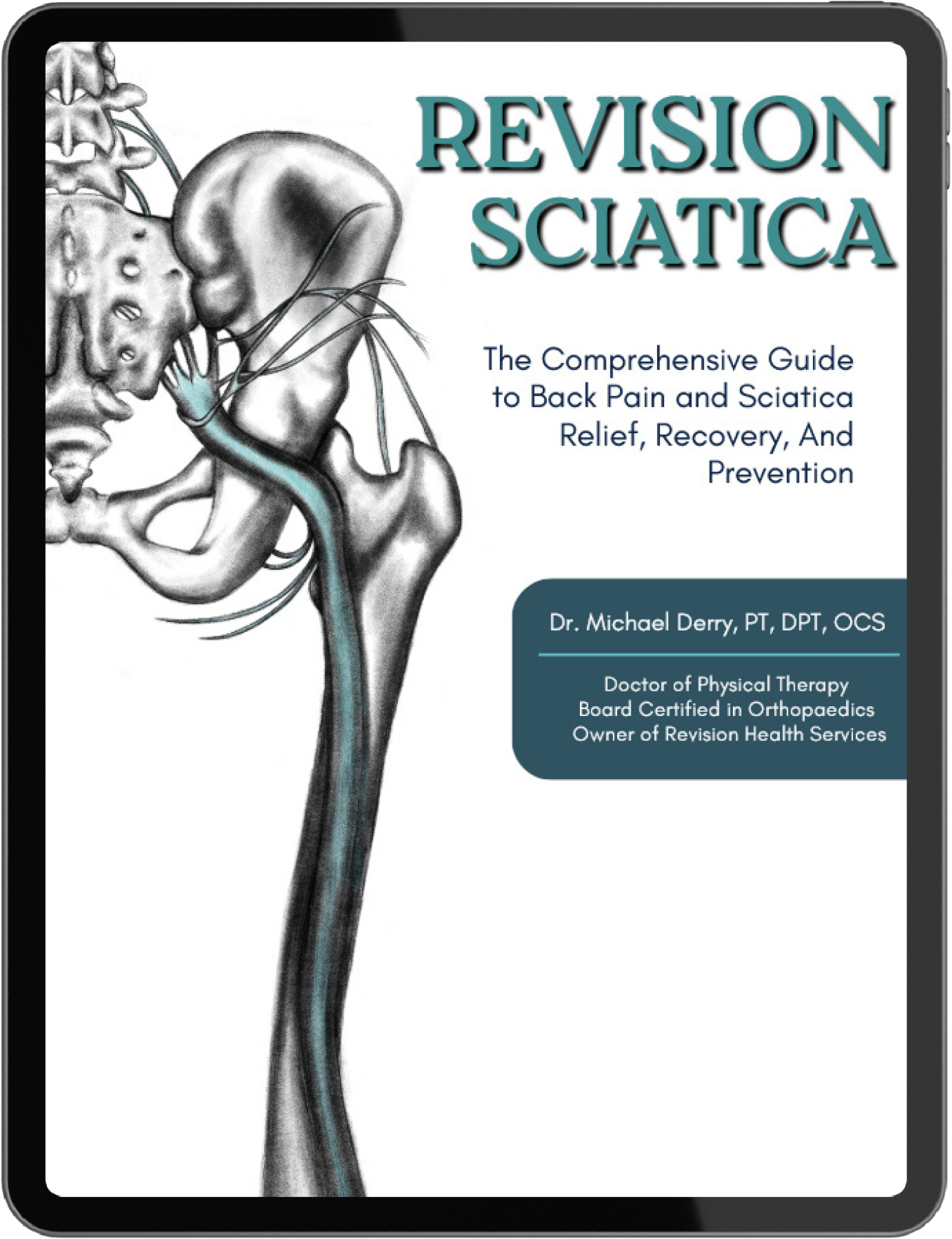
The sciatic nerve originates in your lower back and is the longest nerve in your body. When the sciatic nerve exits your lower back, it comes out of your glutes and goes down the back of your leg near your hamstrings, splits in two in the back of your knees, and then goes down your leg. So you are allowed to feel pain anywhere through the pathway of the nerve.
Knee Joint is The Front Inside Of The Knee Pain Vs Sciatica, Which is Back Of The Knee Pain
If you have front knee pain, it is most likely not sciatica. That is simply not how the body works when we look at nerve distribution and referral patterns of the sciatic nerve. However, if you have pain in the back or side of your knee, it absolutely could be sciatica.
Medial, or inside, knee pain is often due to arthritis or a meniscus tear.
Understanding How Sciatica Causes Calf Pain
Sciatica frequently causes calf pain because the nerve branches directly into the lower leg or calf. It actually becomes the tibial nerve, and my clients often don’t realize that they can have knee or calf pain with sciatica. And, it doesn’t have to travel as a connected line. I have seen so many clients who only have knee pain or calf pain with sciatica.
As the sciatic nerve travels behind your knee, it does this awesome thing where it branches into two nerves. One nerve goes more into your calf, and one goes more to the side of your leg. Because of these specific branches, common symptoms of sciatica absolutely include pain all the way down into your calf.
Testing Your Knee Pain At Home With The Slump Test
The Slump Test physically pulls on the sciatic nerve to see if it reproduces the familiar sharp, burning pain in the back of your leg or in a similar location; if so, you're sure it’s sciatica.
- Sit on the edge of a chair,
- Slump and round your shoulders, and tuck your chin to your chest.
- Slowly kick your painful leg out straight as far as you can, and pull your toes toward your face to see if your symptoms worsen.
- If lifting your head improves the leg pain, it confirms nerve tension and strongly suggests sciatica.
- If there's no change, be more confident it’s not from sciatica.


Fix The Knee Pain From Sciatica Activating The Nerve With Glides
To relieve sciatica-related knee pain, we must activate and nourish the sciatic nerve with gentle glides to restore healthy mobility and blood flow. Nerve glides help free up the sciatic nerve so it can slide smoothly through the surrounding tissue as you heal. I always remind my patients that motion is lotion for your joints and nerves. We want to gently flirt with the pain to encourage blood flow without causing shooting pain down the leg.
Here is a sneak peek at a video from my Revision Sciatica Course.
Here are the steps to do it:
- Lie on your back
- Place your foot in the stretching strap
- Slowly pull your leg up with the strap and feel that stretch


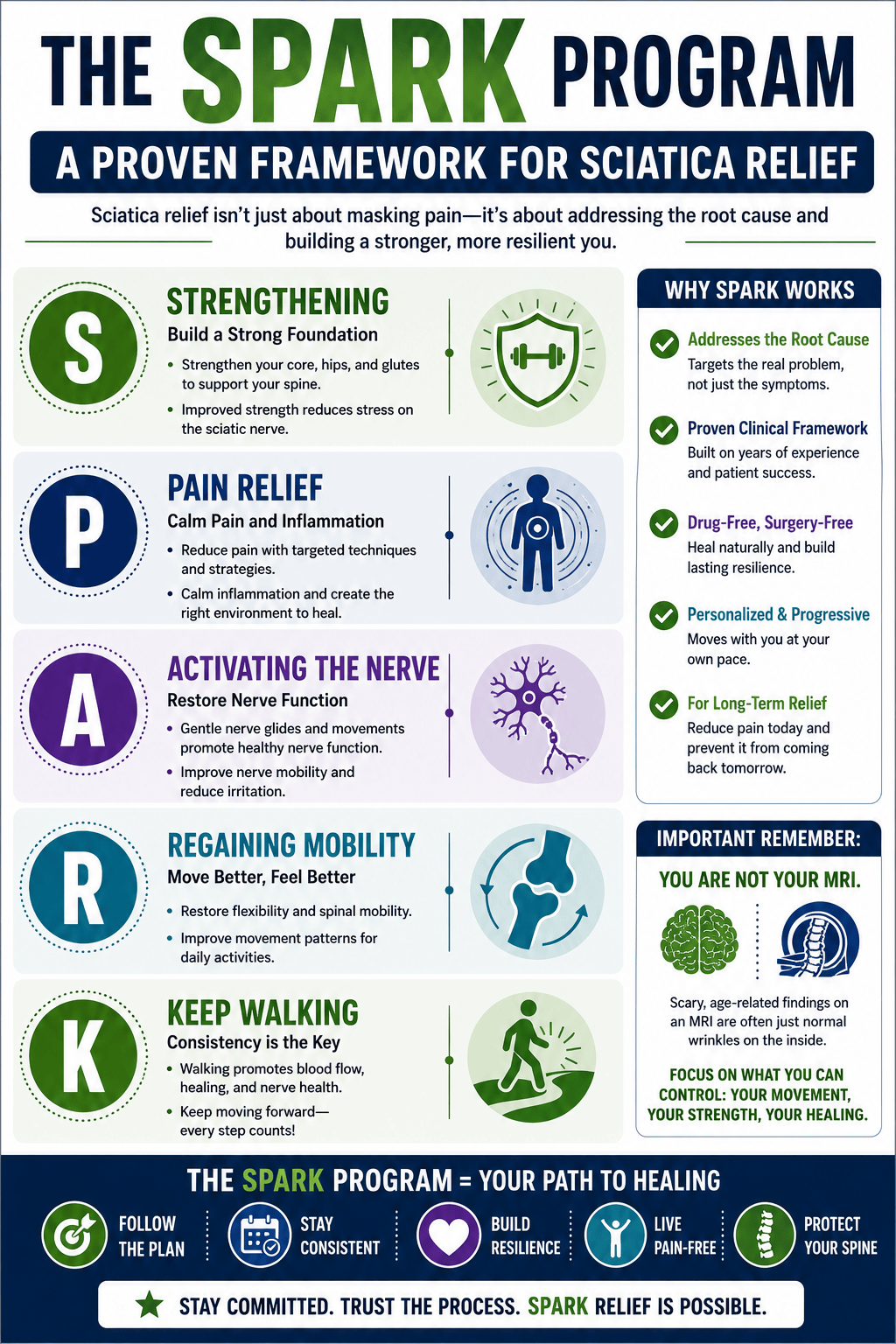
Utilizing The SPARK Program For Lasting Sciatica Relief
To find lasting relief, I highly recommend following my SPARK program.
- Strengthening,
- Pain relief,
- Activating the Nerve,
- Regaining Mobility
- Keep Moving
What works with my patients is using this proven framework to safely build true resiliency without aggravating the sensitive nerves. Our ultimate goal is to improve tissue tolerance so your spine can handle everyday loads again. Remember, age-related changes on imaging are often just normal wrinkles on the inside, so we focus on your function rather than your MRI.
The Takeaway: It’s Often a Nerve Problem, Not a Knee Problem. Mysterious knee or calf pain can be frustrating, but understanding the source is the first step toward recovery. Remember, if your pain is felt in the back of the knee or shoots down into the calf, your sciatic nerve is the likely culprit rather than a damaged knee joint.
Don't stay stuck guessing. Use the Slump Test to check for nerve tension at home, and start incorporating gentle nerve glides to restore the "lotion" of blood flow to your nerves. By following a structured approach like the SPARK Program, you can build the resiliency needed to move without fear.
Summary
Sciatica can cause pain in the back of the knee and calf because the sciatic nerve travels through these areas, often mimicking a knee problem when the real source is nerve irritation in the lower back. This guide explains how to distinguish nerve pain from muscle or joint pain using simple at-home tests like the Slump Test and why nerve glides can help restore healthy movement and blood flow. By following a structured approach such as the SPARK Program, you can address the root cause of sciatica and build long-term resilience for lasting relief.
Are you experiencing mysterious knee pain and wondering if it is actually connected to your lower back? Or, having knee pain, but your knees have always been good, but you have a history of back pain? Sciatica can absolutely cause knee and calf pain, but it is almost exclusively felt in the back of the knee rather than the front. In this blog, I will explain what is going on with the sciatic nerve and its patterns so you can test your pain at home and start feeling better now!
Sciatica Can Cause Knee Pain
Yes, sciatica can absolutely cause knee pain, but the exact location of the discomfort is the most critical clue. When I work with my clients, I often treat sciatica, and this is one of the most common questions that I get. Sciatica absolutely can cause knee pain, but it is not in the front; it is actually in the back. - Or even maybe the outside but almost never on the inside of the knee.
If you are unsure whether you have sciatica, check out my free quiz to help you figure out whether your pain or discomfort is from sciatica and what to do about it. Take our FREE Quiz!
The Anatomy Of The Sciatic Nerve
The sciatic nerve originates in your lower back and is the longest nerve in your body. When the sciatic nerve exits your lower back, it comes out of your glutes and goes down the back of your leg near your hamstrings, splits in two in the back of your knees, and then goes down your leg. So you are allowed to feel pain anywhere through the pathway of the nerve.
Knee Joint is The Front Inside Of The Knee Pain Vs Sciatica, Which is Back Of The Knee Pain
If you have front knee pain, it is most likely not sciatica. That is simply not how the body works when we look at nerve distribution and referral patterns of the sciatic nerve. However, if you have pain in the back or side of your knee, it absolutely could be sciatica.
Medial, or inside, knee pain is often due to arthritis or a meniscus tear.
Understanding How Sciatica Causes Calf Pain
Sciatica frequently causes calf pain because the nerve branches directly into the lower leg or calf. It actually becomes the tibial nerve, and my clients often don’t realize that they can have knee or calf pain with sciatica. And, it doesn’t have to travel as a connected line. I have seen so many clients who only have knee pain or calf pain with sciatica.
As the sciatic nerve travels behind your knee, it does this awesome thing where it branches into two nerves. One nerve goes more into your calf, and one goes more to the side of your leg. Because of these specific branches, common symptoms of sciatica absolutely include pain all the way down into your calf.
Testing Your Knee Pain At Home With The Slump Test
The Slump Test physically pulls on the sciatic nerve to see if it reproduces the familiar sharp, burning pain in the back of your leg or in a similar location; if so, you're sure it’s sciatica.
- Sit on the edge of a chair,
- Slump and round your shoulders, and tuck your chin to your chest.
- Slowly kick your painful leg out straight as far as you can, and pull your toes toward your face to see if your symptoms worsen.
- If lifting your head improves the leg pain, it confirms nerve tension and strongly suggests sciatica.
- If there's no change, be more confident it’s not from sciatica.
Fix The Knee Pain From Sciatica Activating The Nerve With Glides
To relieve sciatica-related knee pain, we must activate and nourish the sciatic nerve with gentle glides to restore healthy mobility and blood flow. Nerve glides help free up the sciatic nerve so it can slide smoothly through the surrounding tissue as you heal. I always remind my patients that motion is lotion for your joints and nerves. We want to gently flirt with the pain to encourage blood flow without causing shooting pain down the leg.
Here is a sneak peek at a video from my Revision Sciatica Course.
Here are the steps to do it:
- Lie on your back
- Place your foot in the stretching strap
- Slowly pull your leg up with the strap and feel that stretch
Utilizing The SPARK Program For Lasting Sciatica Relief
To find lasting relief, I highly recommend following my SPARK program.
- Strengthening,
- Pain relief,
- Activating the Nerve,
- Regaining Mobility
- Keep Moving
What works with my patients is using this proven framework to safely build true resiliency without aggravating the sensitive nerves. Our ultimate goal is to improve tissue tolerance so your spine can handle everyday loads again. Remember, age-related changes on imaging are often just normal wrinkles on the inside, so we focus on your function rather than your MRI.
The Takeaway: It’s Often a Nerve Problem, Not a Knee Problem. Mysterious knee or calf pain can be frustrating, but understanding the source is the first step toward recovery. Remember, if your pain is felt in the back of the knee or shoots down into the calf, your sciatic nerve is the likely culprit rather than a damaged knee joint.
Don't stay stuck guessing. Use the Slump Test to check for nerve tension at home, and start incorporating gentle nerve glides to restore the "lotion" of blood flow to your nerves. By following a structured approach like the SPARK Program, you can build the resiliency needed to move without fear.
Summary
Sciatica can cause pain in the back of the knee and calf because the sciatic nerve travels through these areas, often mimicking a knee problem when the real source is nerve irritation in the lower back. This guide explains how to distinguish nerve pain from muscle or joint pain using simple at-home tests like the Slump Test and why nerve glides can help restore healthy movement and blood flow. By following a structured approach such as the SPARK Program, you can address the root cause of sciatica and build long-term resilience for lasting relief.

%20Blog%20thumbnails.jpg)


