


Is Walking Good for Spinal Stenosis? Why it Hurts and How to Walk Further Without Pain


When I sit down with a new patient in the clinic, the first thing they usually ask is: "Dr. Michael, am I doing more damage by walking?" They describe a familiar pattern: they start off fine, but after a few minutes, their legs feel heavy, tingly, or weak. They have to sit down, lean over a grocery cart, or find a bench just to get relief.
If this sounds like you, I want to give you some immediate peace of mind: You are not damaging your spine by walking. While the discomfort is real, it isn't a "warning sign" of permanent injury. It’s simply a sign that your nerves have hit their tolerance. -But, it can improve!
Is Walking Good for Spinal Stenosis and Why It Hurts?
The short answer and long answer is yes. In fact, I often tell my patients that walking is exactly what their nerves are craving—we just have to change how you walk.
Many people stop walking because it hurts, but avoiding walking entirely leads to weakness, stiff joints, and more pain. When I work with my clients, we discuss how walking is an extension exercise. When you stand up straight and walk, you are naturally narrowing the "doorways" (the spaces where nerves exit) in your spine. This can lead to neurogenic claudication, in which the nerve begins to lose some of its blood flow and space, hallmark signs of stenosis.
It’s important to remember that even though walking can be painful, walking will not cause long-term damage. Unlike strengthening a muscle, where you "tear" it so it builds back stronger, nerves don't work that way.
FREE RESOURCE: Take the Stenosis Quiz to see if your walking difficulty is coming from spinal stenosis.
Nerves need space and blood flow. If you feel awful while walking but have immediate relief when you sit, that is a classic sign of stenosis—and it's a sign that we can improve your situation.
Walking naturally compresses the nerve for a minute, and improves in its tolerance to walking as you stay consistent with your walking program. It’s similar to how gymnasts improve their ability to bend over and achieve a great range of motion. It’s earned, not given. The nerves can improve, and most don’t know how to do it.
The video below is an example how to improve nerve pain and tolerance.
How Physical Therapists Diagnose Stenosis Walking Problems
Physical therapists (myself included) use specific tests to help diagnose lumbar stenosis. One is called the "Two-Stage Treadmill Test." You walk on a treadmill at a comfortable pace with no incline and assess your pain. Then the treadmill is set to an incline (usually about 15%), and you assess your pain again. The test is positive if you report relief when walking on the incline compared to flat ground.
Why does this work? When there's an incline, your body naturally leans forward, relieving pressure on the stenotic spine.
Another test is the informal "Shopping Cart Test." If you have less pain while using a cart or walker compared to walking without one, stenosis may be present. This may seem counterproductive - relying on an assistive device - but if it allows you to get out, enjoy life, and be more active with fewer symptoms, it's absolutely worth it.
Research by Takahashi et al. found that pressure at the area of stenosis was low while lying and sitting, but high while standing. Pressure increased with extension and decreased with flexion. This explains why bending forward provides relief.
Two types of stenosis affect the lumbar spine:
Central stenosis: Narrowing of the spinal canal that houses the spinal cord
Foraminal stenosis: Narrowing of the "doorway" where nerves exit the spine and travel to the legs
With foraminal stenosis, compression on these nerves can cause symptoms that travel down to the leg or foot (Kwon et al., 2022).
How to Walk with Spinal Stenosis
Improving your walking ability isn’t about "pushing through the pain" until your legs go numb. It’s about improving your tissue (nerve) tolerance. I always tell my patients: we aren’t trying to change your bones or "fix" the arthritis—those are just "wrinkles on the inside." We are trying to increase the amount your nervous system can tolerate.
- Nudge the Pain: I recommend my clients "nudge" the discomfort. If you can walk for 10 minutes before the pain hits an 8/10, try walking until it increases by 2/10, then take a rest (stretch, mobilize, wait), and continue walking again.
- Permission to Tingle: It is normal to have some tingling when you walk. Since we know the nerve isn’t being damaged, this gives us "permission" to keep moving and build our body’s capacity at the same time.
- Mobilize and strengthen using flexion techniques. Since walking and other tasks are extension focused you want to strengthen into flexion.
- Good option: This video which goes over 5 exercises
- Best Option: Check out my book on stenosis which goes over 8 weeks of progressions and utilizes flexion to build strength, reduce pain, and improve nerve health.
Walking Tips and Techniques
When I’m building a program for someone in my clinic, we focus on a specific three-part routine. Most people forget that tolerance is a nervous system issue, and you need specific techniques to help those nerves glide.
1. Nerve Glides (Pre and Post-Walk): In my experience, performing nerve glides before you walk "primes" the system, and doing them after helps the nerves settle down. This is a vital part of the recovery process.
2. Strategic Breaks: Don't wait for the pain to force you to stop. Take a break before the symptoms get severe. Mild pain is okay!
3. Understaning Your Pain: Sometimes the pain is in your back, and sometimes it travels down into your legs—knowing what to do in each moment is key. The eBook below covers exactly what to do when you feel each.
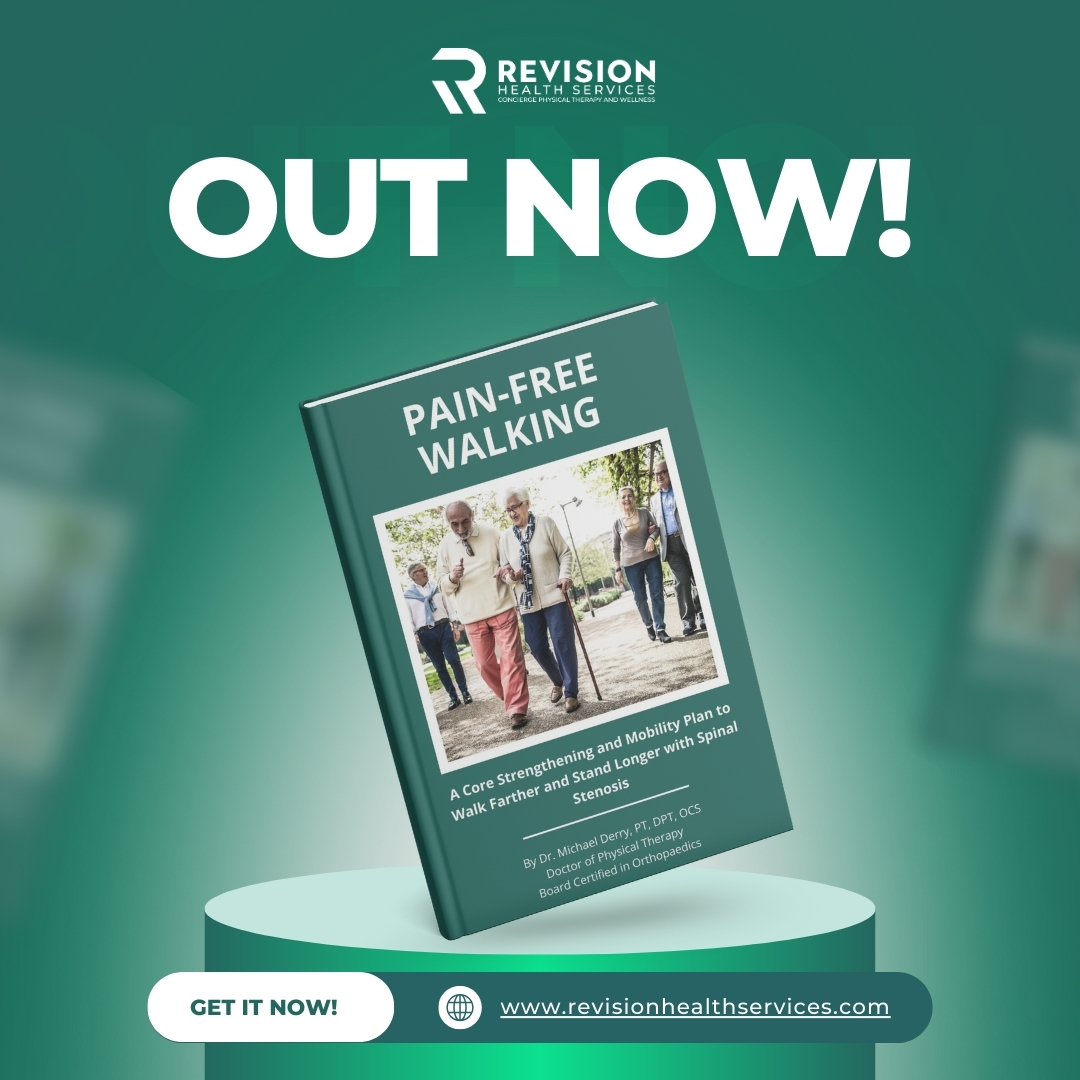
If you want to move beyond these tips and follow a structured plan, I’ve put everything together for you. I created the Pain-Free Walking with Spinal Stenosis Ebook because I saw too many people giving up on their daily walks.
This eBook includes:
- Specific nerve glides to improve nerve tolerance.
- A progressive walking program that balances nerve health and builds resiliency.
- Core strengthening techniques to support your hips, spine, and nerves.
Whether your pain is in your back or traveling down your legs, this guide shows you exactly what to do when your body starts to feel "hit its limit."
3 More Stretches to Improve Walking with Spinal Stenosis
1. Standing L stretch
This stretch works to stretch muscles in the thoracic spine while allowing a bend in the waist. Try to find something that you can grab onto that is relatively high. Most people will use a counter top. Place both hands on the surface and walk back until the arms are fully extended. From there, start to bend at the waist while keeping the arms locked out on the counter. Your body will start to look like the letter L. Hold this for a while if it feels good or just go back and forth to work on mobility.
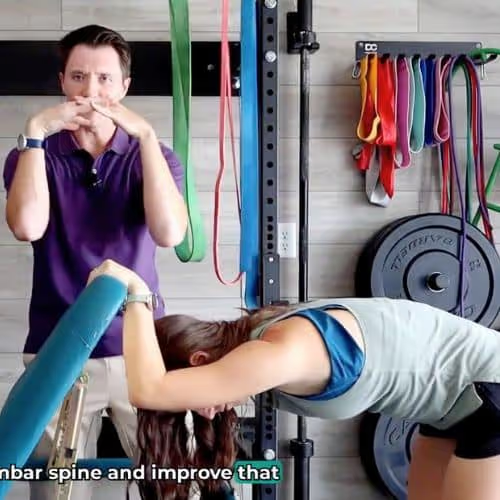
2. Forward flexion:
This tends to be an intuitive motion for those with lumbar spinal stenosis. Much like the shopping cart, the pressure on the spine is reduced when you bend over. Taking a moment and bending over several times may reduce the symptoms down the leg and allow you to walk a longer distance. I remember a patient who loved to hike, but his stenosis symptoms that ran down his legs would prevent him from going as far as he would like.
He would stop periodically and bend over and touch his toes several times and would be able to resume walking with less leg pain. This stretch can be done sitting or standing. If standing, keep the feet shoulder width and fold over at the waist, reaching towards your toes. Go down as far as you can comfortably go then return to the starting position. If you are sitting, sit with your feet flat on the ground. Take a wide base and reach down between the legs.
3. Knees to chest:
If you are able to lay on your back this can be a great move to help reduce pain. Laying on your back and bringing the knees to the chest allows the spine to flex in a slightly different way then bending over. Many people will find relief with this position as it allows the spine to be unloaded.
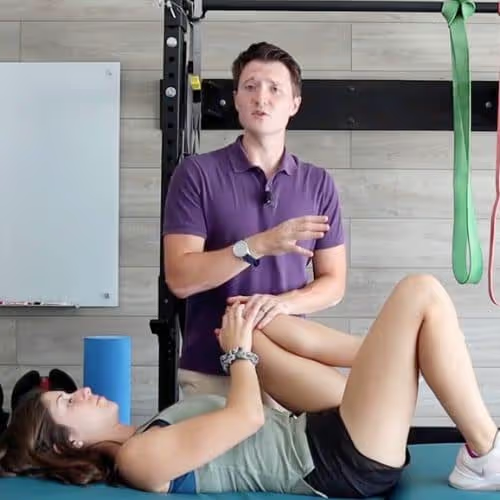
Again, all of these, and more are part of the Pain-Free Walking with Spinal Stenosis eBook because I saw too many people giving up on their daily walks.
Treatment Options for Spinal Stenosis Walking Problems
Living with lumbar spinal stenosis and walking issues can be challenging. Fortunately, there are several treatments available to help alleviate the symptoms.
Non-Surgical Options:
- Physical therapy is often recommended as a first-line approach. It involves exercises, stretches, and modalities that can help strengthen the muscles surrounding the spine, improve flexibility, and reduce pressure on the nerves. It does take time and effort, but it's a great way to improve standing and walking ability without surgery or injections.
- Core strengthening is even safe for seniors with stenosis.
- Medications to control inflammation and alleviate pain, including anti-inflammatory drugs, muscle relaxants, or pain relievers.
- Epidural steroid injections can provide temporary pain relief by reducing inflammation around the compressed nerves.
- Ice or heat may help with intermittent discomfort.
Surgical Options:
If conservative treatments are not providing adequate relief, surgical intervention may be necessary:
- Laminectomy removes portions of the vertebrae to create more space for the spinal nerves.
- Spinal fusion fuses two or more vertebrae together to provide stability and reduce pain caused by arthritis or disc issues.
- Before consenting to any procedure, patients should ensure they have thoroughly reviewed spinal surgery risks and benefits with their healthcare provider.
When to Seek Immediate Medical Attention
Foot problems can occur as a result of spinal stenosis, usually caused by the impact on the nerves that exit the lumbar spine and run down to the feet. Slight tingling and pain in the legs is common with stenosis.
However, seek immediate medical attention if you experience:
- Sudden onset of leg weakness
- Floppy foot or foot drop
- Sudden difficulty walking
- Loss of bowel or bladder control
- Numbness that develops in the sacrum/groin area
Still Unsure If Your Pain is From Stenosis?
If you aren't sure whether your walking difficulty is coming from your spine or from a different issue like a disc, I have a free tool to help you get started.
- FREE RESOURCE: Take the Stenosis Quiz to see if your walking difficulty is coming from spinal stenosis.
Summary
Walking with spinal stenosis doesn't have to be a source of fear or a reminder of what you can't do. When I work with my clients, we shift the focus from "fixing" a bone to improving how your nerves handle movement. Remember, those MRI results are often just "wrinkles on the inside"—they don't define your ability to reclaim your miles. By using strategic techniques like nerve glides and "nudging" the pain, you can expand your world and get back to the activities you love. You have permission to move, explore your limits, and build a body that feels resilient again.
When I sit down with a new patient in the clinic, the first thing they usually ask is: "Dr. Michael, am I doing more damage by walking?" They describe a familiar pattern: they start off fine, but after a few minutes, their legs feel heavy, tingly, or weak. They have to sit down, lean over a grocery cart, or find a bench just to get relief.
If this sounds like you, I want to give you some immediate peace of mind: You are not damaging your spine by walking. While the discomfort is real, it isn't a "warning sign" of permanent injury. It’s simply a sign that your nerves have hit their tolerance. -But, it can improve!
Is Walking Good for Spinal Stenosis and Why It Hurts?
The short answer and long answer is yes. In fact, I often tell my patients that walking is exactly what their nerves are craving—we just have to change how you walk.
Many people stop walking because it hurts, but avoiding walking entirely leads to weakness, stiff joints, and more pain. When I work with my clients, we discuss how walking is an extension exercise. When you stand up straight and walk, you are naturally narrowing the "doorways" (the spaces where nerves exit) in your spine. This can lead to neurogenic claudication, in which the nerve begins to lose some of its blood flow and space, hallmark signs of stenosis.
It’s important to remember that even though walking can be painful, walking will not cause long-term damage. Unlike strengthening a muscle, where you "tear" it so it builds back stronger, nerves don't work that way.
FREE RESOURCE: Take the Stenosis Quiz to see if your walking difficulty is coming from spinal stenosis.
Nerves need space and blood flow. If you feel awful while walking but have immediate relief when you sit, that is a classic sign of stenosis—and it's a sign that we can improve your situation.
Walking naturally compresses the nerve for a minute, and improves in its tolerance to walking as you stay consistent with your walking program. It’s similar to how gymnasts improve their ability to bend over and achieve a great range of motion. It’s earned, not given. The nerves can improve, and most don’t know how to do it.
The video below is an example how to improve nerve pain and tolerance.
How Physical Therapists Diagnose Stenosis Walking Problems
Physical therapists (myself included) use specific tests to help diagnose lumbar stenosis. One is called the "Two-Stage Treadmill Test." You walk on a treadmill at a comfortable pace with no incline and assess your pain. Then the treadmill is set to an incline (usually about 15%), and you assess your pain again. The test is positive if you report relief when walking on the incline compared to flat ground.
Why does this work? When there's an incline, your body naturally leans forward, relieving pressure on the stenotic spine.
Another test is the informal "Shopping Cart Test." If you have less pain while using a cart or walker compared to walking without one, stenosis may be present. This may seem counterproductive - relying on an assistive device - but if it allows you to get out, enjoy life, and be more active with fewer symptoms, it's absolutely worth it.
Research by Takahashi et al. found that pressure at the area of stenosis was low while lying and sitting, but high while standing. Pressure increased with extension and decreased with flexion. This explains why bending forward provides relief.
Two types of stenosis affect the lumbar spine:
Central stenosis: Narrowing of the spinal canal that houses the spinal cord
Foraminal stenosis: Narrowing of the "doorway" where nerves exit the spine and travel to the legs
With foraminal stenosis, compression on these nerves can cause symptoms that travel down to the leg or foot (Kwon et al., 2022).
How to Walk with Spinal Stenosis
Improving your walking ability isn’t about "pushing through the pain" until your legs go numb. It’s about improving your tissue (nerve) tolerance. I always tell my patients: we aren’t trying to change your bones or "fix" the arthritis—those are just "wrinkles on the inside." We are trying to increase the amount your nervous system can tolerate.
- Nudge the Pain: I recommend my clients "nudge" the discomfort. If you can walk for 10 minutes before the pain hits an 8/10, try walking until it increases by 2/10, then take a rest (stretch, mobilize, wait), and continue walking again.
- Permission to Tingle: It is normal to have some tingling when you walk. Since we know the nerve isn’t being damaged, this gives us "permission" to keep moving and build our body’s capacity at the same time.
- Mobilize and strengthen using flexion techniques. Since walking and other tasks are extension focused you want to strengthen into flexion.
- Good option: This video which goes over 5 exercises
- Best Option: Check out my book on stenosis which goes over 8 weeks of progressions and utilizes flexion to build strength, reduce pain, and improve nerve health.
Walking Tips and Techniques
When I’m building a program for someone in my clinic, we focus on a specific three-part routine. Most people forget that tolerance is a nervous system issue, and you need specific techniques to help those nerves glide.
1. Nerve Glides (Pre and Post-Walk): In my experience, performing nerve glides before you walk "primes" the system, and doing them after helps the nerves settle down. This is a vital part of the recovery process.
2. Strategic Breaks: Don't wait for the pain to force you to stop. Take a break before the symptoms get severe. Mild pain is okay!
3. Understaning Your Pain: Sometimes the pain is in your back, and sometimes it travels down into your legs—knowing what to do in each moment is key. The eBook below covers exactly what to do when you feel each.
If you want to move beyond these tips and follow a structured plan, I’ve put everything together for you. I created the Pain-Free Walking with Spinal Stenosis Ebook because I saw too many people giving up on their daily walks.
This eBook includes:
- Specific nerve glides to improve nerve tolerance.
- A progressive walking program that balances nerve health and builds resiliency.
- Core strengthening techniques to support your hips, spine, and nerves.
Whether your pain is in your back or traveling down your legs, this guide shows you exactly what to do when your body starts to feel "hit its limit."
3 More Stretches to Improve Walking with Spinal Stenosis
1. Standing L stretch
This stretch works to stretch muscles in the thoracic spine while allowing a bend in the waist. Try to find something that you can grab onto that is relatively high. Most people will use a counter top. Place both hands on the surface and walk back until the arms are fully extended. From there, start to bend at the waist while keeping the arms locked out on the counter. Your body will start to look like the letter L. Hold this for a while if it feels good or just go back and forth to work on mobility.
2. Forward flexion:
This tends to be an intuitive motion for those with lumbar spinal stenosis. Much like the shopping cart, the pressure on the spine is reduced when you bend over. Taking a moment and bending over several times may reduce the symptoms down the leg and allow you to walk a longer distance. I remember a patient who loved to hike, but his stenosis symptoms that ran down his legs would prevent him from going as far as he would like.
He would stop periodically and bend over and touch his toes several times and would be able to resume walking with less leg pain. This stretch can be done sitting or standing. If standing, keep the feet shoulder width and fold over at the waist, reaching towards your toes. Go down as far as you can comfortably go then return to the starting position. If you are sitting, sit with your feet flat on the ground. Take a wide base and reach down between the legs.
3. Knees to chest:
If you are able to lay on your back this can be a great move to help reduce pain. Laying on your back and bringing the knees to the chest allows the spine to flex in a slightly different way then bending over. Many people will find relief with this position as it allows the spine to be unloaded.
Again, all of these, and more are part of the Pain-Free Walking with Spinal Stenosis eBook because I saw too many people giving up on their daily walks.
Treatment Options for Spinal Stenosis Walking Problems
Living with lumbar spinal stenosis and walking issues can be challenging. Fortunately, there are several treatments available to help alleviate the symptoms.
Non-Surgical Options:
- Physical therapy is often recommended as a first-line approach. It involves exercises, stretches, and modalities that can help strengthen the muscles surrounding the spine, improve flexibility, and reduce pressure on the nerves. It does take time and effort, but it's a great way to improve standing and walking ability without surgery or injections.
- Core strengthening is even safe for seniors with stenosis.
- Medications to control inflammation and alleviate pain, including anti-inflammatory drugs, muscle relaxants, or pain relievers.
- Epidural steroid injections can provide temporary pain relief by reducing inflammation around the compressed nerves.
- Ice or heat may help with intermittent discomfort.
Surgical Options:
If conservative treatments are not providing adequate relief, surgical intervention may be necessary:
- Laminectomy removes portions of the vertebrae to create more space for the spinal nerves.
- Spinal fusion fuses two or more vertebrae together to provide stability and reduce pain caused by arthritis or disc issues.
- Before consenting to any procedure, patients should ensure they have thoroughly reviewed spinal surgery risks and benefits with their healthcare provider.
When to Seek Immediate Medical Attention
Foot problems can occur as a result of spinal stenosis, usually caused by the impact on the nerves that exit the lumbar spine and run down to the feet. Slight tingling and pain in the legs is common with stenosis.
However, seek immediate medical attention if you experience:
- Sudden onset of leg weakness
- Floppy foot or foot drop
- Sudden difficulty walking
- Loss of bowel or bladder control
- Numbness that develops in the sacrum/groin area
Still Unsure If Your Pain is From Stenosis?
If you aren't sure whether your walking difficulty is coming from your spine or from a different issue like a disc, I have a free tool to help you get started.
- FREE RESOURCE: Take the Stenosis Quiz to see if your walking difficulty is coming from spinal stenosis.
Summary
Walking with spinal stenosis doesn't have to be a source of fear or a reminder of what you can't do. When I work with my clients, we shift the focus from "fixing" a bone to improving how your nerves handle movement. Remember, those MRI results are often just "wrinkles on the inside"—they don't define your ability to reclaim your miles. By using strategic techniques like nerve glides and "nudging" the pain, you can expand your world and get back to the activities you love. You have permission to move, explore your limits, and build a body that feels resilient again.
- Genevay, S., & Atlas, S. J. (2010). Lumbar spinal stenosis. Best Practice & Research Clinical Rheumatology. (Confirming that functional management and walking tolerance are the goals of conservative care).
- Kwon JW, Moon SH, Park SY, Park SJ, Park SR, Suk KS, Kim HS, Lee BH. Lumbar Spinal Stenosis: Review Update 2022. Asian Spine J. 2022 Oct;16(5):789-798. doi: 10.31616/asj.2022.0366. Epub 2022 Oct 21. PMID: 36266248; PMCID: PMC9633250.
- NHS. (2020). Spinal Stenosis Patient Information. https://www.tims.nhs.uk/wp-content/uploads/2024/08/TIMS-Spinal-Stenosis-Information-Leaflet-May-2024-1.pdf

%20Blog%20thumbnails.jpg)


