



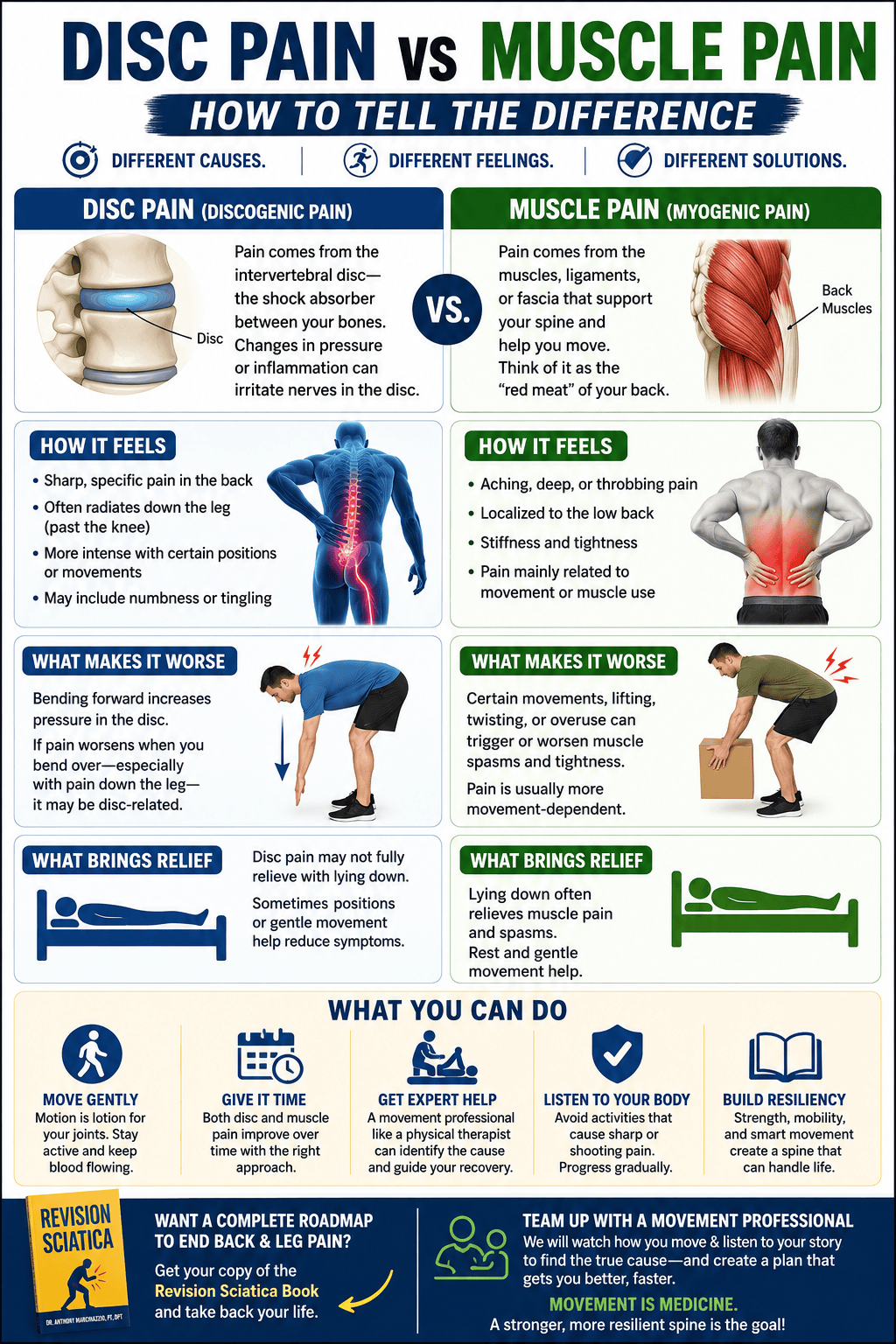
Are you struggling to figure out if your back pain is coming from a muscle spasm or a disc issue? Disc pain (discogenic pain) often feels sharp, almost electric and radiates down the leg when bending forward. While muscle pain is usually a deep, achy throb that spikes when transitioning from sitting to standing or when trying to roll over in bed. In this guide, I will help you pinpoint the cause of your discomfort so you can have some confidence moving forward in your recovery.
What Does Disc Pain Feel Like?
Discogenic pain means the discomfort is coming directly from the disc, which is the little space full of fluid between your bones. This fibrous structure acts as a shock absorber of the spine, allowing you to bend forward, bend backward, and pick up heavy things. It is very amazing how they function, but any change in inflammation or pressure can easily trigger a pain response.
Because there is a part of that disc that has nerve fibers, you can feel pain in that specific area, but it can also radiate down the leg if inflammation gets close to teh nerve. This is them most common cause of sciatica. Disc pain tends to be sharper, more radiating, and more uncomfortable. If your symptoms run down your leg past the knee, you might want to take our Free Sciatica Quiz to see if your pain matches this pattern.
How Bending Forward Impacts Your Discs
When I am trying to figure out if a person's pain is discogenic, I am going to have them bend over. Bending forward puts extra pressure directly into that disc because it acts as a shock absorber. That bending forward moment can cause pressure changes in the disc.
If you bend over and feel an increase in radiating discomfort on the side of your body or down the leg past the knee, I start to get a little more curious about the disc. Because the disc lies so close to the spine, any change in inflammation or pressure that refers pain down the leg may be discogenic. You can learn more about this by reading What a Disc Herniation is and Why Does it Happen?.
If you are looking for a way to help your disc pain then you have a couple options.
- Check out my video for some good exercises to protect your disc as it heals imrpove your back strength
- Look into my book, Revision Sciatica which lays out many exericses with exact instructions to help you guarentee recovery
What Does Muscular Back Pain Feel Like
Muscular pain tends to be more aching, deep, and throbbing. We have a muscle that lies right on top of that disc, helping us move. A muscle is very different than a disc because it is essentially the red meat of your back that powers your motion.
When my clients have an acute spasm or say they throw their back out, that feels very different than a disc. When you have an acute spasm, the intense discomfort is typically highly related to movement. My clients report feeling crooked or like a question mark becuase their body is in spasm.
Here is a great guide to help with spasms.
Does Lying Down Relieve Muscle Spasms?
Yes, people with muscle involvement can often lie down and be relatively pain-free. However, when they try to stand up and put weight on a leg, they might feel completely stuck in one position and unable to get up. You might feel like you have thrown your back out or are stuck in a spasm-like discomfort.
When you stand up, bend over, arch your back, or pick something up, it can be really uncomfortable. During these times, I remind my patients that motion is lotion for your joints. You should gently flirt with the pain to encourage blood flow without causing shooting pain. Check out Easy Stretches for Back Spasms & Other Relief Methods for safe ways to regain movement.
Teaming Up With A Movement Professional
In the very beginning, figuring out if it is a disc or a muscle can be very challenging because you are locked up. Give it a little time, do some active recovery, and listen to your body to help you get up and start walking again. Both of them improve over time, but their recovery paths look a little different.
If you cannot figure it out yourself, find a conservative provider to team up with, such as a physical therapist. We will watch you move and listen to how you describe your pain to help figure out the exact functional cause. Movement is medicine, and our ultimate goal is to build a resilient spine that can handle everyday tasks without fear. If you are ready for a complete roadmap to handle these issues, grab a copy of my Revision Sciatica Book to build true resiliency and get your life back.
Summary
Back pain from a spinal disc often feels sharp and radiates down the leg, especially when bending forward, while muscle pain is typically deep, achy, and triggered by movement or standing up. This guide explains the key differences between disc and muscle pain so you can better understand your symptoms and choose the right recovery approach.
Are you struggling to figure out if your back pain is coming from a muscle spasm or a disc issue? Disc pain (discogenic pain) often feels sharp, almost electric and radiates down the leg when bending forward. While muscle pain is usually a deep, achy throb that spikes when transitioning from sitting to standing or when trying to roll over in bed. In this guide, I will help you pinpoint the cause of your discomfort so you can have some confidence moving forward in your recovery.
What Does Disc Pain Feel Like?
Discogenic pain means the discomfort is coming directly from the disc, which is the little space full of fluid between your bones. This fibrous structure acts as a shock absorber of the spine, allowing you to bend forward, bend backward, and pick up heavy things. It is very amazing how they function, but any change in inflammation or pressure can easily trigger a pain response.
Because there is a part of that disc that has nerve fibers, you can feel pain in that specific area, but it can also radiate down the leg if inflammation gets close to teh nerve. This is them most common cause of sciatica. Disc pain tends to be sharper, more radiating, and more uncomfortable. If your symptoms run down your leg past the knee, you might want to take our Free Sciatica Quiz to see if your pain matches this pattern.
How Bending Forward Impacts Your Discs
When I am trying to figure out if a person's pain is discogenic, I am going to have them bend over. Bending forward puts extra pressure directly into that disc because it acts as a shock absorber. That bending forward moment can cause pressure changes in the disc.
If you bend over and feel an increase in radiating discomfort on the side of your body or down the leg past the knee, I start to get a little more curious about the disc. Because the disc lies so close to the spine, any change in inflammation or pressure that refers pain down the leg may be discogenic. You can learn more about this by reading What a Disc Herniation is and Why Does it Happen?.
If you are looking for a way to help your disc pain then you have a couple options.
- Check out my video for some good exercises to protect your disc as it heals imrpove your back strength
- Look into my book, Revision Sciatica which lays out many exericses with exact instructions to help you guarentee recovery
What Does Muscular Back Pain Feel Like
Muscular pain tends to be more aching, deep, and throbbing. We have a muscle that lies right on top of that disc, helping us move. A muscle is very different than a disc because it is essentially the red meat of your back that powers your motion.
When my clients have an acute spasm or say they throw their back out, that feels very different than a disc. When you have an acute spasm, the intense discomfort is typically highly related to movement. My clients report feeling crooked or like a question mark becuase their body is in spasm.
Here is a great guide to help with spasms.
Does Lying Down Relieve Muscle Spasms?
Yes, people with muscle involvement can often lie down and be relatively pain-free. However, when they try to stand up and put weight on a leg, they might feel completely stuck in one position and unable to get up. You might feel like you have thrown your back out or are stuck in a spasm-like discomfort.
When you stand up, bend over, arch your back, or pick something up, it can be really uncomfortable. During these times, I remind my patients that motion is lotion for your joints. You should gently flirt with the pain to encourage blood flow without causing shooting pain. Check out Easy Stretches for Back Spasms & Other Relief Methods for safe ways to regain movement.
Teaming Up With A Movement Professional
In the very beginning, figuring out if it is a disc or a muscle can be very challenging because you are locked up. Give it a little time, do some active recovery, and listen to your body to help you get up and start walking again. Both of them improve over time, but their recovery paths look a little different.
If you cannot figure it out yourself, find a conservative provider to team up with, such as a physical therapist. We will watch you move and listen to how you describe your pain to help figure out the exact functional cause. Movement is medicine, and our ultimate goal is to build a resilient spine that can handle everyday tasks without fear. If you are ready for a complete roadmap to handle these issues, grab a copy of my Revision Sciatica Book to build true resiliency and get your life back.
Summary
Back pain from a spinal disc often feels sharp and radiates down the leg, especially when bending forward, while muscle pain is typically deep, achy, and triggered by movement or standing up. This guide explains the key differences between disc and muscle pain so you can better understand your symptoms and choose the right recovery approach.

%20Blog%20thumbnails.jpg)


