



Are you wondering how to properly use a TENS unit for sciatica to finally get some relief from that sharp, shooting leg pain? A TENS unit is a tool that works by tricking your nervous system, calming down painful nerve fibers, and activating feel-good signals. In this guide, I will show you the exact pad placements, the best machine settings, and why you must combine this device with movement to build true resiliency.
If you are unsure if you have sciatica or want some tailored tips for recovery, take my Free Sciatica Quiz to figure out exactly what is going on.
Can A TENS Unit Help With Sciatica And Back Pain?
Yes, a TENS unit can absolutely help with sciatica and lower back pain when used correctly. Recent studies continue to show that TENS units are effective at reducing pain, making them an easy tool for your home recovery kit. Even better, these devices are way less risky compared to relying on heavy medications or spinal injections. I tell my clients there is no harm in trying TENS. It may not work for everyone, but it’s worth a try!
When I work with my clients in Jacksonville, they are often surprised by how affordable a simple TENS unit is. They have really come down in price, and there is really no major difference between what you use at home and what we use in a clinic.
The goal with TENS is to reduce pain so you can be more comfortable without taking risky treatments such as medication.
Here is a TENS unit that I have used in the past!
What we are trying to do is trick your body's nervous system. The electrical pulses calm down the irritated, painful fibers and actively stimulate your feel-good nerve fibers.
A TENS unit will not change the structural image on your MRI or the wear and tear in your body, but it will help improve your tissue tolerance so you can get back to moving. - which is the MOST important aspect of recovery!
Important Safety Warnings Before Using A TENS Unit
A TENS unit is useful, but there are a few strict rules you need to follow before turning it on.
- First and foremost, never place the electrical pads over an area of skin that has an open wound, active bleeding, or severe bruising.
- You must also never use a TENS unit if you have a cardiac pacemaker, as the electrical currents can interfere with the device.
- Additionally, if you are pregnant, you should avoid using a TENS unit on your trunk or lower back.
- Lastly, when in doubt, always consult your physical therapist or doctor before starting a new treatment. You also want to make sure you do not turn the intensity up too high, as this can cause muscle spasms and irritate your sciatica further.
Quick Guide: How to Use a TENS Unit for Sciatica
Transcutaneous Electrical Nerve Stimulation (TENS) is a safe, at-home method to manage sciatica pain. Use this chart to set up your unit confidently and safely.

The Best TENS Unit Settings For Sciatica Relief
When you look at a TENS unit, don’t let the buttons and dials overwhelm you! The setup is actually quite simple. You do not need a complex or fancy unit to get great results; an older, basic model works perfectly fine.
To start, set the "Mode" switch to continuous. This ensures a steady stream of electrical pulses to calm the nerve down rather than a pulsating or bursting rhythm.
Next, set the "Pulse Width" dial to a value between 60 and 100.
Finally, set the "Pulse Rate" (which controls the tingling speed) to a higher value, typically between 100 and 130. These specific parameters are exactly what I use in the clinic to maximize comfort for my sciatica patients.
Finding The Right Intensity For Nerve Relief
Finding the perfect intensity requires you to listen to your body and adjust the dials slowly. You should turn the intensity dial up one side at a time until you start to feel a mild tingling sensation.
What works with my patients is aiming for a strong, comfortable tingle. You want a good, heavy tingle right before you get an actual muscle contraction.
I have seen patients who require very little intensity to feel it, while others need it turned almost all the way up. Everyone's nervous system is unique, so just change your intensity based on how you feel that day. If you are still unsure if your leg pain is truly sciatica, take my Free Sciatica Quiz to figure out exactly what is going on.
Where To Place TENS Unit Pads For Sciatica
Sciatica occurs in the lower, but REFERS pain away from the back.
Because of this, you can have pain in your back, your glute, the outer leg, or all the way down into your calf.
I typically recommend placing the TENS unit pads over the area where you feel the most intense muscular discomfort, which is very often the glute.
The good news is that the glute area is full of thick muscle tissue, so we are not as limited by where we can safely stick the pads.
For the best relief, I like to apply the positive and negative electrode leads in a crisscross or diagonal pattern across the painful area. You can place them directly across from each other or side-by-side; the exact geometry matters less than simply surrounding the pain.
For more details on where this nerve travels, check out my guide on What’s the Difference Between a Pinched Nerve and Sciatica.
How Long Should You Leave A TENS Unit On
Once you have the pads in place and the intensity set to a strong, comfortable tingle, you should apply the treatment for 15 to 20 minutes. You can do this while lying on your belly, sitting in a chair, or in any position that brings you the most relief.
During that 15 to 20-minute window, it is very normal for your body to get used to the electrical sensation. This is called accommodation. Because your nerves adapt, you might have to increase the intensity dial just a little bit halfway through your session.
Just remember, I do not want you to turn it up high enough that your muscles start actively contracting or twitching. The intention here is purely pain relief, not a muscular workout.
Why You Must Follow Up With Movement And Exercise
The biggest mistake you can make is relying on a TENS unit alone for your treatment. These devices are designed to reduce pain, but they do not physically change what is happening at the structural level of your back. Use the TENS unit when you need to, and it can be multiple times in a day, but it will not help your strength, mobility, or calm down your nerve pain.
A TENS unit simply provides a window of pain relief so you can start moving again. In my 10+ years of PT experience, motion is lotion, and you must gently flirt with pain to build true functional resiliency.
This Is How I Use TENS with My Patients
If you were my patient, after using the TENS unit for 20 minutes, I would immediately have you follow up with targeted nerve exercises, such as nerve glides. Moving the sciatic nerve through its pathway is how we create lasting healing and improve tissue tolerance.
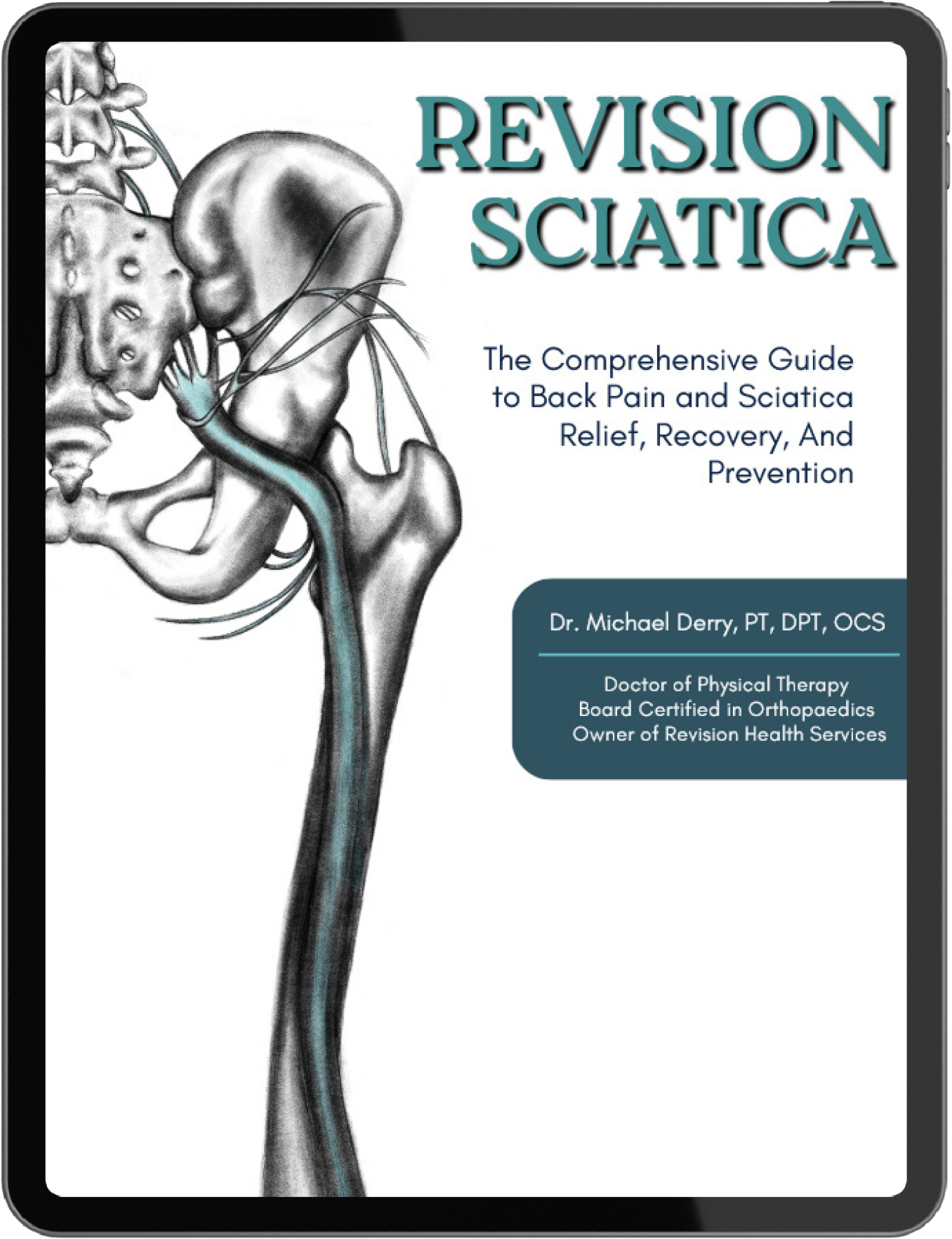
In the end, I highly encourage you to grab a copy of my Revision Sciatica Book. It walks you through my complete SPARK program to help you eliminate nerve pain. The SPARK program includes strengthening, pain relief modalities, activating the sciatic nerve, regaining mobility of your hips and spine, and keeping movement at the center of your recovery.
A step-by-step recovery plan for your type of sciatica.
Identify your type: disc vs. stenosis - and then follow the 5-phase SPARK protocol. Optional $24 video-course add-on.
by Dr. Michael Derry, PT, DPT, OCS
Summary
A TENS unit can help reduce sciatica pain by calming irritated nerves and providing temporary relief without relying on medications or injections. This guide explains the best TENS unit settings, pad placement, safety tips, and why combining TENS with movement is essential for long-term recovery.
Are you wondering how to properly use a TENS unit for sciatica to finally get some relief from that sharp, shooting leg pain? A TENS unit is a tool that works by tricking your nervous system, calming down painful nerve fibers, and activating feel-good signals. In this guide, I will show you the exact pad placements, the best machine settings, and why you must combine this device with movement to build true resiliency.
If you are unsure if you have sciatica or want some tailored tips for recovery, take my Free Sciatica Quiz to figure out exactly what is going on.
Can A TENS Unit Help With Sciatica And Back Pain?
Yes, a TENS unit can absolutely help with sciatica and lower back pain when used correctly. Recent studies continue to show that TENS units are effective at reducing pain, making them an easy tool for your home recovery kit. Even better, these devices are way less risky compared to relying on heavy medications or spinal injections. I tell my clients there is no harm in trying TENS. It may not work for everyone, but it’s worth a try!
When I work with my clients in Jacksonville, they are often surprised by how affordable a simple TENS unit is. They have really come down in price, and there is really no major difference between what you use at home and what we use in a clinic.
The goal with TENS is to reduce pain so you can be more comfortable without taking risky treatments such as medication.
Here is a TENS unit that I have used in the past!
What we are trying to do is trick your body's nervous system. The electrical pulses calm down the irritated, painful fibers and actively stimulate your feel-good nerve fibers.
A TENS unit will not change the structural image on your MRI or the wear and tear in your body, but it will help improve your tissue tolerance so you can get back to moving. - which is the MOST important aspect of recovery!
Important Safety Warnings Before Using A TENS Unit
A TENS unit is useful, but there are a few strict rules you need to follow before turning it on.
- First and foremost, never place the electrical pads over an area of skin that has an open wound, active bleeding, or severe bruising.
- You must also never use a TENS unit if you have a cardiac pacemaker, as the electrical currents can interfere with the device.
- Additionally, if you are pregnant, you should avoid using a TENS unit on your trunk or lower back.
- Lastly, when in doubt, always consult your physical therapist or doctor before starting a new treatment. You also want to make sure you do not turn the intensity up too high, as this can cause muscle spasms and irritate your sciatica further.
Quick Guide: How to Use a TENS Unit for Sciatica
Transcutaneous Electrical Nerve Stimulation (TENS) is a safe, at-home method to manage sciatica pain. Use this chart to set up your unit confidently and safely.
The Best TENS Unit Settings For Sciatica Relief
When you look at a TENS unit, don’t let the buttons and dials overwhelm you! The setup is actually quite simple. You do not need a complex or fancy unit to get great results; an older, basic model works perfectly fine.
To start, set the "Mode" switch to continuous. This ensures a steady stream of electrical pulses to calm the nerve down rather than a pulsating or bursting rhythm.
Next, set the "Pulse Width" dial to a value between 60 and 100.
Finally, set the "Pulse Rate" (which controls the tingling speed) to a higher value, typically between 100 and 130. These specific parameters are exactly what I use in the clinic to maximize comfort for my sciatica patients.
Finding The Right Intensity For Nerve Relief
Finding the perfect intensity requires you to listen to your body and adjust the dials slowly. You should turn the intensity dial up one side at a time until you start to feel a mild tingling sensation.
What works with my patients is aiming for a strong, comfortable tingle. You want a good, heavy tingle right before you get an actual muscle contraction.
I have seen patients who require very little intensity to feel it, while others need it turned almost all the way up. Everyone's nervous system is unique, so just change your intensity based on how you feel that day. If you are still unsure if your leg pain is truly sciatica, take my Free Sciatica Quiz to figure out exactly what is going on.
Where To Place TENS Unit Pads For Sciatica
Sciatica occurs in the lower, but REFERS pain away from the back.
Because of this, you can have pain in your back, your glute, the outer leg, or all the way down into your calf.
I typically recommend placing the TENS unit pads over the area where you feel the most intense muscular discomfort, which is very often the glute.
The good news is that the glute area is full of thick muscle tissue, so we are not as limited by where we can safely stick the pads.
For the best relief, I like to apply the positive and negative electrode leads in a crisscross or diagonal pattern across the painful area. You can place them directly across from each other or side-by-side; the exact geometry matters less than simply surrounding the pain.
For more details on where this nerve travels, check out my guide on What’s the Difference Between a Pinched Nerve and Sciatica.
How Long Should You Leave A TENS Unit On
Once you have the pads in place and the intensity set to a strong, comfortable tingle, you should apply the treatment for 15 to 20 minutes. You can do this while lying on your belly, sitting in a chair, or in any position that brings you the most relief.
During that 15 to 20-minute window, it is very normal for your body to get used to the electrical sensation. This is called accommodation. Because your nerves adapt, you might have to increase the intensity dial just a little bit halfway through your session.
Just remember, I do not want you to turn it up high enough that your muscles start actively contracting or twitching. The intention here is purely pain relief, not a muscular workout.
Why You Must Follow Up With Movement And Exercise
The biggest mistake you can make is relying on a TENS unit alone for your treatment. These devices are designed to reduce pain, but they do not physically change what is happening at the structural level of your back. Use the TENS unit when you need to, and it can be multiple times in a day, but it will not help your strength, mobility, or calm down your nerve pain.
A TENS unit simply provides a window of pain relief so you can start moving again. In my 10+ years of PT experience, motion is lotion, and you must gently flirt with pain to build true functional resiliency.
This Is How I Use TENS with My Patients
If you were my patient, after using the TENS unit for 20 minutes, I would immediately have you follow up with targeted nerve exercises, such as nerve glides. Moving the sciatic nerve through its pathway is how we create lasting healing and improve tissue tolerance.
In the end, I highly encourage you to grab a copy of my Revision Sciatica Book. It walks you through my complete SPARK program to help you eliminate nerve pain. The SPARK program includes strengthening, pain relief modalities, activating the sciatic nerve, regaining mobility of your hips and spine, and keeping movement at the center of your recovery.
A step-by-step recovery plan for your type of sciatica.
Identify your type: disc vs. stenosis - and then follow the 5-phase SPARK protocol. Optional $24 video-course add-on.
by Dr. Michael Derry, PT, DPT, OCS
Summary
A TENS unit can help reduce sciatica pain by calming irritated nerves and providing temporary relief without relying on medications or injections. This guide explains the best TENS unit settings, pad placement, safety tips, and why combining TENS with movement is essential for long-term recovery.

%20Blog%20thumbnails.jpg)


