Why Strengthening Alone Doesn't Fix Stenosis
Being strong is a good thing. But when degenerative changes have narrowed the space around your nerves, jumping straight into back-strengthening usually misses the mark. For most general back issues, strength is the primary fix. With stenosis, mobility and nerve health have to come first.
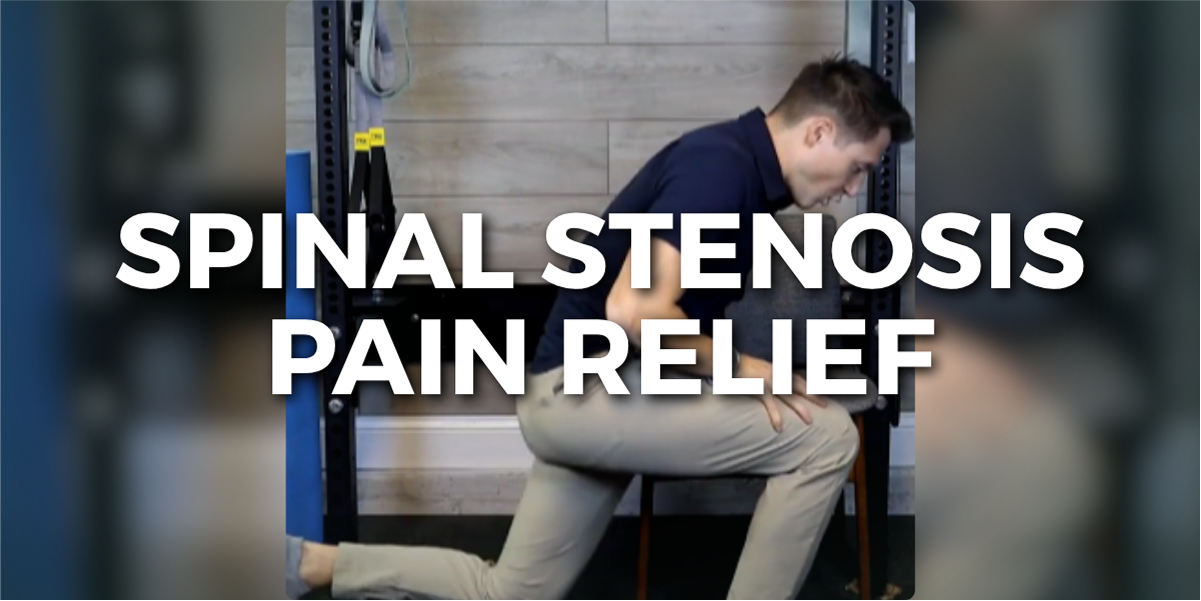
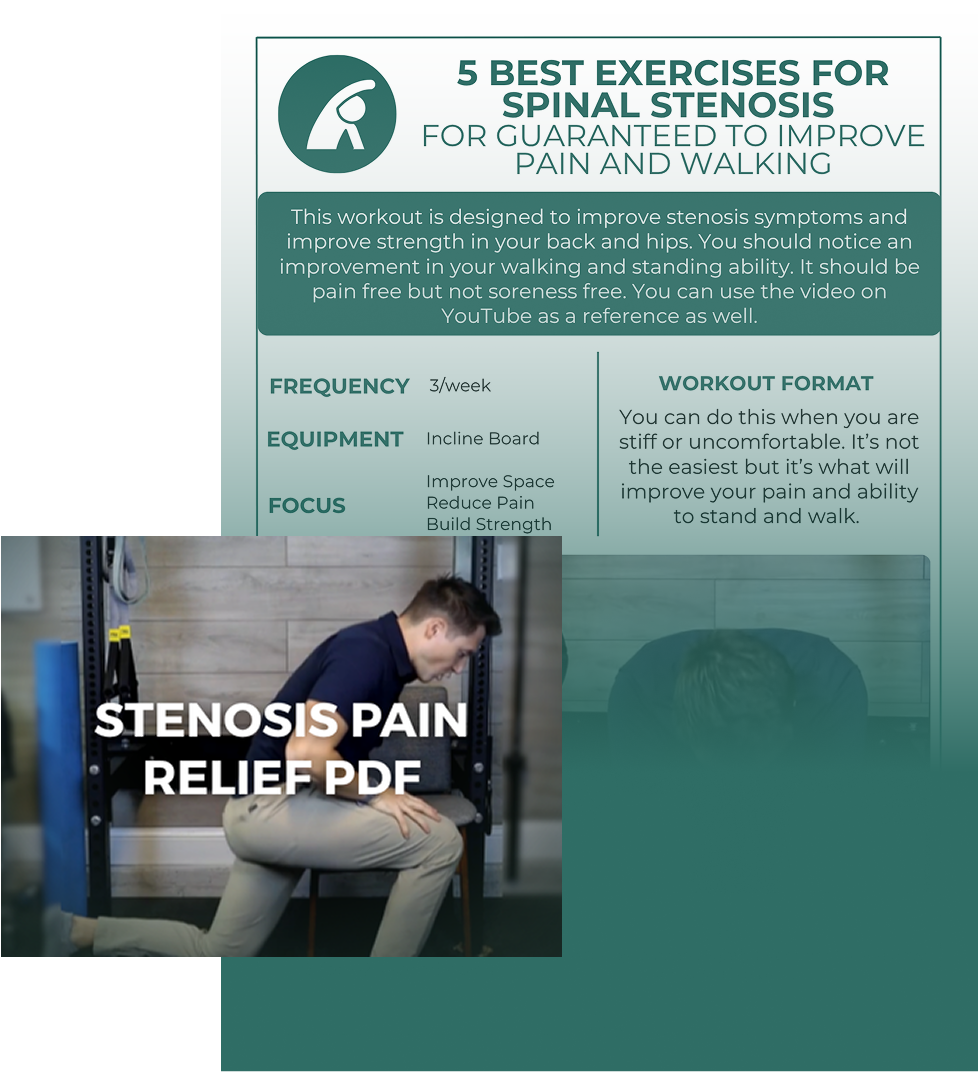
The five exercises in this guide follow that thinking. Two are flexion movements that open up space: a seated lumbar flexion and a standing lumbar flexion with a nerve glide. One stretches the front of your hip. The other two build strength: a chair-supported squat with your heels on an incline and a modified lunge done leaning forward.
One rule before you start: the routine should be pain free, but it does not have to be soreness free.
What to Expect
Nerve symptoms can change quickly once pressure comes off, or they can take their time. The pathway is different for everyone, which is why I am not going to give you a timeline.
I can't promise a total absence of pain. What I can promise is that if you put in the work and listen to your body, your trajectory will change.
Watch which direction your symptoms move. If they travel further down your leg, back off. If they pull back toward your spine, you are going the right way.
Perfect For People Who:
- Can't walk far without needing to sit
- Lean on shopping carts for relief
- Have leg pain that disappears when sitting
- Want to avoid surgery or injections
- Need exercises that won't make symptoms worse
How It Works
- Get instant access. Enter your name and email. The guide arrives in your inbox, free.
- Set up. You need an incline board (or a folded yoga mat) and a sturdy chair.
- Run it three times a week. Follow the reps and hold times. Watch the video first if you want to see a movement before you try it.
- Check the next 24 hours. Symptoms pulling back toward your spine is progress. Symptoms traveling further down your leg means ease off.